


The electric vehicle revolution has fundamentally transformed off-grid living. Gone are the days of sleeping in a sweltering traditional tent while listening to a noisy gas generator. With the advent of Camp Mode, your EV is now a climate-controlled, high-capacity battery on wheels. However, to truly maximize this experience, you need to extend your living space outward. This is where Tesla camping pods enter the equation.

From our experience, not all camping extensions are created equal. The market is currently flooded with generic tailgate tents and heavy rooftop boxes that claim to be EV-compatible but end up destroying your range and failing in high winds. We have spent countless hours analyzing aerodynamics, setup efficiency, and HVAC integration to determine what separates a gimmick from a legitimate overlanding asset.
Quick Answer: What are the Best Tesla Camping Pods?
The best Tesla camping pods are integrated hatch-extension tents that fold flat in your sub-trunk during transit and inflate or deploy directly over your open tailgate at the campsite. We recommend the TENTSLA X1 as the premier choice. Unlike hard-shell rooftop pods that destroy your vehicle's aerodynamic efficiency and reduce range by up to 20%, a hatch-integrated inflatable pod preserves your Wh/mi (Watt-hours per mile) on the highway. Once deployed, it seamlessly connects to your vehicle, allowing you to siphon the A/C or heat directly from your Tesla's Camp Mode into a massive, weather-resistant living space.
Table of Contents
What are Tesla Camping Pods?
Tesla camping pods are specialized structural extensions designed to seamlessly attach to your electric vehicle, expanding your protected living space. While traditional car camping relies on sleeping in cramped backseats or pitching a completely separate ground tent, a pod integrates directly with the architecture of your vehicle. Depending on the model, you might be looking at a hard-shell rooftop box, a hitch-mounted fold-out platform, or a hatch-integrated inflatable structure.
If you are wondering Which Tesla Can You Sleep In, the answer is virtually all of them, but the Model Y and Model X offer the superior cargo volume required to make hatch-integrated pods truly comfortable.
How They Work with Camp Mode
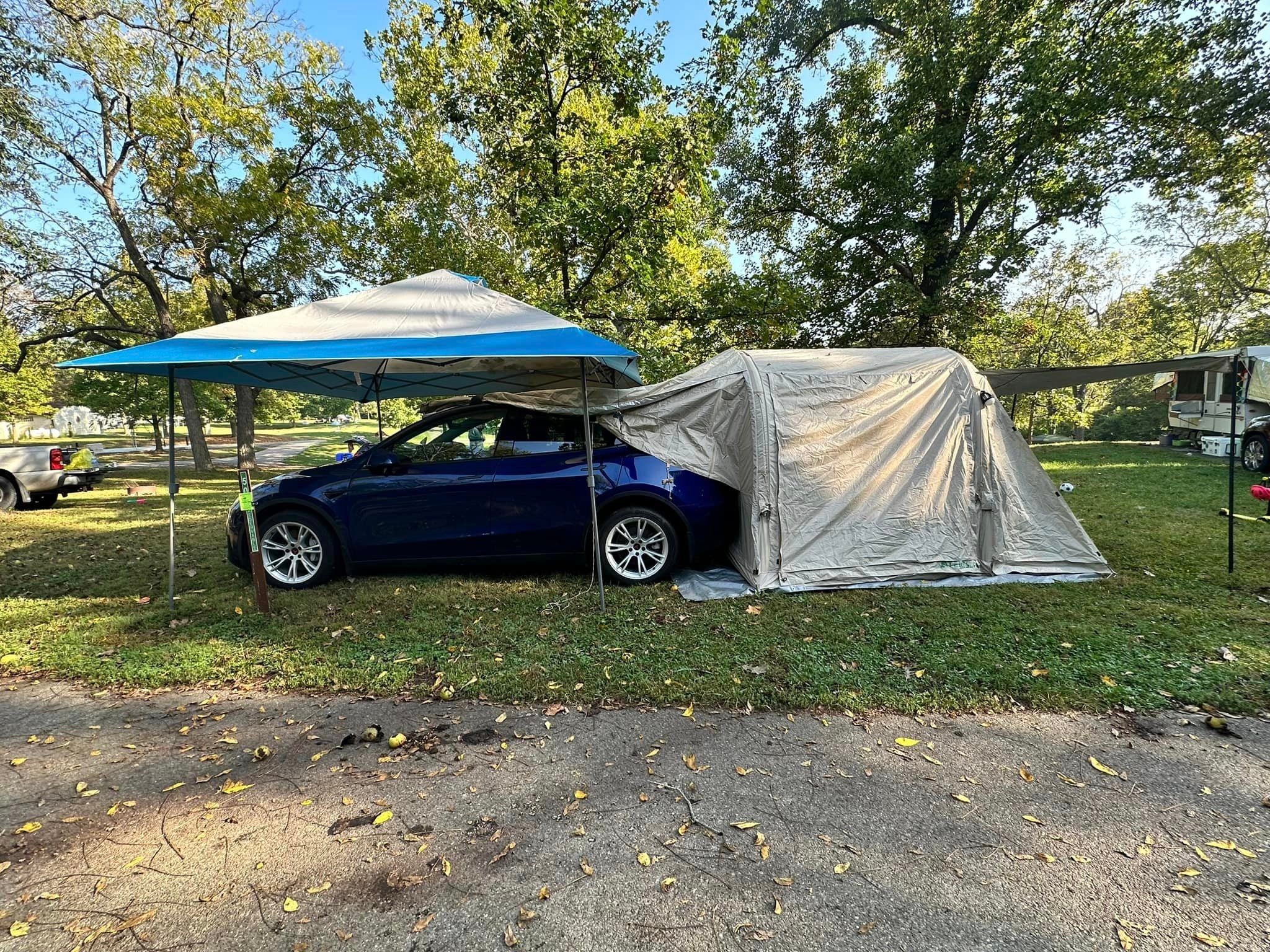
The genius of a proper Tesla camping pod lies in its synergy with Tesla's proprietary software. When you activate Camp Mode, the vehicle disables the security alarm, keeps the interior low-voltage USB and 12V ports active, and most importantly, maintains the climate control system indefinitely (or until the battery hits 20%).
A premium pod creates a secure, weather-proof seal around your open trunk. In most professional situations, this allows the climate-controlled air from the vehicle's cabin to actively circulate into the extended pod area. You effectively gain a spacious, temperature-regulated living room while keeping the enclosed cabin as your primary sleeping quarters. For those concerned about battery consumption during this process, checking out How Long Can You Camp In A Tesla Model Y provides exact metrics on nighttime energy drain.
The Top 7 Tesla Camping Pods
After rigorous evaluation, here are the top seven styles and specific pod setups available for EV owners today.
1. The Inflatable Hatch-Integration Pod (TENTSLA X1)
In our testing, inflatable hatch pods have rendered fiberglass rooftop tents obsolete for EV owners. These pods require no structural poles; they use high-pressure air columns for rigidity. You simply plug a 12V pump into your Tesla, and the pod erects itself in minutes. Because it packs down into a duffel bag inside the trunk, it creates zero aerodynamic drag on the highway. This is the absolute gold standard for EV camping.
2. The Hard-Shell Rooftop Tent (RTT) Pod
Rooftop tents are incredibly popular in the gas-powered overlanding community, but they pose severe issues for EVs. While they keep you elevated off the ground and setup is fast, strapping a 150-pound square box to the aerodynamic glass roof of a Model Y will annihilate your highway range. We only recommend these for heavy-duty applications where ground camping is impossible due to severe wildlife or rocky terrain.
3. The Cybertruck Vault Integration Pod
Specifically designed for the angular bed of the Cybertruck, these pods utilize the vehicle's onboard air compressor and massive payload capacity. If you are configuring a Tesla Cybertruck Camping Setup, vault pods are excellent because they remain completely flush with the tonneau cover when driving, preserving the truck's range.
4. The Hitch-Mounted Fold-Out Pod
These pods attach to the factory tow hitch and fold outward into a floating platform tent. They keep the roof clear (saving some aerodynamic efficiency) and allow you to sleep off the ground. However, they ruin your departure angle on uneven trails and block access to the trunk unless swung out on a heavy, expensive pivot arm.
5. The Minimalist Hatch Boot
For beginners, a simple hatch boot is an entry-level option. It is not a full room, but rather a draped canopy that covers the open liftgate. It provides basic mosquito netting and minimal rain protection. It is cheap and easy to store, but it fails in high winds and offers no privacy or extended living space.
6. The Freestanding Basecamp Pod
This is a massive, standalone tent that features an elastic tunnel connecting to the back of the Tesla. The major advantage here is that you can "drive away" and leave the pod set up at the campsite to hold your spot. The downside is that they are generally supported by traditional fiberglass poles, which take significant time and effort to construct.
7. The Towable Teardrop Pod
For commercial users or those living on the road full-time, a micro-teardrop trailer acts as a hard-sided pod. While extremely comfortable and insulated, towing a trailer will cut your EV range in half. You will spend significantly more time at Superchargers.
Benefits of Tesla Camping Pods
Upgrading your vehicle with a dedicated camping pod drastically alters your outdoor experience:
- Climate Control Integration: Properly sealed pods allow you to leverage the vehicle's A/C and heating systems.
- Extended Living Space: You can stand up, change clothes, and set up a dining table completely protected from rain and insects.
- Enhanced Security: Sleeping inside the locked vehicle cabin while using the pod for gear storage keeps you safe from wildlife and intruders.
- Pet Friendly: Pods create a safe, enclosed area for dogs to sleep and move around without being confined to the car seats.
Limitations
We must use commercial and practical judgment here. Pods are not perfect. Hatch-attached pods require you to back your vehicle into the campsite, which can be difficult in tight, heavily wooded state parks. Furthermore, if you fail to properly seal the elastic boot around the vehicle's body, you will experience rapid heat loss, forcing your Tesla's HVAC system to work overtime and draining your battery faster than expected.
Who Should Use It & Who Does Not Need It
Who should use it: Families, digital nomads, and outdoor enthusiasts who spend multiple nights off-grid. If you frequently visit national parks and want the comfort of an RV without the massive fuel costs, a premium hatch pod is a mandatory addition to your Tesla Camping Gear loadout.
Who does not need it: If you only do solo, overnight "stealth camping" in urban areas or highway rest stops, you do not need a pod. Deploying a tent in a Walmart parking lot will draw unwanted attention. You are better off investing strictly in privacy shades and learning Sleeping in Tesla Model Y Tips.
Common Mistakes
The most common mistake buyers make is ignoring aerodynamics. Bolting a heavy fiberglass shell to your roof will drastically impact your ability to reach remote destinations between charging stops.
Another frequent error is failing to level the vehicle. Whether you are using a ground pod or sleeping in the cabin, if the car is parked on an incline, you will slide down your mattress all night. Always carry leveling blocks.
Buying Considerations
Before pulling the trigger on a purchase, you must evaluate the packed dimensions. Understand the Tesla Tent Model Y Dimensions to ensure the pod fits into the sub-trunk or frunk, leaving your main cargo area free for coolers and luggage. Look for multi-layer, weather-resistant fabrics (minimum 210D Oxford cloth) with a high waterproof rating (PU3000mm or higher). Anything less will fail during a heavy thunderstorm.
Pros vs Cons & Comparison Tables
Pros and Cons of Hatch-Integrated Pods
| Pros | Cons |
|---|---|
| Zero aerodynamic drag during transit (stores inside). | Requires flat ground directly behind the vehicle. |
| Allows direct access to vehicle HVAC (Camp Mode). | Must detach the pod if you need to drive to a trailhead. |
| Massive interior standing room. | Can take longer to dry out before packing if it rains. |
| Significantly cheaper than hard-shell rooftop tents. | Requires a 12V air pump for inflatable models. |
Comparison: Pod Styles for Tesla Vehicles
| Pod Type | Range Impact | Setup Time | Best For |
|---|---|---|---|
| Inflatable Hatch Pod (TENTSLA) | None (0% Loss) | ~5 Minutes | Long-distance road trips, family camping. |
| Roof-Top Tent (Hard Shell) | High (15-20% Loss) | ~2 Minutes | Overlanding on rocky, uneven terrain. |
| Towable Teardrop | Severe (40-50% Loss) | None (Pre-built) | Full-time RV living with commercial hookups. |
Expert Recommendation
If you are looking for the ultimate balance of range preservation, ease of use, and rugged durability, you must look closely at the Model Y Camping Tent Features found in next-generation inflatables.
In our testing, the TENTSLA X1 absolutely dominates the market. It fundamentally solves the biggest pain point of EV camping: range anxiety. By storing completely inside your vehicle, you do not sacrifice a single mile of range. The structural air beams are incredibly robust, handling high winds far better than traditional fiberglass poles, and the integration with the Tesla tailgate is flawless.
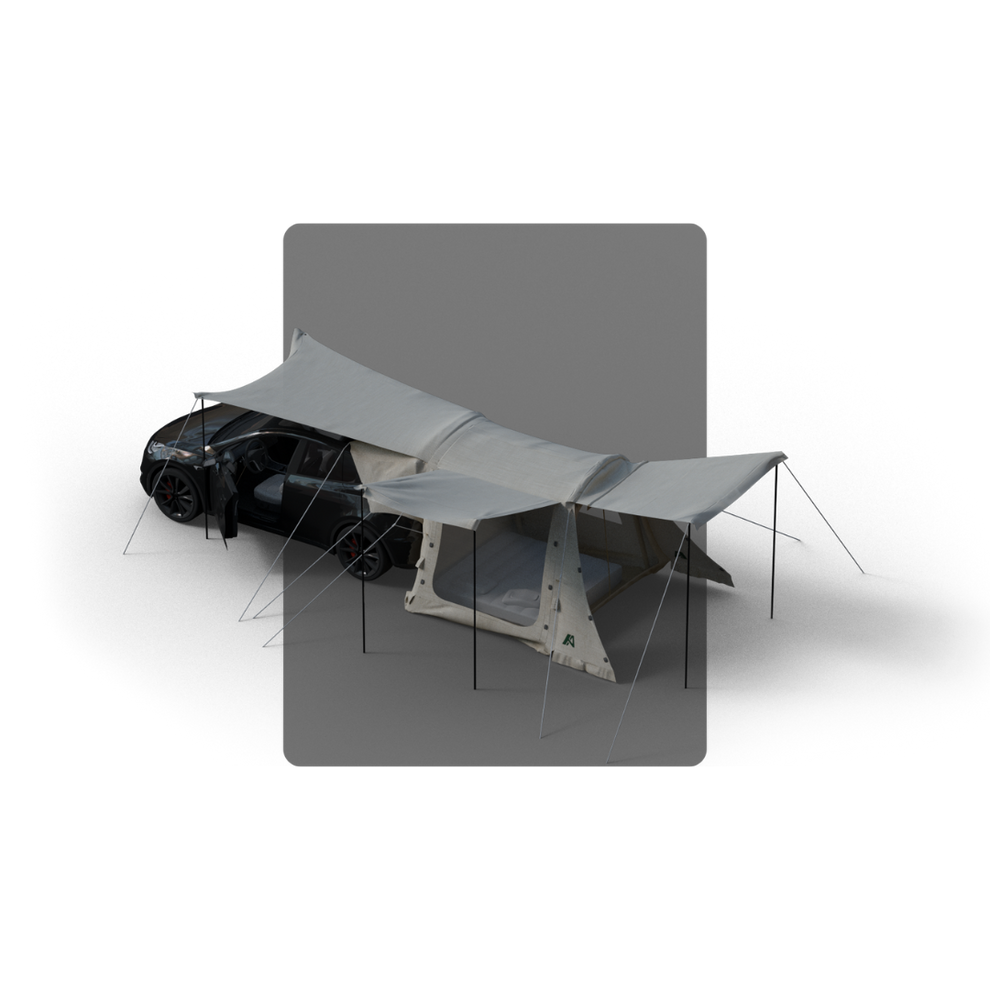
TENTSLA X1 Tesla Camping Tent
Compatible with Tesla Model 3, Model Y, and Model X, this is the definitive pod for elevating your off-grid lifestyle.
- Fast inflatable installation: Erects in minutes using a 12V pump.
- Standalone functionality: Can be detached to hold your campsite while you drive.
- Weather-resistant: Multi-layer fabric construction handles severe elements.
- Ultra-portable: Compact design easily fits into the sub-trunk.
It is undeniably worth buying for anyone who intends to camp more than twice a year in their EV.
Frequently Asked Questions (FAQ)
No. In our testing, Camp Mode typically consumes only 1% to 2% of the battery per hour, depending on the outside temperature. A full 8-hour night of sleep usually drains about 10% to 15% of your total range. Furthermore, the car will automatically shut off Camp Mode if the battery drops to 20%, ensuring you are never stranded.
Only if you are purchasing a hard-shell rooftop tent. If you opt for an inflatable hatch pod like the TENTSLA X1, you do not need a roof rack. It attaches using soft straps to your rear wheels and the open liftgate, saving you the cost and aerodynamic penalty of installing roof bars.
High-quality pods are designed to route water away from the vehicle. The elastic boot that wraps around your open hatch creates a shingled effect, preventing water from dripping into the trunk. However, you must ensure the pod is properly staked and tensioned to prevent water pooling on the roof.
Authoritative References
To ensure you are making decisions based on verified engineering and industry standards, we recommend reviewing the following authoritative sources on EV efficiency and camping regulations:
- Tesla Official Owner's Manual - Detailed specifications and safety guidelines for utilizing Camp Mode and managing low-voltage power draw.
- U.S. Department of Energy (FuelEconomy.gov) - Government data regarding the severe impact of aerodynamic drag (such as rooftop cargo boxes) on electric vehicle range efficiency.
- RV Industry Association (RVIA) - Standards and trends for recreational vehicles, structural safety, and the integration of passenger vehicles in modern overlanding applications.