


Electric vehicle architecture has completely redefined the traditional road trip, changing car camping from an emergency fallback into a deliberate luxury travel style. The Tesla Model Y, with its expansive panoramic glass roof, flat-folding second-row seats, and dedicated high-voltage battery capacity, stands out as one of the most capable mobile sleeping platforms available globally. However, achieving an optimal, rejuvenating night inside an EV requires more than throwing a sleeping bag in the rear trunk. To avoid cold drafts, excessive battery drainage, and spatial clutter, you need a firm grasp of the vehicle hardware and environmental management parameters.

At TENTSLA, we analyze and develop outdoor overlanding equipment engineered exclusively for the electric vehicle ecosystem. Sourcing, designing, and testing vehicle integration systems has given us an industrial perspective on EV thermal management. From our experience, many owners make the mistake of isolating themselves inside the metal shell of the cabin, which quickly leads to a cramped interior and severe condensation loops. This authoritative guide outlines nine proven technical strategies for sleeping in Tesla Model Y, balancing climate control configurations, battery metrics, and spatial modifications to maximize overnight safety and comfort.
- 1. Summary Matrix: The Overnight EV Camping Metrics
- 2. Mastering Camp Mode and Power Dynamics
- 3. Physical Modifications and Spatial Layout Optimization
- 4. Deep Dive: 9 Technical Tips to Sleeping in Tesla Model Y
- 5. Expanding the Footprint: Turnkey Tailgate Integration
- 6. Frequently Asked Questions (FAQs)
- 7. Technical and Regulatory References
1. Summary Matrix: The Overnight EV Camping Metrics
Before launching an overland journey, you must map out your vehicle thermal configurations and battery expenditure assumptions. The table below outlines real-world power drain parameters for sleeping in Tesla Model Y across varied ambient temperatures.
| Ambient Outside Climate | Optimal Target Interior Temp | Estimated Battery Drain (Per Hour) | Overnight Drain (8-Hour Stay) | Primary Thermal Management Risk |
|---|---|---|---|---|
| Mild Conditions (15°C to 25°C) | 19°C to 21°C | 1.0% to 1.5% | 8% to 12% | Minimal; standard ventilation stabilization required |
| Hot Weather (30°C+) | 20°C | 2.0% to 3.0% | 16% to 24% | High compressor load; solar radiation through glass roof |
| Cold Climate (0°C to 10°C) | 18°C | 2.0% to 3.5% | 16% to 28% | Heat pump cycling; cold radiation from steel panels |
| Sub-Freezing Below -10°C | 17°C | 3.5% to 5.0%+ | 28% to 40%+ | High-voltage resistance heating; battery pack thermal save |
2. Mastering Camp Mode and Power Dynamics
The core advantage of sleeping in Tesla Model Y compared to any internal combustion vehicle is the ability to run the climate control system continuously all night without idling emissions or carbon monoxide risks. When you engage Camp Mode via the climate control menu, the high-voltage lithium battery pack powers the vehicle HVAC system, keeps the low-voltage USB-C accessory ports active, and keeps the infotainment screen accessible while placing the drivetrain into a complete state of rest.
From our experience, Camp Mode handles power allocation with great efficiency, but external parameters directly control the discharge curve. The onboard heat pump system works efficiently down to freezing, but sub-zero conditions force the vehicle to consume up to 40% of its total charge overnight just to keep the cabin comfortable. To ensure a safe trip, you must calculate your energy requirements and ensure you arrive at your camping location with a sufficient safety margin. Camp Mode automatically cuts out if the vehicle charge level drops to 20%, a safeguard designed to prevent you from being stranded far from a charging station.
3. Physical Modifications and Spatial Layout Optimization
The physical interior of the Model Y features a generous cargo capacity, but transitioning it into a supportive sleeping surface requires proper preparation. When you fold the second-row seats down, the seatbacks do not drop perfectly flat; instead, they rest at a slight 5-degree upward incline toward the front headrests. Sleeping with your head at the lower end can cause blood pooling and morning headaches. We recommend always sleeping with your head positioned toward the front seats to align with this natural incline.
Furthermore, the gap between the folded rear seats and the front center console presents a structural challenge. Taller individuals will find their feet or pillows slipping into this empty footwell space. Filling these front footwells with rigid storage bins or custom extenders creates a continuous, flat platform that maximizes your usable bed length, ensuring a more comfortable night's rest.
We recommend establishing a strict storage plan before laying out your bedding. Once a full-sized mattress is inflated inside the Model Y trunk, access to the sub-trunk and side storage pockets is completely blocked. If you store your clothes, kitchen gear, or shoes in the lower sub-trunk, you will be forced to roll up your entire bed in the middle of the night just to access basic supplies.
4. Deep Dive: 9 Technical Tips to Sleeping in Tesla Model Y
1. Lock and Verify Your Battery Margin

Never pull into an off-grid campsite with less than 40% battery capacity unless a Level 2 outlet is actively available on-site. Given that an 8-hour session of sleeping in Tesla Model Y can use anywhere from 8% to 30% charge based on external temperatures, maintaining an absolute safety buffer ensures you can reach local Superchargers in the morning without anxiety.
2. Calibrate Head Positioning and Seat Incline
To match the natural 5-degree rise of the folded second-row seatbacks, always position your pillows toward the front of the vehicle. This minor adjustment aligns your body comfortably and keeps you from sliding down into the rear hatch channel during the night.
3. Bridge the Front Footwell Gap
Slide the driver and front passenger seats fully forward, then fill the rear footwell voids using rectangular cooler boxes or matching storage cubes. This mechanical change extends the total sleeping platform to over 74 inches, allowing taller campers to stretch out completely.
4. Deploy Tailored Thermal Window Shades
The Model Y features vast glass surfaces that lose heat rapidly in the winter and trap solar energy in the summer. Deploying custom-fit, multi-layered reflective privacy shades across all side windows and the glass roof adds an essential layer of insulation, significantly reducing the power drain on your climate control system.
5. Lower Screen Brightness and Activate Clean UI Modes
When Camp Mode is engaged, the central 15-inch touchscreen remains active. While you can use the display for evening entertainment, the bright background light can disrupt your sleep. We recommend shifting the system into a dedicated dark mode or opening the built-in clean screen cleaning interface to turn the panel completely black.
6. Store Active Footwear in Side Trunk Pockets
Avoid tracking trail dirt, morning moisture, or pine needles directly onto your mattress fabric. Utilize the deep structural side cubbies located at the far left and right edges of the rear trunk area as specialized shoe drop zones, keeping dirty footwear contained and away from your bedding.
7. Move Heavy Gear to the Frunk and Front Seats
To maximize your interior sleeping room, move large luggage pieces, heavy storage totes, and kitchen equipment into the front trunk (frunk) or stack them onto the front driver and passenger seats. Keeping the rear living space clear makes it far easier to move around comfortably inside the cabin.
8. Manage Manual Air Velocity Configurations
While the automated climate control settings are highly reliable, the vehicle fan can occasionally pulse loudly during temperature shifts, disrupting light sleepers. We recommend manually setting the fan speed to a fixed setting of 1 or 2. This keeps a quiet, steady stream of air moving through the rear vents without sudden acoustic jumps.
9. Avoid Public Charger Camping Stalls
Unless you are staying at a dedicated RV campsite with a reserved utility connection, avoid sleeping in active Supercharger stalls. Occupying a high-power stall overnight when you are not actively charging can block other drivers and lead to expensive idle fees from the Tesla network.
5. Expanding the Footprint: Turnkey Tailgate Integration
While sleeping directly inside the enclosed metal cabin works well for short highway rest stops, extended multi-day overlanding trips can feel restrictive due to limited vertical headroom. To create a highly functional outdoor base camp, you can pair the vehicle with specialized gear from our Tesla Camping Collection designed to expand your living footprint.
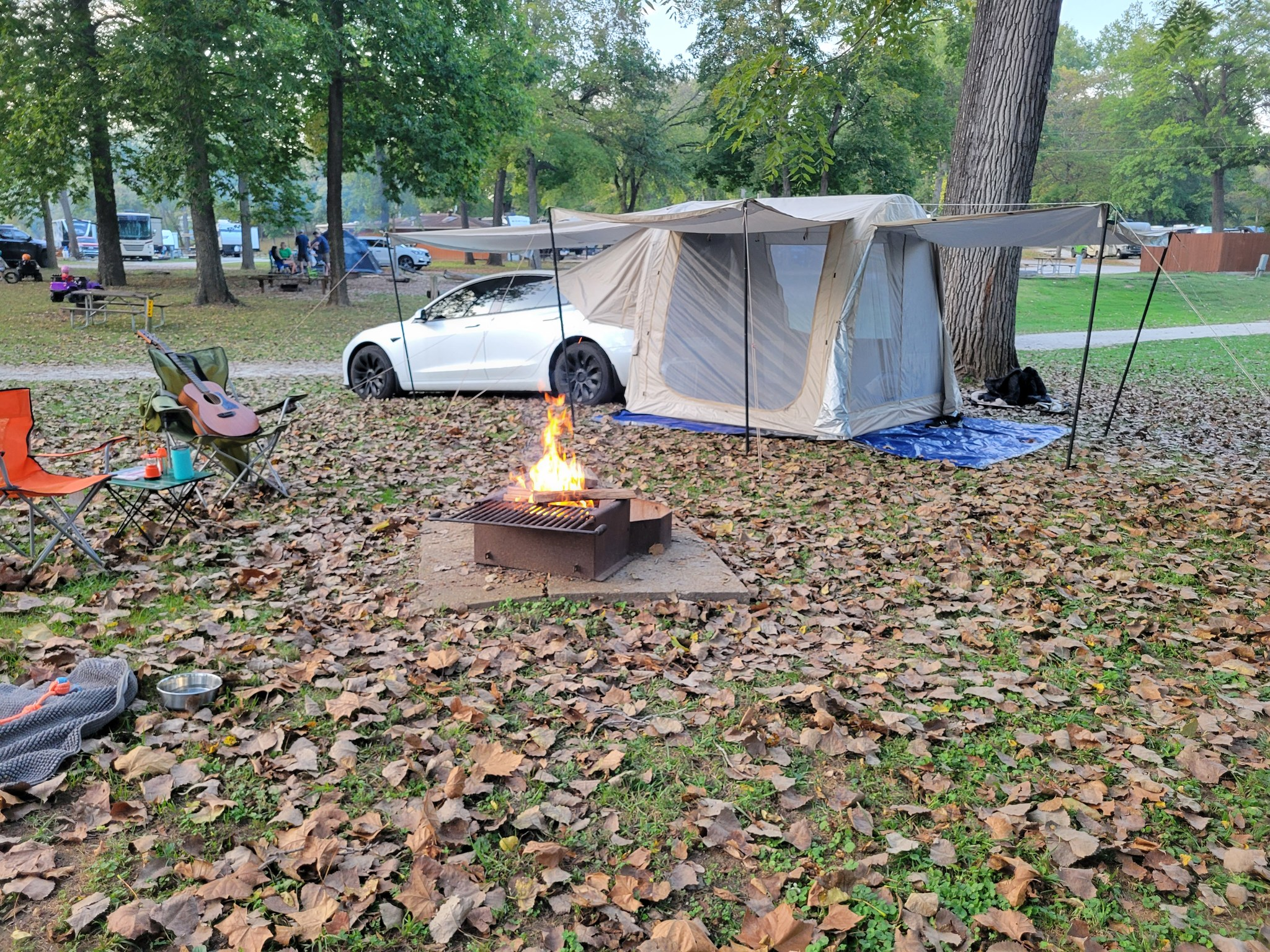
Traditional stand-up ground tents force campers to isolate themselves from the vehicle, cutting them off from the advanced climate systems of the car. The TENTSLA X1 Tailgate Tent for Tesla Model Y addresses this directly by creating an airtight, weather-resistant extension that connects straight to the rear hatch. This seamless integration allows you to use the vehicle Camp Mode to heat or cool an expanded living area that comfortably accommodates up to four people, giving you a spacious, climate-controlled shelter out on the trail.
To tailor your setup for specific environments, you can browse our curated line of Tesla Tent Accessories to find integrated insect screens, heavy-duty ground mats, and customized canopy poles. For comprehensive trip prep, reviewing our list of Tesla Road Trip Essentials ensures you have the necessary storage organizers and electrical adapters to support extended, off-grid adventures. Discover our corporate values and engineering history on our About Tentsla background portal, or reach out to our support team directly via the Contact Tentsla communication hub. If you are an outdoor content creator or overlanding professional interested in advancing the EV camping movement, explore our community network through the Tesla Camping Partner Program.
6. Frequently Asked Questions (FAQs)
7. Technical and Regulatory References
For official engineering data, vehicle safety parameters, and electric vehicle overlanding standards, consult the following authoritative international entities:
- Tesla, Inc. Official Model Y Owners Manual – Climate Control and Storage Configurations.
- Society of Automotive Engineers (SAE). SAE J1634 Battery Electric Vehicle Energy Consumption and Range Test Metrics.
- U.S. National Park Service (NPS). Public Lands Vehicle Camping Regulations and Clean Air Compliance Frameworks.