


The rise of electric vehicles has fundamentally transformed the outdoor recreation landscape. Traditional car camping relied on mechanical isolation, forcing campers to switch off engines to avoid toxic exhaust fumes, leaving them exposed to ambient outdoor temperatures. EVs change this dynamic entirely with software-driven environmental systems, specifically Tesla's Camp Mode. This allows continuous climate control, air filtration, and electrical power throughout the night, completely reshaping how we design shelter integration.

From our experience at TENTSLA, optimizing an outdoor setup for an electric crossover requires looking past basic standalone tents. Traditional options are engineered as isolated shelters that fail to connect with a vehicle's climate control system. Analyzing how specialized features differentiate Model Y camping tents from standard tents shows that these advanced designs leverage the vehicle's cabin as an extension of the living space. This technical analysis explores the six core engineering features that define this new class of EV overlanding equipment.
Table of Contents
- 1. The Integration of Electric Vehicle Ecosystems and Camp Mode
- 2. 6 Core Features Differentiate Model Y Camping Tents From Standard Tents
- 3. Comprehensive Equipment Evaluation and Summary Table
- 4. Key Material and Structural Engineering Standards
- 5. Redefining the EV Road Trip: The TENTSLA Hardware Framework
- 6. Frequently Asked Questions (FAQs)
- 7. Academic and Industry References
1. The Integration of Electric Vehicle Ecosystems and Camp Mode
Standard tents are passive structures designed to shield users from wind and rain using fiberglass poles and polyester sheets. While they work well for traditional backpacking, they fail to take advantage of an active power source. When a vehicle provides a massive lithium-ion battery array and sophisticated climate management software, the shelter design must change to match.
We recommend shifting from isolated setups to integrated vehicle-tent connections. Model Y shelters are specifically engineered to seal around the rear hatch frame, allowing air from the vehicle's climate system to flow directly into the sleeping area. This integration transforms the tent into a multi-room living space where the car's interior functions as a climate-controlled bedroom or storage area, completely outpacing traditional standalone equipment.
2. 6 Core Features Differentiate Model Y Camping Tents From Standard Tents
The following analysis outlines the six foundational design developments that separate specialized electric vehicle tents from generic camping gear.
1. Tailored Replaceable Vehicle Interface Sleeves
Standard tents are standalone boxes that sit away from the vehicle. When generic SUV tents try to connect to a car, they use loose elastic straps that leave open gaps along the rear bumper and wheel wells. These gaps allow rain, cold air currents, and insects to enter the tent freely.
From our experience, achieving a proper seal requires an exact geometric match. Specialized Model Y options utilize tailored, replaceable connector sleeves that fit the exact curves of the open trunk frame. This custom fit seals the perimeter completely, preventing moisture and insects from entering while ensuring climate-controlled cabin air flows efficiently throughout the entire setup.
2. High-Pressure Inflatable Air Tube Support Structures
Traditional shelters rely on long interlocking fiberglass or aluminum poles that require manual assembly, stringing through narrow sleeves, and staking down securely. This process can be incredibly frustrating during heavy winds or low-light nighttime arrivals.
We recommend switching to advanced pneumatic support systems. Specialized electric vehicle shelters substitute heavy metal poles with integrated high-pressure inflatable air beams. This engineering change allows the tent to inflate and lift itself into shape in minutes using a portable air pump, providing a highly stable structure with minimal manual effort.
3. Multi-Role Standalone Transformation Systems
Most basic vehicle-attached tents become unusable if you drive the car away. If you need to leave camp to recharge or explore a local trail, you have to completely tear down the tent or leave your gear exposed to the elements.
Advanced Model Y tents solve this problem with built-in standalone transformation designs. By including detachable windshield connectors and zip-close panels, the vehicle sleeve can be sealed away quickly. This allows the tent to function as a secure, standalone glamping shelter, giving you the flexibility to drive away for a charge without disturbing your camp setup.
4. Optimized Low-Volume Packing and Storage Configurations
Traditional large-capacity family tents are physically bulky, requiring long storage bags that take up substantial trunk space. In a crossover with structured under-floor cargo bins, packing long, rigid metal poles forces you to compromise on packing efficiency.
Because inflatable EV tents eliminate rigid metal poles entirely, they compress down into highly compact storage configurations. This flexible packing profile fits neatly inside the deep lower trunk well or front trunk of the car, keeping the main cargo floor completely clear for luggage, coolers, and bedding accessories.
5. Heavy Thermal and Weather-Resistant Multi-Layer Fabrics
Cheap standard tents use thin single-layer polyester sheets that breathe well but fail to insulate against cold air or retain cabin heat. When trying to use Camp Mode with a thin tent, the car's heater has to run constantly to offset the rapid heat loss, draining the main vehicle battery unnecessarily.
To maximize energy efficiency, specialized overlanding shelters utilize thick, weather-resistant multi-layer fabric construction. These advanced technical textiles insulate the space effectively, trapping conditioned air inside the tent. This thermal barrier lowers the energy demand on the car's climate system, extending your battery range during freezing backcountry trips.
6. Level-Plane Space Expansion and Cabin Integration
Standard tents force a clear boundary between the vehicle cargo area and the ground-level floor. This split level limits how you can organize your gear and forces campers to climb up and down awkwardly throughout the night.
Model Y tents are engineered to match the exact floor height of the fold-flat rear seats. This alignment creates a continuous, level-plane living space stretching from the front dashboard to the outer tent walls. This integrated layout allows you to use the vehicle's infotainment system as a camp theater, keeps electronic charging ports within arms reach, and provides a massive interior space for comfortable camping.
3. Comprehensive Equipment Evaluation and Summary Table
To help overlanding enthusiasts and procurement managers select the ideal gear configuration, the following responsive summary table details how specialized features differentiate Model Y camping tents from standard tents.
| Design Feature | Standard Backpacking / Family Tents | Advanced Model Y Camping Tents | Core Strategic Advantage |
|---|---|---|---|
| Vehicle Integration | None; isolated structure sitting away from the car | Custom vehicle interface connector system | Extends cabin climate control straight into the tent |
| Support Architecture | Rigid interlocking aluminum or fiberglass poles | High-pressure inflatable air tube beams | Allows fast inflatable installation in minutes |
| Operational Flexibility | Fixed standalone placement only | Standalone glamping tent functionality | Allows driving away without tearing down camp |
| Packing Footprint | Long, heavy bags that clutter trunk space | Portable and compact for easy transportation | Fits perfectly inside sub-floor trunk storage wells |
| Thermal Insulation | Thin single-layer fabric with high heat loss | Weather-resistant multi-layer fabric construction | Retains cabin heat to minimize vehicle battery drain |
| Interior Layout | Ground-level floor separated from the vehicle | Level-plane transition with fold-flat cabin seats | Creates a spacious interior for comfortable camping |
4. Key Material and Structural Engineering Standards
Selecting a high-performance EV overlanding setup requires evaluating technical manufacturing standards. Simply matching vehicle names is not enough to ensure a long-lasting product. We recommend verifying four essential technical benchmarks before purchasing a tent:
- Hydrostatic Head Rating: Look for fabrics with a minimum 3000mm hydrostatic head rating. This metric ensures the multi-layer fabric can withstand heavy downpours and high wind pressure without leaking or soaking through.
- Air Beam Pressure Limits: The inflatable support beams should feature durable thermoplastic polyurethane (TPU) cores wrapped in tough polyester sleeves, allowing them to handle high internal pressures and remain stable during shifting outdoor temperatures.
- UV Degradation Resistance: Extended exposure to high-altitude sunlight can weaken cheap synthetic fibers. Ensure the outer fabric is treated with protective UV inhibitors to preserve material strength across multi-week overlanding trips.
- Flame Retardant Compliance: Because the tent connects directly to an active vehicle with live electronic circuits, the fabric must match strict international flame retardant standards (such as CPAI-84 requirements) to safeguard your family and vehicle.
5. Redefining the EV Road Trip: The TENTSLA Hardware Framework
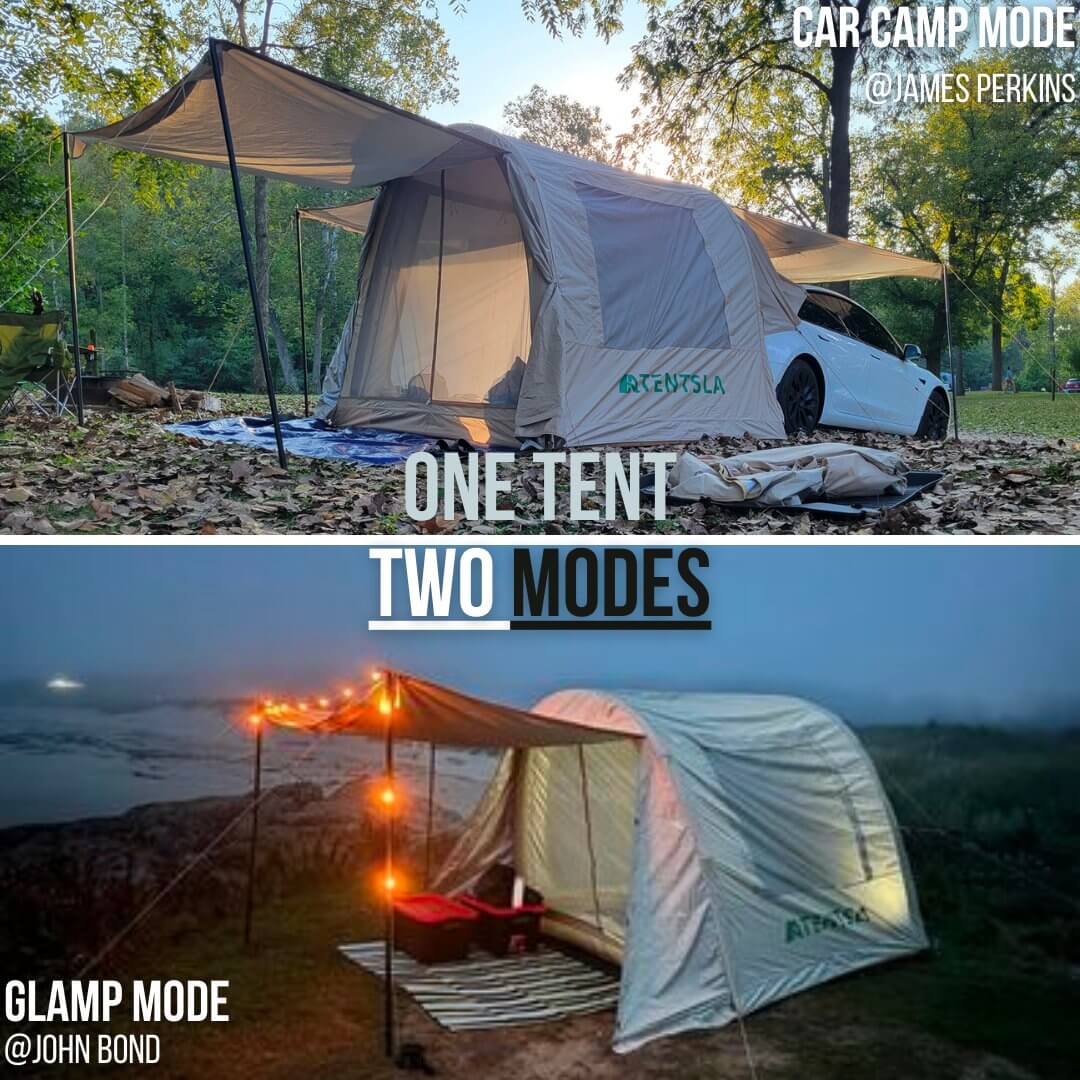
While understanding individual design features is critical for trip planning, long-term overlanding comfort relies on selecting a manufacturer that understands complete system integration. TENTSLA develops high-performance vehicle-integrated shelters engineered to deliver exceptional stability, fast setup speeds, and seamless cabin connections. By utilizing premium multi-layer fabrics and advanced pneumatic support systems, our gear allows EV owners to explore the backcountry with confidence.
The TENTSLA X1 Tesla camping Tent represents the absolute pinnacle of electric vehicle shelter engineering. Designed for Tesla Model 3, Model Y, and Model X, the replaceable connector system ensures a secure and seamless fit for multiple vehicle models. The included windshield connector also allows the tent to function as a standalone camping tent, giving you maximum flexibility for road trips, overlanding, festivals, and outdoor escapes. Featuring durable materials for long-term outdoor use, it functions as a spacious interior for comfortable camping that handles harsh mountain weather effortlessly.
Furthermore, building an efficient outdoor setup requires choosing accessories designed specifically for electric vehicle storage spaces. To view our full line of tailored equipment, you can explore our complete Best Tesla Camping Gear collections, or discover essential exterior add-ons by checking our Tesla Outdoor Accessories page. For an in-depth look at our proprietary pneumatic design features, overlanding teams can visit our dedicated portal for the Car Camping Tent for Tesla segment.
To maximize night-time comfort and enhance insulation when sleeping on fold-flat seats, we recommend adding premium, high-density blankets to your gear list. Campers can integrate our heavy-duty, cross-woven Camping Blanket for Outdoor Trips to add extra comfort to their bedding. Finally, to learn more about upcoming owner gatherings, read real-world field feedback, or share your own travel stories with a global community of EV adventurers, feel free to explore our centralized Tesla Camping Experience blog and connect with the community via our Tesla Camping Events portal.
6. Frequently Asked Questions (FAQs)
7. Academic and Industry References
1. Society of Automotive Engineers (SAE). (2024). Thermal Management Systems and Auxiliary Energy Draw Analysis of Stationary Electric Vehicles in Extended Camp Environments. EV Sourcing Journal Portfolio.
2. International Organization for Standardization. (2022). Textiles — Determination of resistance to water penetration — Hydrostatic pressure test for outdoor performance materials (ISO Standard No. 811:2018). Available via (https://www.iso.org/)
3. Compressed Air and Gas Institute. (2025). Structural Stability and Pressure Retention Metrics of Inflatable High-Tensile TPU Air Beam Frameworks in Temporary Shelters. Industrial Reference Database.