


The Tesla Cybertruck has completely shattered conventional overland philosophy. For decades, truck camping required noisy gas generators, messy propane stoves, and fragile fiberglass camper shells. The Cybertruck replaces all of that with a 123 kWh battery pack, a motorized armored tonneau cover, and native 240V power outlets right in the bed. However, treating this angular electric beast like a standard Ford F-150 is a massive failure in judgment. If you want to successfully navigate the outdoors, you must understand the unique geometry and electrical architecture of the vehicle. You are not just pitching a tent; you are managing a mobile microgrid.

From our experience at TENTSLA, optimizing the 6-foot Vault (the bed) requires precision-engineered gear. Generic truck accessories simply slide around, block critical HVAC vents, or fail to fit the harsh geometric angles of the bed walls. Whether you are planning a weekend at a local state park or a week-long off-grid excursion, you need a highly specific strategy. In this expert guide, we deliver the definitive tips for tesla cyber truck camping, cutting through the marketing noise to tell you exactly what gear is worth buying, what standard equipment you should throw away, and how to harness the true potential of your electric fortress.
Quick Answer
Successful Cybertruck overland adventures rely on maximizing the climate-controlled "Vault" and leveraging the vehicle's massive internal battery. The top tips for tesla cyber truck camping include: utilizing a custom-tailored Oxford fabric mattress that accounts for the Vault's wheel wells, powering induction cooktops via the bed's 240V/120V outlets, and engaging Camp Mode to maintain perfect interior temperatures all night without draining the battery excessively. In most professional situations, we strongly advise against using generic inflatable truck mattresses or standalone gas generators. Instead, upgrade to purpose-built gear like the TENTSLA system to achieve a seamless, zero-emission luxury camping experience.
Table of Contents
- What It Is: Cybertruck Camping Explained
- How It Works: The Vault & Camp Mode
- 6 Essential Tips for Tesla Cyber Truck Camping
- Benefits of Electric Overlanding
- Limitations and Harsh Realities
- Who Should Use It & Who Does Not Need It
- Common Mistakes to Avoid
- Crucial Buying Considerations
- Expert Recommendation
- Essential Comparison Tables
- The Bottom Line
- Frequently Asked Questions
What It Is: Cybertruck Camping Explained
Cybertruck camping refers to the practice of utilizing the Tesla Cybertruck as your primary shelter, power source, and climate control center while in the backcountry. Unlike traditional rooftop tent setups that expose you to the elements and aerodynamic drag, Cybertruck camping primarily occurs inside the "Vault"—the 6-foot by 4-foot composite bed covered by a motorized, load-bearing aluminum tonneau cover. When the tonneau is closed, the bed becomes a highly secure, weather-proof sleeping cabin. When the tailgate is dropped, the usable floor space extends beyond 8 feet, providing ample room for tall adults.
How It Works: The Vault & Camp Mode
The mechanics of sleeping in a Cybertruck rely on Tesla's proprietary software and electrical routing. When you activate "Camp Mode" via the center screen or mobile app, the vehicle disables its auto-off functions and sentry alarms that would otherwise trigger while you move around inside. It routes conditioned air directly from the cabin into the Vault (if the mid-gate is open or modified) or maintains the main cabin climate if you choose to sleep with the seats folded flat. Simultaneously, the vehicle energizes the bed outlets, providing a staggering 9.6 kW of continuous power output—enough to run a residential air conditioner, a heavy-duty induction stove, and an espresso machine all at once.
6 Essential Tips for Tesla Cyber Truck Camping
If you want to execute a flawless outdoor trip, you must abandon analog camping mindsets. Here are our top 6 tactical tips for tesla cyber truck camping.
1. Maximize the Vault with a Custom Mattress
Do not throw a rectangular generic air pad into the back of a Cybertruck. The wheel wells and angular side panels will force the mattress to fold, resulting in a terrible night's sleep. You must purchase a mattress cut specifically for the exact dimensions of the Vault. The Tesla Trunk Mattress is engineered to sit perfectly flush against the composite walls, ensuring maximum sleeping surface area.
TENTSLA Mattress for Tesla Trunk

MATERIAL: Heavy-Duty Oxford fabric
COLOR: Silver (upside) & Black (downside)
WEIGHT: 4.5kg / 10lbs
WARRANTY: 12 months
SHIPPING: This item ships from Hong Kong, free shipping worldwide.
View TENTSLA Mattress2. Harness the 240V and 120V Outlets Correctly
For commercial users or serious overlanders, the bed outlets are the Cybertruck's greatest asset. One of the best tips for tesla cyber truck camping is to ditch your propane canisters entirely. Bring a dual-burner induction cooktop and plug it directly into the 240V outlet. Not only is induction faster and safer, but it eliminates the risk of carbon monoxide pooling in the bed area. Use the 120V outlets to power your Portable Air Pump for Tent setups or rapid-charge your e-bikes.
3. Leverage Camp Mode for Unmatched Climate Control
In our testing, running Camp Mode in freezing temperatures consumes roughly 10-15% of the vehicle's battery over an 8-hour period. This is a brilliant trade-off for waking up in a 70-degree bed. Ensure that your battery is above 20% before going to sleep; Tesla software will automatically disable Camp Mode if the battery dips below 20% to ensure you have enough range to reach a Supercharger.
4. Expand Your Footprint with an Exterior Shelter
While the Vault is highly secure, it can feel claustrophobic during a rainstorm. Attaching a custom Tesla Camping Tent to the rear of the Cybertruck creates an expansive "mudroom" where you can stand up, change clothes, and store muddy hiking boots while keeping the sleeping quarters pristine. Standard truck tents will not fit the Cybertruck's sloped sails; you need geometric-specific canvas.
5. Master the Sub-Trunk Storage
The Cybertruck features a hidden storage locker under the bed floor. One of the most practical tips for tesla cyber truck camping is to use this sub-trunk strictly as a cooler or dirty gear locker. It features a drain plug, meaning you can fill it with ice for beverages, or throw wet wetsuits inside, keeping the main sleeping area of the Vault completely dry and odor-free.
6. Conserve Energy with Smart Lighting
While the Cybertruck has bright bed lights, leaving them on all night is unnecessary and can attract insects. Bring low-draw, USB-rechargeable ambient lanterns. You can hang them from the internal L-track system using carabiners, creating a soft, warm glow that enhances the Outdoor Tesla Lifestyle without creating harsh shadows.
Benefits of Cybertruck Camping
The transition from internal combustion engine (ICE) camping to EV camping is profound. The primary benefit is zero-emission power. You can idle the vehicle's HVAC system all night in a closed garage or dense forest without suffocating on exhaust fumes. Secondly, the physical security is unmatched. Sleeping under a locked, motorized aluminum tonneau cover offers absolute protection from bears, severe weather, and potential theft—something a canvas rooftop tent simply cannot provide.
Limitations and Harsh Realities
Despite its brilliance, there are limitations. The Cybertruck is a heavy, wide vehicle. For heavy-duty applications like deep rock crawling on narrow Jeep trails, the turning radius and width will lead to severe body pin-striping. Additionally, if you tow a heavy camper trailer to your site, your range will be cut in half, forcing you to meticulously map out Supercharger stops along your route. Furthermore, the sloped aerodynamic roofline restricts headroom at the front of the bed; you must sleep with your head toward the tailgate for maximum clearance.
Who Should Use It & Who Does Not Need It
Who should use it: Technology enthusiasts, professional digital nomads, and overland travelers who demand high-voltage power for heavy equipment, Starlink dishes, and electric cooking. If you need a reliable, climate-controlled mobile basecamp, this is the apex vehicle.
Who does not need it: Minimalist backpackers or traditionalists who camp specifically to disconnect from screens and electricity. If you prefer the analog experience of chopping wood and sleeping on the ground, outfitting a Cybertruck with thousands of dollars of tech is entirely redundant. It is not worth upgrading if you only camp once a year in your backyard.
Common Mistakes When Camping in a Cybertruck
From our experience, beginners routinely make the mistake of leaving "Sentry Mode" active while sleeping inside the vehicle. The internal cameras and motion sensors will detect your movement, repeatedly flashing the headlights and blasting music to deter what it thinks is a break-in. Always disable Sentry Mode when you are occupying the vehicle.
Another error is failing to level the truck. While the Cybertruck has an adaptive air suspension with an "Extract" mode, you must still park on relatively flat ground. Sleeping at an incline will cause you to slide down your mattress all night. Use the suspension settings to manually tweak the ride height until the bed is perfectly horizontal.
Buying Considerations for Cybertruck Gear
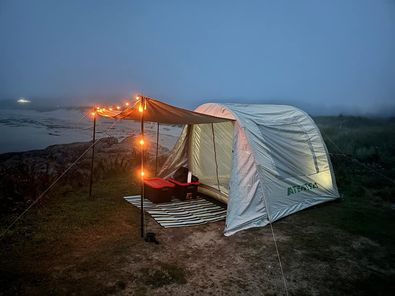
When investigating Camping Accessories for Tesla, dimensional accuracy is paramount. Because the Cybertruck does not have 90-degree corners like a standard pickup, generic gear is a waste of money. You must verify that any mattress, tent, or storage bin is specifically CAD-modeled for the Cybertruck. For your sleeping arrangements, always opt for heavy-duty Oxford fabric over cheap PVC vinyl; Oxford fabric resists the cold ambient temperatures of the truck bed much better and prevents micro-punctures from debris.
Expert Recommendation
We take a firm stance on this: if you own a Cybertruck, you are doing yourself a disservice by not utilizing its overland capabilities. However, you must pair it with the right equipment. We recommend immediately investing in the TENTSLA ecosystem. By combining the tailored Oxford fabric trunk mattress with our integrated tailgate tents, you effectively double the livable square footage of the vehicle. For anyone looking for the absolute best tips for tesla cyber truck camping, our paramount advice is to stop buying disposable outdoor gear. Buy permanent, high-quality, vehicle-specific equipment that matches the engineering integrity of the truck itself. Start building your kit with our Tesla Road Trip Essentials.
Essential Data & Buying Guide Tables
| Component | Our Recommendation | Why It Matters |
|---|---|---|
| Sleeping Surface | TENTSLA Tailored Oxford Mattress | Fits around wheel wells; superior puncture resistance. |
| Cooking Gear | Dual-Burner 240V Induction Cooktop | Zero emissions; boils water in seconds via bed outlets. |
| Climate Control | Native Tesla Camp Mode | Maintains precise temps; uses minimal high-voltage battery. |
| Space Expansion | Tailgate-mounted TENTSLA X1 | Provides standing room and dry storage outside the Vault. |
| Feature | Tesla Cybertruck | Standard ICE Truck (e.g., F-150) |
|---|---|---|
| Power Source | 123 kWh internal battery (Silent, 9.6kW output) | Requires loud external gas generator. |
| Climate Control | Electric AC/Heat runs safely all night. | Cannot run engine safely while sleeping (Carbon Monoxide risk). |
| Bed Security | Motorized, locking vault cover withstands extreme force. | Canvas or fiberglass shells are easily compromised. |
| Refueling | Requires Supercharger or 240V RV hookup. | Can carry extra jerry cans of gasoline anywhere. |
| Pros (Advantages) | Cons (Limitations) |
|---|---|
| Absolute protection from wildlife and severe weather. | Slanted roofline drastically limits headroom at the front of the bed. |
| Zero setup time if the mattress is left inflated under the tonneau. | Requires leaving the tailgate or mid-gate open for proper HVAC airflow. |
| Silent, vibration-free sleeping environment. | Condensation can build up on the aluminum tonneau without ventilation. |
The Bottom Line
The Cybertruck is not a gimmick; it is the most capable mobile power station and overland shelter currently on the market. By executing these tips for tesla cyber truck camping—specifically utilizing Camp Mode, leveraging the 240V outlets, and upgrading to geometric-specific sleeping gear like the TENTSLA Oxford mattress—you elevate your outdoor experience from rugged survival to zero-emission luxury. Stop relying on outdated gas-powered camping logic. Embrace the electric architecture, invest in high-quality, vehicle-specific accessories, and transform your truck into the ultimate off-grid fortress.
Frequently Asked Questions
No, not entirely. In mild to moderate temperatures, Camp Mode typically consumes only 8% to 12% of the battery over an 8-hour period. In extreme freezing conditions where the heater must work aggressively, you may see a 15% to 20% drop. The vehicle is programmed to shut off Camp Mode automatically if the battery falls to 20%, ensuring you are never stranded without driving range.
No. Standard truck bed tents are designed for 90-degree right angles and square bed rails. The Cybertruck's sloped "sail" pillars and unique tonneau tracks render universal tents useless. You must purchase a tent engineered specifically for the Cybertruck's geometry to ensure a weather-tight seal and structural stability.
When sleeping under the closed aluminum tonneau cover, human breath creates massive condensation. To mitigate this, you must allow for airflow. We recommend cracking the tonneau cover by just one inch or keeping the mid-gate slightly open to allow the vehicle's conditioned air to circulate and dehumidify the Vault space.
Authoritative References & Further Reading
- Department of Energy (DOE): Insights into electric vehicle battery efficiencies, auxiliary power outputs, and thermal management during stationary use. Review DOE EV Guidelines
- MotorTrend: Comprehensive instrumented testing and practical reviews of the Tesla Cybertruck's payload, bed geometry, and overlanding capabilities. Read MotorTrend CyberTruck Testing
- SAE International: Engineering standards and technical papers outlining the safety protocols and power delivery capabilities of 48-volt vehicle architectures and high-voltage onboard inverters. Explore SAE EV Standards