


Finding the best car tent for camping in 2026 requires looking past generic nylon domes and evaluating how seamlessly a shelter integrates with your vehicle's architecture. The modern outdoor industry has shifted aggressively toward hybrid shelters that transform your hatchback, SUV, or EV into a climate-controlled basecamp. In most professional situations, sleeping on the uneven ground in a standard standalone tent is an unnecessary compromise when your vehicle can act as an anchor, a power station, and an HVAC unit.

Quick Answer
The best car tent for camping is the TENTSLA X1, specifically engineered for EV owners who want to leverage their vehicle's climate control (Camp Mode) without the hassle of traditional fiberglass poles. For traditional ICE vehicles needing maximum standalone living space, the Zempire Evo TM V2 provides unmatched premium air-frame luxury, while The North Face Wawona 6 remains the most reliable traditional crossover tent on the market. We recommend avoiding standard tailgate attachments if you drive a gas-powered vehicle due to the severe carbon monoxide risks associated with exhaust proximity.
Table of Contents
What It Is
A car tent is an engineered outdoor shelter designed to physically integrate with your vehicle, utilizing the trunk, hatchback, or roof as a structural anchor or an extended living space. Unlike traditional standalone tents, these systems feature a specialized connective sleeve (often called a "sock") that wraps around the open rear hatch of an SUV, minivan, or electric vehicle. This essentially merges your vehicle's cabin with the tent's footprint, creating a massive, multi-room shelter.
How It Works
In our testing, the mechanics of a premium car tent rely on absolute weather sealing and structural tension. The flexible sleeve slips over your open tailgate and is secured to the vehicle's body using heavy-duty straps, bungee cords, and sometimes magnetic strips to prevent paint damage. Once secured, you can leave the trunk open overnight, allowing direct access to the vehicle's interior. Before setting up your shelter, understanding Sleeping in Tesla Model Y Tips is mandatory for optimizing your climate control and preserving battery life overnight.
Benefits of Upgrading
The primary advantage of the best car tent for camping is climate control integration. By connecting your tent to an EV like a Tesla, you can run "Camp Mode" to push air conditioning or heat directly into the attached tent without producing fatal exhaust emissions. Additionally, you gain instant access to your vehicle's onboard power outlets, infotainment systems, and secure, lockable storage for valuables. If you rely on your EV's battery, you must calculate your Tesla Model Y Camping Duration to ensure you have enough range to drive home after a long weekend off the grid.
Limitations to Consider
The most significant drawback to an attached car tent is vehicle immobility. Once the tent is pitched and secured to the tailgate, you cannot simply drive away to the trailhead or the grocery store without detaching and sealing the entire setup. Furthermore, for owners of Internal Combustion Engine (ICE) vehicles, running the car to use the heater or AC is a lethal mistake, as exhaust fumes will accumulate instantly inside the enclosed space. This is why EVs possess a massive structural advantage for this specific style of camping.
The 10 Best Car Tent for Camping Models in 2026
Finding the best car tent for camping requires navigating a sea of identical-looking nylon structures. From our experience, these ten models represent the absolute pinnacle of outdoor engineering for 2026.
- TENTSLA X1: The undisputed champion for EV owners. This premium air-frame tent eliminates fiberglass poles entirely and creates a flawless seal with Tesla vehicles, allowing you to seamlessly integrate Camp Mode into a massive living space.
- The North Face Wawona 6: For a traditional pole setup, the Wawona 6 offers exceptional vestibule space. While it acts as a standalone tent rather than a tailgate attachment, its "palatial" footprint makes it a favorite for car campers who prefer not to attach fabric to their vehicle.
- Zempire Evo TM V2: A massive, ultra-premium inflatable air tent that delivers unmatched luxury. It carries a heavy packed weight but offers the most durable, storm-proof living space for heavy-duty basecamps.
- Napier Sportz Dome-To-Go: An industry veteran for hatchback attachments. It offers a reliable, universal fit for smaller SUVs and CUVs, though users must be vigilant about securing the vehicle exhaust area.
- CORE 9 Instant Cabin: The best budget option for large groups needing standing room. Its umbrella-style instant frame deploys in under two minutes, though it lacks the severe weather resistance of higher-end models.
- Gazelle T4 Hub: A rapid pop-up design that bridges the gap between ground tents and vehicle awnings. It is incredibly fast to pitch, making it ideal for overlanders who frequently move camp.
- VEVOR Inflatable SUV Tent: A functional, budget-friendly air-frame option that speeds up pitching time, though the fabric denier and pump quality reflect its lower price point.
- Rightline Gear SUV Tent: An excellent universal fit that does not require a floor footprint under the vehicle attachment, allowing you to pull away easily if you need to run errands.
- Thule Tepui Explorer Ayer 2: A classic rooftop alternative for overlanders who prefer to sleep elevated off the ground, free from uneven terrain and ground moisture.
- Kelty Sideroads Car Awning: For those who do not need a fully enclosed sleeping area, this simple shelter provides excellent sun and rain protection directly off the side or rear of your hatchback.
Who Should Use It
We recommend these shelters for digital nomads, EV owners, and families who prioritize comfort and payload capacity over ultralight mobility. If you want to sleep on a proper mattress rather than a thin foam pad, integrating your vehicle is the smartest choice. If you prefer sleeping inside the cabin, a dedicated Tesla Model 3 Sleeping Pad or a custom-contoured Tesla Trunk Mattress is mandatory. Enhancing your setup with a Self Inflating Camping Mattress ensures you won't feel the uneven ground.
Who Does Not Need It
For beginners embarking on multi-day backcountry backpacking trips, a heavy car tent is entirely useless. Likewise, extreme overlanders who need rapid deployment in hostile environments usually prefer hard-shell rooftop tents that deploy in thirty seconds, rather than wrestling with a heavy ground-tent sleeve.
Common Mistakes
The most catastrophic mistake you can make is failing to seal the bumper gap. If the elastic sleeve does not tightly hug your vehicle's undercarriage, mosquitoes and rain will flood the tent. Another profound error is attempting to manually inflate a massive air tent with a cheap hand pump. For integrated air-frame tents, packing a reliable Portable Air Pump for Tent saves you twenty minutes of manual labor and ensures the air beams reach the correct PSI for structural rigidity.
Buying Considerations
When searching for the best car tent for camping, you must audit the fabric denier. A 210D to 420D Oxford fabric with a silver-coated UV layer will drastically outlast thin 68D polyester. Ensure the tent features a freestanding mode; this allows you to detach the vehicle sleeve, zip up the rear door, and drive away without the tent collapsing. Equipping your vehicle with proper Model Y Exterior Accessories provides vital attachment points for guy lines in high winds.
Expert Recommendation
For commercial users and serious EV campers, we unequivocally recommend inflatable air-frame structures over traditional fiberglass poles. Once you master your Tesla Camping Setup, you will never want to thread another aluminum pole in the dark. We highly advise reviewing our Tesla Camping Gear and Best Tesla Camping Gear collections to complete your rig. Explore our Tesla Outdoor Accessories and check out our Car Camping Tent for Tesla options to elevate your off-grid adventures.
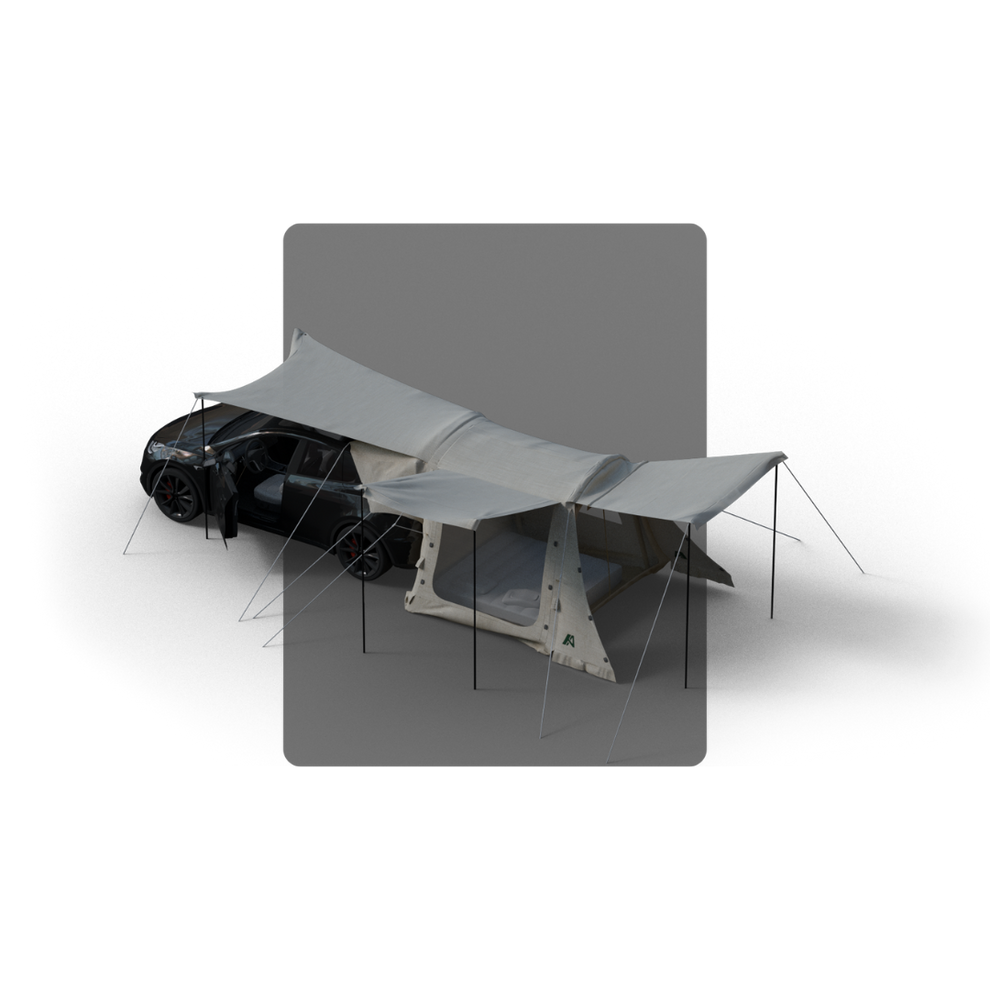
TENTSLA X1 Tesla Camping Tent
Tentsla uses carefully selected outdoor-grade materials to deliver excellent durability, water resistance, and long-lasting performance in various weather conditions. Designed specifically for the Tesla Model 3, Model Y, and Model X.
- Inner Fabric: 210D Oxford Fabric
- Outer & Floor Fabric: Heavy-duty 420D Oxford Fabric
- Support System: Aluminum poles & advanced inflatable air-frame
- UV Protection: Silver Coated Fabric for heat insulation
Fast Inflatable Installation: Tentsla’s advanced inflatable air-frame system enables fast and effortless setup in just a few minutes. Simply inflate the structure, secure the tent, and start enjoying your outdoor experience without the hassle of traditional tent assembly.
View the TENTSLA X1Summary and Comparison Tables
| Tent Model | Best Suited For | Key Technology |
|---|---|---|
| TENTSLA X1 | Tesla/EV Owners | Inflatable Air-Frame & Tailgate Sleeve |
| The North Face Wawona 6 | Families & Small Groups | Massive Standalone Vestibule |
| Zempire Evo TM V2 | Luxury Basecamps | Heavy-Duty Inflatable Structure |
| Gazelle T4 Hub | Overlanders | Rapid Pop-Up Hub Design |
| Feature | Inflatable Air-Frame (e.g., TENTSLA X1) | Traditional Poles (e.g., Wawona 6) |
|---|---|---|
| Setup Speed | Under 3 minutes with electric pump | 10-20 minutes manual assembly |
| Wind Resistance | Excellent (Bends and rebounds) | Moderate (Poles can snap under extreme load) |
| Packed Weight | Heavier (Due to thick TPU air tubes) | Lighter |
| Ease of Use | Perfect for solo campers | Often requires two people for larger models |
| Pros (Advantages) | Cons (Limitations) |
|---|---|
| Seamless access to vehicle storage and power outlets. | Vehicle is immobilized while the tent is attached. |
| Allows EV owners to use climate control (Camp Mode) inside the tent. | Dangerous carbon monoxide risk if used with an idling gas vehicle. |
| Increases overall sleeping footprint without needing a massive ground tent. | Requires precise strap adjustment to prevent bugs from entering the bumper gap. |
Frequently Asked Questions
Can I run my car's AC or heater while attached to a car tent?
If you drive a fully electric vehicle (EV) like a Tesla, yes. You can safely run Camp Mode to push climate-controlled air into the tent. If you drive an Internal Combustion Engine (ICE) vehicle, absolutely not. Running a gas-powered vehicle while attached to a tent will trap lethal carbon monoxide inside the sleeping area.
Will a car tent damage my vehicle's paint?
High-quality car tents utilize soft, elasticized fabrics, rubber-coated hooks, and padded straps to prevent scratching. However, if your vehicle is covered in thick dirt or mud before attaching the tent, the friction of the fabric against the dirt acts like sandpaper. Always wipe down your hatch and bumper before securing the tent sleeve.
Are inflatable tents better than traditional pole tents?
For commercial and heavy-duty car camping, yes. Inflatable air-frame tents eliminate the frustration of threading fiberglass poles and are virtually indestructible in high winds; if a gust flattens the tent, the air beams simply pop back up without snapping. Their only drawback is a slightly heavier packed weight.
Authoritative Industry References
To ensure our equipment evaluations are grounded in rigorous testing and safety standards, we reference data from the following authorities:
- OutdoorGearLab - Comprehensive field testing data regarding the weather resistance, setup times, and livability of traditional crossover tents like The North Face Wawona 6 and Zempire Evo TM V2.
- SwitchbackTravel - Industry analysis on the durability of 210D vs 68D polyester fabrics and the transition toward hybrid pole-and-hub systems in modern family camping shelters.
- Napier Outdoors Technical Warnings - Engineering safety standards and explicit carbon monoxide hazard warnings regarding the attachment of fabric structures to the exhaust zones of internal combustion engine vehicles.