


Every Tesla owner who activates Camp Mode for the first time experiences the same realization: having climate-controlled, battery-powered air conditioning running all night is brilliant, but sleeping on an uncalibrated mattress ruins the entire adventure. Too many campers toss a generic big-box camping pad into their crossover, only to discover it pinches violently against the plastic wheel wells, buckles down the middle, or leaves them wedged against the glass roof. When shopping for sleep gear, analyzing the exact Tesla Model Y air mattress dimensions is the single most critical factor that determines whether you wake up refreshed or crippled with lumbar stiffness. The cargo hold of the Model Y is not a standard rectangle; it is an asymmetrical, contoured space with strict mechanical pinch points that require deliberate geometric planning.

Quick Answer: Exact Tesla Model Y Air Mattress Dimensions
For direct in-cabin sleeping with the second-row seats folded flat and front seats pushed forward, the target Tesla Model Y air mattress dimensions are 188 to 191 cm (74 to 75 inches) in total length, tapering from 127 to 130 cm (50 to 51 inches) across the upper shoulders down to 96 to 100 cm (38 to 39.5 inches) between the rear wheel wells. Thickness must stay strictly between 7.5 and 11 cm (3 to 4.5 inches) to preserve at least 58 cm (23 inches) of vertical sitting clearance beneath the panoramic glass. If you require standard luxury bed heights (35 to 40 cm / 14 to 16 inches) and true residential width (150 cm / 59 inches), you must expand outside the cabin hatch using an integrated tailgate annex like the Tentsla X1 Tent paired with an elevated high-profile platform.
Article Directory
- The Cargo Floor Reality: Wheel Wells, Gaps, and Angles
- Quick Summary Table: Model Y Cargo Floor vs. Mattress Sizing
- In-Cabin Dimensions Broken Down (cm and inches)
- The Vertical Clearance Trap: Why Thickness Matters More Than Length
- In-Cabin Mattresses vs. Extended Tailgate Tent Mattresses
- Product Spotlight: TENTSLA Self-Inflate Double Mattress
- Direct Dimensional Comparison Table across Mattress Formats
- Pros and Cons: In-Cabin Custom Mattress vs. High-Profile Tent Air Bed
- Who Can Sleep In-Cabin vs. Who Needs an External Annex
- Costly Sizing and Sourcing Mistakes Tesla Campers Make
- Essential Buying Considerations for Tesla Air Mattresses
- Expert Final Verdict
- Frequently Asked Questions
- Authoritative References & EV Camping Standards
The Cargo Floor Reality: Wheel Wells, Gaps, and Angles
To understand why off-the-shelf mattresses fail inside an electric crossover, you must audit the vehicle interior with a tape measure. When you fold the 60/40 split second-row seats down in a Model Y, you do not get a flat, uniform cargo floor. You get a multi-plane surface defined by three distinct physical realities:
- The Wheel Arch Pinch Point: The absolute widest area of the cabin sits behind the front seats, spanning roughly 130 cm (51 inches) across the door armrests. However, directly over the rear axle, the molded interior plastic trim intrudes aggressively, narrowing the usable floor to a strict 96.5 cm (38 inches). Any air bed that measures wider than 39 inches at the foot will bow upward into a taco shape.
- The Second-Row Incline: The folded second-row seatbacks do not rest at a true 180-degree horizontal plane. They settle at a subtle 5- to 8-degree upward incline toward the front of the vehicle. A quality Tesla Trunk Mattress must have enough structural firmness to prevent your body from sliding backward toward the liftgate during the night.
- The Footwell Gap: When you push both front driver and passenger seats fully forward in Camp Mode, a 25 to 30 cm (10 to 12 inch) chasm opens between the back of the front center console and the folded rear headrests. Without a firm headboard extension bridge or supportive footwell cubes, the top 20% of an air mattress will plunge into the floorboards, leaving your head dangling unsupported.
In our testing, ignoring these three mechanical boundaries turns an expensive weekend trip into an orthopedic disaster. Measuring your Tesla Model Y air mattress dimensions requires matching both the horizontal contours and the vertical constraints of the vehicle.
Quick Summary Table: Model Y Cargo Floor vs. Mattress Sizing
| Measurement Location | Interior Cabin Clearance (cm) | Interior Cabin Clearance (inches) | Target Mattress Spec (cm / in) | Operational Impact |
|---|---|---|---|---|
| Total Length (Seats Forward) | 193 – 198 cm | 76 – 78 in | 188 – 191 cm / 74 – 75 in | Allows hatch to latch cleanly without compressing rear glass |
| Shoulder Width (Max Interior) | 127 – 132 cm | 50 – 52 in | 127 – 130 cm / 50 – 51 in | Fills cabin wall-to-wall without squeezing door seals |
| Wheel Well Width (Pinch Point) | 96.5 – 99 cm | 38 – 39 in | 94 – 98 cm / 37 – 38.5 in | Prevents mattress from buckling or folding down the middle |
| Vertical Ceiling Height | 68 – 72 cm | 27 – 28.5 in | 7.5 – 11 cm / 3.0 – 4.5 in thick | Preserves 58+ cm of headroom so you can sit up comfortably |
| Tailgate Tent Extension Width | 150 – 165 cm | 59 – 65 in | 150 cm / 59 in (Full Double) | Allows full-size residential double beds in an annex tent |
In-Cabin Dimensions Broken Down (cm and inches)
1. Length Constraints: 188 to 191 cm (74 to 75 inches)
From the closed rear liftgate latch to the folded second-row headrests, the Model Y offers roughly 170 cm (67 inches) of floor space if the front seats remain in standard driving positions. However, when you access the infotainment screen and slide the front bucket seats fully forward, total usable length expands to roughly 196 cm (77 inches).
In most professional situations, we recommend choosing an air mattress that measures exactly 188 to 191 cm (74 to 75 inches). If a mattress is manufactured at 200 cm (78.7 inches), the bottom edge will press firmly against the motorized rear hatch glass. When the power liftgate closes, the motor safety sensor will either detect the obstruction and reopen the hatch in the middle of the night, or force the mattress against the glass, stressing the power liftgate struts.
2. The Tapered Width: 130 cm Shoulders down to 98 cm Feet
Standard home mattresses are rectangular. The interior of the Model Y is decidedly contoured. Across the passenger doors, you have roughly 130 cm (51 inches) of elbow room, which easily accommodates two adults sleeping side by side. However, past the seatbelt anchors and across the rear wheel suspension towers, the interior narrows down to 96.5 to 99 cm (38 to 39 inches).
Because of this, an authentic, dedicated in-cabin mattress must feature a contoured silhouette. The top two-thirds of the mattress must measure roughly 127 to 130 cm wide to fill the cabin, while the lower third must step down or taper cleanly to 96 to 98 cm. If you attempt to jam a non-tapered 54-inch Full mattress inside, the wheel arches will pinch the air bladder inward, forcing the middle of the mattress upward into a ridge that rolls both sleepers toward the doors.
The Vertical Clearance Trap: Why Thickness Matters More Than Length
The single most catastrophic mistake first-time EV campers make is buying a plush, 25 to 40 cm (10 to 16 inch) traditional home air mattress. They assume that thicker equals more comfortable. Inside a crossover with a sloping aerodynamic roofline, excessive thickness ruins the camping experience.
The vertical clearance from the folded seatback fabric to the panoramic glass roof measures between 68 and 72 cm (27 to 28.5 inches). Consider the math:
- If you place a 10-inch (25 cm) tall air mattress inside the cabin, you are left with barely 43 cm (17 inches) of space between your nose and the glass.
- If you place a 16-inch (40 cm) elevated home air bed inside, you have less than 30 cm (12 inches) of space. You cannot roll over, you cannot read a book, and waking up abruptly means smashing your head into structural cross-members.
In-Cabin Mattresses vs. Extended Tailgate Tent Mattresses
While in-cabin sleeping is convenient for fast highway rest stops, the strict 38-inch wheel arch pinch point means two adults are essentially sleeping on a narrow twin-plus surface. For extended camping, many Tesla owners expand their usable space outward using a dedicated Car Camping Tent for Tesla.
When you back your crossover into an integrated automotive annex tent like the Tentsla X1, you bypass the vehicle's interior dimensional limits entirely. You leave the rear liftgate open, venting active Camp Mode heating and air conditioning directly into the insulated tent living space. Suddenly, your mattress dimensions are no longer restricted by a 38-inch wheel arch or a 27-inch ceiling clearance.
In a tailgate tent annex, you can deploy a full-sized, high-profile mattress measuring 197 cm long, 150 cm wide, and 40 cm tall (77.5 x 59 x 15.7 inches). You enjoy true residential Queen-width sleeping room, 6.5 feet of standing headroom, and the freedom to get in and out of bed without crawling across your partner. If you want to elevate your vehicle setup beyond cramped cabin limits, review our breakdown of the Tesla Model Y Camper Kits to see how modular platforms expand your campsite footprint.
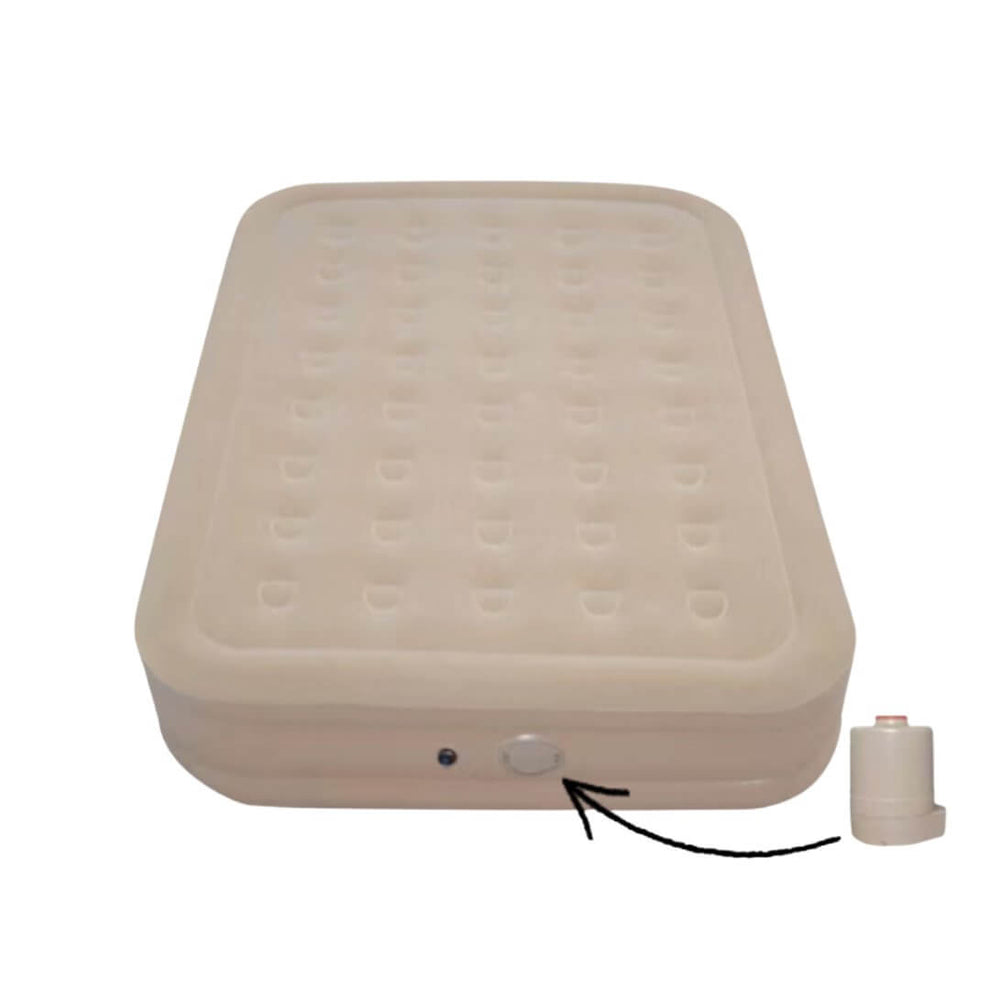
Flagship Sleep System: TENTSLA Self-Inflate Mattress (Double)
When transitioning from cramped in-cabin overnighting to an expansive basecamp setup, the TENTSLA Self-Inflate Double Mattress sets the benchmark for outdoor sleeping comfort. Engineered specifically for seamless pairing with the Tentsla X1 tailgate tent system, it provides residential-grade mattress elevation directly connected to your Tesla's climate control.
| Retail Price | $299.00 USD (Direct Value) |
| Dimensions (cm) | 197 cm Length × 150 cm Width × 40 cm Height |
| Dimensions (Inches) | 77.5 in Length × 59.0 in Width × 15.7 in Height |
| Material Architecture | Heavy-duty puncture-resistant PVC & soft flocking fabric coated ABS |
| Inflation Hardware | Integrated built-in high-speed electric pump with charging cable |
| Included Kit | Mattress, electric pump, charging cable, carry bag, deflation nozzle, repair kit |
Our Practical Assessment: The 40 cm (15.7-inch) elevation keeps you off cold ground, allows natural sitting and standing transitions, and completely eliminates the body aches associated with low-profile pads. Check out the complete Self Inflating Camping Mattress specs to upgrade your overland camping comfort.
Direct Dimensional Comparison Table across Mattress Formats
| Mattress Category | Length (cm / in) | Shoulder Width | Foot Width | Thickness | Cabin Fit Verdict |
|---|---|---|---|---|---|
| Custom Contoured Model Y Pad | 188 – 191 cm / 74 – 75 in | 128 cm / 50.5 in | 96 cm / 38 in | 7.5 – 10 cm / 3 – 4 in | Perfect in-cabin fit; retains vertical headroom |
| Standard Twin Air Mattress | 190 cm / 75 in | 96 cm / 38 in | 96 cm / 38 in | 20 – 30 cm / 8 – 12 in | Fits wheel wells, but leaves 12" gap at shoulders; tall |
| Standard Full Air Mattress | 190 cm / 75 in | 137 cm / 54 in | 137 cm / 54 in | 20 – 35 cm / 8 – 14 in | Fails; buckles sharply between 38-inch wheel arches |
| TENTSLA Tent Double Mattress | 197 cm / 77.5 in | 150 cm / 59 in | 150 cm / 59 in | 40 cm / 15.7 in | Engineered for tailgate tent annexes; luxury height |
| Tri-Fold Memory Foam Pad | 185 – 188 cm / 73 – 74 in | 125 cm / 49 in | 94 cm / 37 in | 6.5 – 8 cm / 2.5 – 3 in | Fits in-cabin, but consumes 60% of sub-trunk when folded |
Pros and Cons: In-Cabin Custom Mattress vs. High-Profile Tent Air Bed
| Sleeping Architecture | Practical & Travel Advantages | Operational Limitations & Drawbacks |
|---|---|---|
|
In-Cabin Low-Profile Air Mattress (Direct Trunk Deployment) |
|
|
|
High-Profile Tent Annex Mattress (e.g., TENTSLA Double System) |
|
|
Who Can Sleep In-Cabin vs. Who Needs an External Annex
Every camper has different tolerances for space, privacy, and gear management. Understanding your physical requirements helps you decide whether to invest in an in-cabin pad or build out a full tailgate camp system.
Who Can Sleep Comfortably Inside the Cabin:
- Solo Overlanders and Business Travelers: A single adult sleeping diagonally across a 75-inch in-cabin mattress has plenty of room. You get exceptional leg extension, plenty of space for your phone and bag, and total climate control.
- Minimalist Couples on Fast Road Trips: If you are driving cross-country, arriving at charging stations at midnight, and leaving at 6:00 AM, in-cabin sleeping is unmatched. You pull over, fold the seats, inflate the mattress, and sleep without stepping out into bad weather. Before hitting the road, read our comprehensive Tesla Model Y Camp Mode Guide to optimize climate settings and minimize battery drain.
- Safety-Conscious Campers: Sleeping inside a locked vehicle provides peace of mind. Review our safety breakdown on Tesla Model Y Sleeping Safety for essential tips on ventilation, battery buffers, and sensor management.
Who Needs an External Tailgate Tent System:
- Campers Over 6 Feet 1 Inch (185 cm) Tall: If you are tall, sleeping in-cabin forces your toes against the tailgate glass or your head against the front seats. An external tent mattress lets you stretch out completely with room to spare.
- Families Camping with Kids or Pets: Squeezing two adults, a child, or a golden retriever inside a 38-inch cabin space is an exercise in frustration. A tailgate annex allows parents to sleep on an elevated double mattress while kids or dogs sleep in the connected living space.
- Multi-Day Basecampers: If you are staying at a national park for three days, shuffling duffel bags between the front seats and the trunk every morning and evening gets old fast. Setting up an integrated Tesla Camping Setup lets your car remain a functional day-trip vehicle while your bedroom stays assembled at camp.
Costly Sizing and Sourcing Mistakes Tesla Campers Make
Field Failure Warning: The most expensive mistake Tesla owners make is buying a generic Full-size air mattress from a department store. At 54 inches wide, it will not compress past the Model Y's 38-inch rear wheel arches; it forms a rigid center ridge that ruins sleep and can scuff your interior side panels.
- Ignoring the Footwell Head-Drop: Many budget air mattresses end right at the top of the folded seatback (around 66 inches long). When you stretch out, your pillow slips into the 10-inch footwell gap behind the front seats. Always look for a mattress with reinforced head extension panels, or bridge the gap using a dedicated Tesla Model Y Camping Platform.
- Relying on Thin PVC Without Secondary Flocking: Cheap pool-float-grade PVC squeaks loudly against the Model Y's vegan leather seatbacks every time you shift positions. Even worse, cold ambient air outside cools the air inside the mattress, pulling heat from your body. Insist on puncture-resistant, TPU-laminated fabrics or heavy-duty flocked tops with high thermal resistance.
- Over-Inflating Inside a Sealed Cabin: Pumping an air mattress rock-hard at 7:00 PM when the cabin is warm causes problems if you run the cabin heater at 72°F all night. As temperature rises, internal pressure climbs, stressing welded air seams. Inflate the mattress to roughly 90% capacity, lie down on it, and adjust the firmness to your body weight.
- Forgetting Fast Inflation Hardware: Manually blowing up a dual-chamber mattress with a foot pump after a 400-mile driving day is exhausting. Choose mattresses with built-in electric pumps, or keep a dedicated 12V high-flow inflator like the Portable Air Pump for Tent in your under-trunk storage bay.
Essential Buying Considerations for Tesla Air Mattresses
Before purchasing any sleep setup for your electric crossover, evaluate these four mechanical criteria to ensure long-term durability:
1. Air vs. Self-Inflating Memory Foam Hybrids
Pure air mattresses pack down small (roughly the size of a loaf of bread), fitting easily into the Model Y frunk. However, they lack edge support and can feel bouncy when two people share the bed. Self-inflating open-cell foam mattresses provide superior body contouring, zero rubber squeak, and insulation against cold air. The trade-off is pack size: foam mattresses take up roughly half of your deep sub-trunk when rolled up. Decide whether you prioritize compact storage or plush bed support.
2. TPU Lamination vs. Cheap PVC Construction
Thermoplastic Polyurethane (TPU) is lighter, more flexible, and completely odorless compared to cheap polyvinyl chloride (PVC). Traditional PVC off-gasses strong chemical smells that linger inside a sealed car cabin running recirculated air. If you choose an air mattress, ensure it is made with food-grade TPU or heavy flocked PVC certified free of harmful phthalates.
3. Real Pack Size and Storage Locations
The Model Y offers outstanding hidden storage: the front trunk (frunk) and the deep sub-trunk floor well. Check the deflated dimensions of your mattress kit. A well-designed in-cabin pad should fold into a carry bag no larger than 40 x 25 x 20 cm, leaving your lower trunk free for coolers and charging cables. Browse our curated collection of Camping Accessories for Tesla to find storage-optimized outdoor gear.
4. Matching Accessories with a Cohesive Outdoor Kit
Your mattress is part of a broader sleep ecosystem. Pair your sleep pad with tailored blackout window shades to block morning sun and protect your privacy at public Superchargers. For full-scale off-grid adventures, explore our full catalog of the Best Tesla Camping Gear to pair your mattress with matching tables, awnings, and power accessories.
Expert Final Verdict
In our professional assessment, if you primarily use your electric vehicle for weekend road trips, late-night Supercharger power naps, or solo backcountry overlanding, invest in a dedicated, custom-contoured in-cabin mattress. Settle for nothing less than exact Tesla Model Y air mattress dimensions: 188 to 191 cm (74 to 75 inches) in length, tapering from 128 cm (50 inches) at the shoulders down to 96 cm (38 inches) at the wheel wells, with a low-profile thickness under 10 cm (4 inches). For a deep dive into top-rated options across every Tesla platform, review our guide on the Tesla Camping Mattress market.
However, if you plan to camp for multiple days with a partner, want to sit upright in bed, and hate shuffling luggage between seats every morning, skip in-cabin compromises entirely. Connect an exterior tailgate tent like the Tentsla X1 to your rear hatch and deploy a high-profile luxury double mattress like the TENTSLA Self-Inflate Double Mattress. Gaining a 59-inch-wide, 15.7-inch-tall residential sleep surface backed by your Tesla's climate control delivers the ultimate balance of outdoor freedom and modern comfort.
Frequently Asked Questions
For inside the cabin, the ideal Tesla Model Y air mattress dimensions are 188 to 191 cm (74 to 75 inches) in length, tapering from 127 to 130 cm (50 to 51 inches) at the shoulders down to 96 to 100 cm (38 to 39.5 inches) at the rear wheel wells. Maximum recommended thickness is 7.5 to 11 cm (3 to 4.5 inches) to maintain usable vertical headroom beneath the panoramic glass roof.
A standard Twin mattress (38 x 75 inches / 96 x 190 cm) fits lengthwise and between the wheel wells, but it leaves significant unused space in the shoulder cubbies and slides around during sleep. A standard Full mattress (54 x 75 inches / 137 x 190 cm) does not fit between the wheel arches; it pinches sharply at the 38-inch wheel arches, causing the mattress to taco upward and ruin sleep ergonomics.
The vertical clearance from the folded rear seatback to the glass roof is roughly 68 to 72 cm (27 to 28.5 inches). When using a thin 7.5 to 10 cm (3 to 4 inch) mattress, you retain approximately 58 to 62 cm (23 to 24.5 inches) of headroom. Thick 25 to 40 cm (10 to 16 inch) traditional air beds leave less than 30 cm of space, making in-cabin sleeping claustrophobic.
When the front seats are slid fully forward in Camp Mode, a 25 to 30 cm (10 to 12 inch) gap opens between the front seatbacks and the folded second-row headrests. Dedicated Tesla mattresses feature firm headboard extension panels or inflatable footwell cubes that bridge this gap, preventing the top of the mattress from sagging into the floorboards.