


Yes. You can camp in the back of a Tesla Model Y, and for many drivers, it is one of the most practical ways to turn an electric SUV into a comfortable overnight base. Fold the rear seats flat, add a properly fitted sleeping pad or mattress, manage the cabin climate, and you can sleep inside without carrying a conventional tent. The setup works best for one or two people who plan ahead, choose a legal overnight location, and understand how climate control affects battery range.

Yes. The Model Y's folding rear seats create a useful sleeping area, and Tesla's Camp Mode can help maintain cabin temperature and keep selected comfort features operating while you rest. For a better night's sleep, use a Model Y-compatible mattress, cover gaps between the folded seats and cargo area, provide ventilation according to Tesla's guidance, and monitor battery charge. You do not need a tent for basic car camping, but a tent can add sheltered space and privacy at suitable campsites.
The Short Answer: Is the Tesla Model Y Good for Car Camping?
For most people who want occasional weekend camping, road-trip overnights, or a convenient place to sleep between destinations, the Tesla Model Y is a strong car-camping choice. Its main advantages are the enclosed cabin, folding rear seats, electric climate control, and the ability to keep your sleeping gear protected inside the vehicle.
It is not a perfect substitute for a full-size camper. Sleeping space is limited, the rear floor is not automatically a perfectly level mattress platform, and climate control consumes energy. Two tall adults may find the arrangement more restrictive than a dedicated tent or camper van. Bathroom access, condensation, privacy, and local overnight-parking rules also require planning.
Our recommendation is to treat the Model Y as a compact sleeping system rather than simply folding the seats and hoping for the best. A properly sized mattress, a simple window-covering plan, and a tested overnight routine will make a bigger difference than buying a large collection of accessories.
Quick Summary: Tesla Model Y Camping at a Glance
| Question | Practical answer | Our recommendation |
|---|---|---|
| Can you sleep in the back? | Yes, with the rear seats folded and a suitable sleeping surface. | Measure your vehicle and sleeping gear before buying a mattress. |
| Do you need a tent? | No, not for basic in-car sleeping. | Use a tent when you want sheltered space beyond the cabin. |
| Can you use climate control overnight? | Camp Mode is designed to support cabin comfort while parked, subject to vehicle settings and conditions. | Start with adequate charge and monitor battery use. |
| Is it comfortable for two? | It can be, depending on body size, mattress fit, and gear storage. | Test the setup at home before a long trip. |
| What is the most useful upgrade? | A well-fitted mattress or sleeping pad. | Prioritize flatness, support, fit, and packability. |
| What is the main limitation? | Limited interior space and battery use for climate control. | Plan storage, overnight charging, and a backup option. |
What Do You Need to Camp in the Back of a Tesla Model Y?
You can begin with a very simple setup. The essentials are a sleeping surface, bedding suited to the weather, a safe overnight parking location, and enough battery charge to handle your planned driving and cabin climate needs. Everything else should solve a specific problem rather than add clutter.
1. A mattress or sleeping pad that fits
The folded rear seats provide the basic platform, but the transition between the seats and cargo area can affect comfort. A mattress designed for the Model Y or a camping pad that fits the usable space helps reduce uncomfortable gaps and pressure points. Check the dimensions for your specific vehicle year and configuration; trim changes and accessories can affect usable space.
For beginners, a supportive inflatable mattress or compact foam pad is usually a better first purchase than an elaborate custom platform. Look for enough width for your sleeping arrangement, a practical packed size, and a surface that is easy to clean. If you are comparing sleeping accessories for another Tesla model, the Tesla Model 3 sleeping pad guide illustrates the type of fit and comfort criteria worth considering, although Model 3 dimensions should not be used as a substitute for Model Y measurements.
2. Bedding and privacy covers
Bring a sleeping bag or blanket appropriate for the lowest expected temperature, a pillow that does not consume too much space, and a window-covering solution that provides privacy without interfering with safe vehicle operation. Window shades can also reduce light from nearby campsites and streetlamps.
Do not assume the cabin will remain comfortable simply because the vehicle has climate control. Cold weather, hot weather, wind, and your chosen temperature setting can change energy use. Bedding should match the weather rather than relying entirely on the HVAC system.
3. A plan for gear storage
When the rear seats are folded for sleeping, loose luggage can quickly take over the remaining cabin space. Put clothing, food, and small equipment into compact bags that can be moved to the front seats or another secure location. Keep heavy objects from becoming projectiles if the vehicle moves, and never obstruct the driver's controls or required visibility.
4. A safe, permitted overnight location
Before planning a route around sleeping in your car, verify that overnight parking is allowed at the location. A charging station is not automatically a campsite, and a parking lot that permits daytime parking may prohibit overnight stays. Use established campgrounds, designated overnight areas, or other locations where vehicle sleeping is expressly permitted.
How Much Sleeping Space Is in the Back of a Tesla Model Y?
The Model Y's folding rear seats create a long cargo-and-seat area that can accommodate a sleeping pad, but the exact usable length and width depend on the model year, seat position, vehicle configuration, and the way you arrange the mattress. A published cargo volume figure does not tell you whether a particular mattress will fit comfortably.
Measure the actual sleeping area from the back of the front seats to the tailgate, then measure the narrowest usable width. Check for gaps, slopes, and the height of the sleeping surface relative to the folded seats. These details matter more than a mattress's headline dimensions.
Can two adults sleep in a Model Y?
Two adults can share the back of a Model Y, but comfort depends on their height, preferred sleeping position, and tolerance for close quarters. Couples who sleep side by side should prioritize usable width and a mattress that stays flat. Taller campers should measure length before purchasing rather than relying on general claims that a mattress is “Tesla compatible.”
For a first trip, we recommend testing the full setup at home for at least an hour before bedtime. Lie down in your normal position, move your legs, check the edges of the mattress, and see whether you can reach your water, phone, and bedding without dismantling the setup. A product that looks suitable in a photograph may feel cramped once two people and their belongings are inside.
Should you use an inflatable mattress or foam pad?
| Sleeping surface | Advantages | Limitations | Best for |
|---|---|---|---|
| Inflatable car mattress | Compact storage and adjustable firmness on suitable models | Can leak, shift, or feel uneven if poorly fitted | Occasional trips and drivers who value packability |
| Folding foam pad | Simple setup, no inflation, and no air leak risk | Can occupy more storage space | Frequent use and campers who prefer quick setup |
| Custom sleep platform | Can create a more consistent sleeping surface and organized storage | Higher cost, added weight, and less flexibility | Frequent campers who need a repeatable setup |
| Sleeping bag directly on the folded seats | Lowest initial cost and minimal equipment | Seat contours and gaps can make sleep uncomfortable | Emergency overnights or very occasional use |
For most owners, start with a well-fitting mattress or foam pad before investing in a platform. Upgrade only if repeated trips reveal a clear problem, such as an uneven surface, poor storage, or insufficient support.
How Tesla Camp Mode Works During an Overnight Stay
Tesla's Camp Mode is designed to maintain cabin climate and support selected comfort functions while the vehicle is parked. It is useful for sleeping in the Model Y because the cabin can remain more comfortable than it would with climate control switched off. Available functions and behavior can vary with vehicle software, model year, settings, and battery conditions, so consult the owner's manual for your specific vehicle.
Camp Mode does not mean unlimited heating or cooling. The climate system draws energy from the high-voltage battery, and energy consumption varies with outside temperature, the target cabin temperature, vehicle condition, and other factors. There is no single reliable percentage of battery that every Model Y will use overnight.
How to use Camp Mode more effectively
- Arrive with a practical charge buffer. Plan enough charge for the overnight stay and the next leg of the journey, including a reserve for detours or changing conditions.
- Set a reasonable cabin temperature. Avoid unnecessarily aggressive heating or cooling. Use appropriate bedding so the climate system does not need to compensate for every comfort issue.
- Check the displayed battery level. Monitor charge before going to sleep and again when you wake up. Do not assume a previous night's consumption will repeat under different weather conditions.
- Understand the vehicle's alerts and limits. Follow on-screen instructions and the owner's manual if the battery becomes low or a climate feature is unavailable.
- Know how to exit the mode. Before the trip, learn the controls and confirm the settings you need while parked.
For a fuller explanation of the differences between climate and pet comfort settings, see Tesla Camp Mode vs. Dog Mode. Do not treat Dog Mode as a substitute for deciding whether an overnight sleeping setup is appropriate or safe.
How to Set Up the Back of a Tesla Model Y for Camping
A good setup should be quick to repeat, easy to pack away, and comfortable without turning the cabin into a pile of gear. Use this sequence to build a reliable routine.
Step 1: Choose and prepare your parking location
Park only where overnight vehicle sleeping is allowed. Prefer a level surface away from traffic, flood-prone ground, falling branches, and other hazards. If you are in a campground, follow its parking, quiet-hour, and charging rules. If you are near a charger, make sure overnight parking is permitted rather than assuming charging access grants permission to sleep there.
Step 2: Fold the rear seats and clear the floor
Move loose cargo out of the sleeping area and check that the rear seats have folded as intended. Look for hard objects, sharp edges, and uneven gaps. Do not place heavy items where they could shift into the sleeping area or interfere with the driver controls.
Step 3: Install the sleeping surface
Position the mattress or pad so it sits securely and does not press against moving seat components. Inflate it according to its instructions if applicable, then test firmness and alignment. If the mattress leaves a gap near the seat backs, use a purpose-designed support solution rather than stacking unstable objects beneath it.
Step 4: Arrange bedding, privacy, and personal items
Keep essentials within reach, but leave enough space to move safely. Use window shades made for the vehicle or another secure covering that does not obstruct the driver's view when the vehicle is in use. Keep emergency access clear and avoid placing equipment where it could damage interior trim.
Step 5: Set the cabin climate and check battery reserve
Enable Camp Mode according to the instructions for your vehicle if it suits the conditions. Confirm the displayed battery level and the next charging opportunity. If the weather is extreme or the battery reserve is marginal, change the plan rather than relying on the system to solve every problem.
Step 6: Test the setup before a long trip
Try a short overnight stay at home or at a nearby permitted campsite. This reveals practical issues such as a mattress that slides, light entering through the windows, condensation, inadequate bedding, or gear that is hard to reach. Adjusting these details at home is easier than discovering them after driving several hours.
Pros and Cons of Camping in the Back of a Tesla Model Y
| Pros | Cons |
|---|---|
| Enclosed sleeping area with protection from ordinary wind and rain | Interior space is limited compared with a tent or camper van |
| Folding rear seats provide a useful base for a mattress | The sleeping surface may have slopes or gaps without extra support |
| Camp Mode can maintain cabin climate when available and properly configured | Heating and cooling use battery energy, which varies with conditions |
| Sleeping gear can remain protected inside the vehicle | Privacy, condensation, and gear organization require planning |
| Can reduce the need to set up a separate tent for a simple overnight | Bathrooms, cooking space, and standing room are not provided by the car |
| Useful for road trips and flexible overnight stops where permitted | Overnight parking restrictions may rule out otherwise convenient locations |
The strongest reason to camp inside a Model Y is convenience. The weakest reason is expecting it to behave like a large recreational vehicle. If you want a quick, protected place to sleep, the setup makes sense. If you need room to stand, cook, change clothes, and store bulky equipment under cover, a tent or larger camping arrangement is a better fit.
Model Y Camping Setup Comparison: Mattress Only, Tent, or Full Camping System?
| Setup | Relative cost | Setup effort | Weather flexibility | Best use case |
|---|---|---|---|---|
| Basic mattress inside the Model Y | Low to moderate | Low | Good for sleeping inside during ordinary conditions, subject to safe climate management | Occasional overnights and road trips |
| Mattress plus privacy and storage accessories | Moderate | Low to moderate | Improves comfort and organization but does not add an external sheltered room | Regular car campers |
| Vehicle-compatible tent | Moderate to high | Moderate | Adds sheltered space when properly pitched and used within its weather limits | Campgrounds and trips where extra covered space matters |
| Mattress, tent, and organized camp equipment | Higher | Moderate | Most flexible of these options when the equipment is suitable for the conditions | Frequent campers and longer stays |
| Dedicated camper or larger vehicle | High | Varies | Depends on the vehicle and its systems | Extended trips requiring more living space |
Costs depend heavily on the equipment you already own, product specifications, and whether you need a tent for one trip or repeated use. Do not buy the most expensive setup first. Identify the main problem you need to solve, then upgrade only where the improvement justifies the cost.
Do You Need a Tesla Camping Tent?
No. If your plan is to sleep inside the Model Y and leave the vehicle in the morning, a mattress and appropriate bedding may be enough. A vehicle-compatible tent becomes more valuable when you want covered space for changing clothes, organizing equipment, or relaxing outside the sleeping area at a permitted campsite.
A tent is not a substitute for safe parking, suitable weather judgment, or correct installation. Check compatibility with your vehicle, the attachment method, weather limits, ventilation, and whether the tent requires particular ground conditions. Avoid using a tent in conditions that exceed its rating, and never assume a vehicle tent makes an otherwise prohibited parking location acceptable.
When an inflatable-frame tent is worth considering
For campers who want to extend their living space but dislike assembling multiple rigid poles, an inflatable-frame tent can be attractive. TENTSLA's X1 is listed for Tesla Model 3, Model Y, and Model X and is priced at $649 on the supplied product listing. Its listed construction includes 210D Oxford fabric for the inner fabric, 420D Oxford fabric for the outer and floor fabrics, aluminum support poles, steel tent pegs, and silver-coated fabric intended for UV protection and heat insulation. The product listing describes an inflatable frame designed for setup in a few minutes.
These listed features are relevant when evaluating convenience, materials, and intended use, but they do not eliminate the need to check the product's current instructions, fit, weather limits, and compatibility with your particular vehicle. A tent adds value only if you will use the additional covered space often enough to justify the cost and storage requirements.
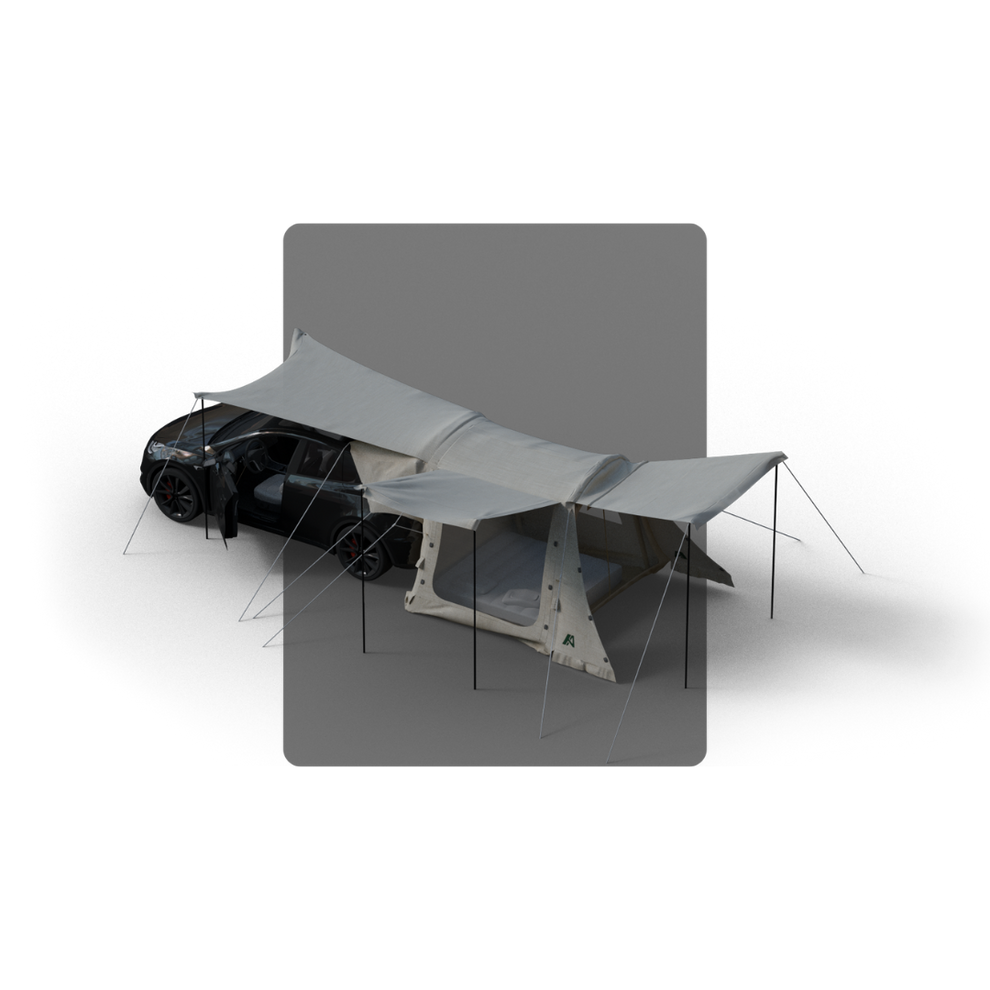
TENTSLA X1 Tesla Camping Tent
Listed price: $649
A vehicle-compatible inflatable tent option for owners who want more sheltered campsite space beyond the Model Y cabin.
Consider it if: you camp regularly, need a separate covered area, and value an inflatable-frame setup.
Skip it if: you mainly sleep inside the car for one-night road-trip stops and do not need extra outdoor living space.
Before purchasing, compare the tent's current price and included components with the cost of a simple mattress-only setup. You can also read this Tesla tent price guide and the key features to look for in a Tesla tent. Those comparisons are more useful than choosing based on appearance alone.
Battery Use, Climate Control, and Overnight Safety
Battery planning is one of the most important parts of camping in an electric vehicle. Camp Mode can support cabin comfort, but the energy needed depends on conditions. Cold temperatures may require heating; hot weather may require cooling; and a long overnight stay can consume more energy than a brief stop. Avoid relying on a universal estimate for battery loss.
How to reduce unnecessary battery use
- Arrive with a comfortable charge buffer and identify the next available charging location.
- Use bedding suited to the weather instead of expecting climate control to do all the work.
- Choose a reasonable cabin temperature and avoid changing it unnecessarily throughout the night.
- Review the vehicle's displayed battery level and alerts before sleeping.
- Do not plan an overnight stay that leaves too little charge for an unexpected detour or a change in destination.
Ventilation and condensation
People release moisture through breathing, and that moisture can condense on cool vehicle windows. Condensation can leave bedding damp and make the cabin uncomfortable. Keep bedding from blocking relevant air outlets and follow the vehicle manufacturer's instructions for ventilation and climate control. Check the cabin in the morning, dry wet surfaces, and air out bedding before packing it away.
Never run a fuel-burning stove, portable heater, charcoal burner, or other combustion appliance inside the vehicle or in an enclosed tent. Carbon monoxide can be deadly and may accumulate without obvious warning. Use cooking equipment only in locations and conditions permitted by its manufacturer, with the ventilation and clearances it requires.
Parking and vehicle security
Park on stable ground, keep an unobstructed route to the driver's seat, and secure loose equipment. Check the weather forecast, including wind and temperature changes. Do not sleep in a location where vehicle movement, traffic, flooding, falling branches, or other hazards could threaten you. Follow campground rules and local laws, and use a designated campsite when overnight parking permission is unclear.
For more practical setup ideas, see Model Y camping accessories and the broader guide to choosing the best Tesla for car camping.
Who Should Camp in a Tesla Model Y?
Best suited to these campers
- Road-trippers: Drivers who need an occasional overnight stop and prefer not to assemble a full tent setup.
- Weekend campers: People visiting established campsites who want a simple sleeping space and can travel light.
- Solo travelers: Campers who want room for one person and a manageable amount of gear.
- Couples who pack light: Two people willing to measure the sleeping area and accept limited personal space.
- EV owners who plan carefully: Drivers comfortable monitoring charge, mapping charging stops, and checking overnight parking rules.
Who may prefer a tent or a larger vehicle?
The Model Y may not be the best choice for people who need to stand upright, bring extensive equipment, sleep separately from a partner, or spend many consecutive days in the same campsite. Families with children should carefully consider the actual sleeping arrangement, passenger and cargo needs, and the manufacturer's instructions for vehicle use. Do not assume a sleeping configuration is suitable for every occupant just because the rear seats fold down.
If your main goal is a large sheltered living area rather than a compact sleeping base, a tent or dedicated camper may deliver better value. For a comparison of Tesla vehicles and their camping trade-offs, use the Tesla car-camping vehicle guide before spending money on accessories.
Buying Considerations: Which Model Y Camping Upgrades Are Worth It?
From our experience with camping-product selection, the most useful upgrades are those that fix repeated discomfort or make setup simpler. Buying accessories in the wrong order can waste money and fill the cabin with gear you rarely use.
First priority: sleeping comfort
Choose a mattress or sleeping pad that fits the usable area and supports your body. Confirm dimensions, packed size, material, inflation method if applicable, and the manufacturer's cleaning instructions. If you wake up sore because the sleeping surface is uneven, this is the first issue to address.
Second priority: privacy and organization
Window covers, compact storage bags, and a simple way to keep essentials within reach can improve the experience without adding much complexity. Avoid accessories that interfere with airbags, seat mechanisms, visibility, or safe vehicle operation.
Third priority: external shelter
Buy a Tesla camping tent only if the extra covered space solves a real problem. If you camp several times a month and use the tent to organize gear or spend time outside the vehicle, the investment may be worthwhile. If you mostly sleep inside for one night and leave early, a mattress and bedding are likely the better value.
Compare the total cost, not just the product price
Include any required pump, support accessories, storage bag, compatible covers, and shipping when calculating the total. Check the return policy and the seller's current compatibility information. A lower-priced mattress that does not fit properly may cost more in the long run than a suitable product purchased once.
Common Mistakes When Camping in the Back of a Tesla Model Y
- Buying before measuring. Measure the usable sleeping area and check your specific vehicle configuration. Do not rely only on a generic compatibility label.
- Ignoring the seat transition. A mattress can fit in length and width but still feel uncomfortable if it bridges a gap poorly or slopes in the wrong place.
- Underestimating climate-control energy use. Weather changes overnight. Start with a practical charge reserve and monitor battery levels.
- Packing too much gear. Bulky equipment reduces sleeping space and makes it harder to move safely inside the cabin.
- Assuming every parking lot allows sleeping. Confirm overnight rules before arriving, especially at charging stations and retail locations.
- Expecting a tent to solve every problem. A tent adds space but also requires setup, storage, suitable weather, and a permitted campsite.
- Skipping a trial night. Test the mattress, bedding, shades, and storage plan before committing to a long road trip.
Expert Recommendation: The Best Way to Camp in a Tesla Model Y
For most owners, the best starting point is a mattress or sleeping pad that fits the rear area, suitable bedding, privacy covers, and a straightforward battery plan. This setup offers the core benefit of Model Y camping without the cost or storage burden of a large accessory system.
If you camp frequently, make upgrades in stages. Improve the sleeping surface first, then solve privacy and storage problems. Add a vehicle-compatible tent only when you need a sheltered area outside the cabin. TENTSLA's X1 is worth considering for campers who want an inflatable-frame tent and extra covered space, but its listed $649 price is difficult to justify if all you need is somewhere to sleep inside the car.
For beginners, a trial night close to home is the smartest investment. It will reveal whether the mattress fits, whether two people have enough room, how the climate system behaves in the conditions, and how much charge you want to retain. For regular campers, a repeatable setup is more valuable than a long list of accessories.
The bottom line: yes, camping in the back of a Tesla Model Y is practical for many people, especially for road trips and short stays. It works best when you measure before buying, plan for battery use, follow safe overnight practices, and spend money only on equipment that solves a real problem.
Frequently Asked Questions
1. Can you sleep overnight in the back of a Tesla Model Y?
Yes. Fold the rear seats, use a suitable mattress or sleeping pad, and choose a location where overnight vehicle sleeping is permitted. Prepare bedding and climate settings for the expected weather.
2. Do the Tesla Model Y rear seats fold flat?
The rear seats fold to create a larger cargo area, but the resulting surface may not be perfectly level for sleeping. Measure your vehicle and check the mattress fit before purchasing a sleep system.
3. Can two adults comfortably camp in a Model Y?
Two adults can sleep in the back, but comfort depends on height, body size, mattress width, and storage needs. Test the layout at home before relying on it for a long trip.
4. Does Tesla Camp Mode stay on all night?
Camp Mode is designed to support cabin comfort while parked, but behavior and available features depend on the vehicle and conditions. Follow the owner's manual, monitor battery charge, and respond to vehicle alerts.
5. How much battery does Model Y camping use overnight?
There is no universal figure. Energy use depends on outdoor temperature, climate settings, vehicle condition, and the length of the stay. Check your displayed charge and plan a reserve rather than relying on a fixed percentage estimate.
6. Do you need a Tesla camping tent to sleep in the Model Y?
No. A mattress and bedding are enough for basic in-car sleeping. A tent is useful when you want extra covered space for changing, organizing equipment, or spending time outside the cabin.
7. Is an inflatable mattress or foam pad better for Model Y camping?
An inflatable mattress can pack compactly and allow firmness adjustment, while a foam pad avoids leaks and inflation. Choose based on fit, support, storage space, and how often you camp.
8. Is it safe to run climate control while sleeping in a Tesla?
Use the vehicle's supported climate features according to the owner's manual, monitor the battery, and follow vehicle alerts. Never use combustion heaters, stoves, or charcoal burners inside the vehicle or an enclosed tent.
9. Can you camp in a Tesla Model Y at a charging station?
Only if the location permits overnight parking and sleeping. Charging access does not automatically grant permission to camp. Check posted rules and local restrictions before settling in.
10. Is the TENTSLA X1 tent worth buying for a Model Y?
It may be worth considering if you camp regularly and need an additional sheltered area. The supplied listing shows a $649 price and an inflatable-frame design. Verify current pricing, compatibility, included components, and weather instructions before purchasing. If you only need a place to sleep inside the car, start with a mattress instead.
References
- Tesla Model Y Owner's Manual — consult the manual for your vehicle's climate-control features, operating instructions, and safety guidance.
- National Highway Traffic Safety Administration — Vehicle Safety — general vehicle safety information relevant to safe vehicle use and trip preparation.
- Recreation.gov — a resource for finding and planning stays at participating public recreation sites; always check the specific location's rules for overnight vehicle use.
Vehicle features, product prices, fit, and campsite rules can change. Confirm the details for your specific Model Y, current product listing, and intended overnight location before departure.