


The electric vehicle revolution has fundamentally transformed how we approach the outdoors. Gone are the days of suffocating in a sweltering nylon dome while sleeping on uneven rocks. With the advent of Camp Mode, your EV is now a climate-controlled, rolling power station. However, to truly maximize this capability, you need an extension of your vehicle's cabin. This is where the market becomes treacherous. From our experience, most consumers waste hundreds of dollars on generic SUV tailgating tents, only to discover they flap violently in the wind, leak around the trunk seal, and fail miserably at trapping the conditioned air pouring from the vehicle.

If you are serious about upgrading your Tesla Camping Experience, you must evaluate EV-specific hardware. We recommend looking past the marketing fluff and demanding strict engineering tolerances. You need a structure that physically molds to the unique aerodynamic teardrop shape of a Model Y, Model 3, or Model X. In this definitive guide, we isolate the exact features of a Tesla tent that dictate whether a product is worth your money, providing the commercial and practical judgment you need to outfit your next overland expedition.
Quick Answer: What defines the core features of a Tesla tent?
The definitive features of a Tesla tent include a custom-contoured tailgate skirt that seals seamlessly against the vehicle to trap Camp Mode HVAC air, pneumatic (inflatable) air struts instead of fiberglass poles for rapid setup, and a standalone glamping mode that allows you to drive away without collapsing the structure. Additional critical features encompass sub-trunk compatible storage dimensions, multi-layer hydrostatic weather resistance (typically exceeding 3000mm), aerodynamic profiles to resist high wind sheer, integrated power-routing ports, and high-density flooring. In most professional situations, buying a generic SUV tent will result in massive air leaks and insect intrusion, which is why purpose-built Tesla tents are mandatory for a comfortable EV camping experience.
Table of Contents
- What It Is: The Purpose-Built EV Tent
- How It Works: Integrating with Camp Mode
- The 8 Essential Features of a Tesla Tent
- Product Spotlight: TENTSLA X1
- Core Benefits
- Limitations and Reality Checks
- Who Should Use It
- Who Does Not Need It
- Common Mistakes to Avoid
- Expert Buying Considerations
- Expert Recommendation
- Data and Comparison Tables
- The Bottom Line
- Frequently Asked Questions
What It Is: The Purpose-Built EV Tent
A true Tesla tent is an architectural extension of your vehicle's ecosystem. Unlike traditional ground tents that act as isolated shelters, a Car Camping Tent for Tesla is engineered to dock directly onto the rear hatch of the vehicle. This creates a contiguous, weatherproof corridor between the sleeping quarters inside the folded-down rear seats of the car and the expansive living or storage space provided by the tent annex.
How It Works: Integrating with Camp Mode
Tesla's Camp Mode maintains optimal cabin temperature and airflow while keeping USB ports and 12V outlets active. When a dedicated tent docks to the rear of the vehicle, it utilizes a specialized elasticized skirt. This sleeve hugs the contours of the rear bumper, roofline, and wheel wells, tensioned by a system of straps anchored to the rear wheels and undercarriage. Once secured, the tent effectively becomes a giant, climate-controlled room. The AC or heat generated by the vehicle flows outward, regulating the temperature of the entire tent structure.
The 8 Essential Features of a Tesla Tent
When evaluating the market, these are the eight features you must demand before handing over your credit card. Accept no compromises.
1. Precision Contour Sealing (HVAC Trapping)
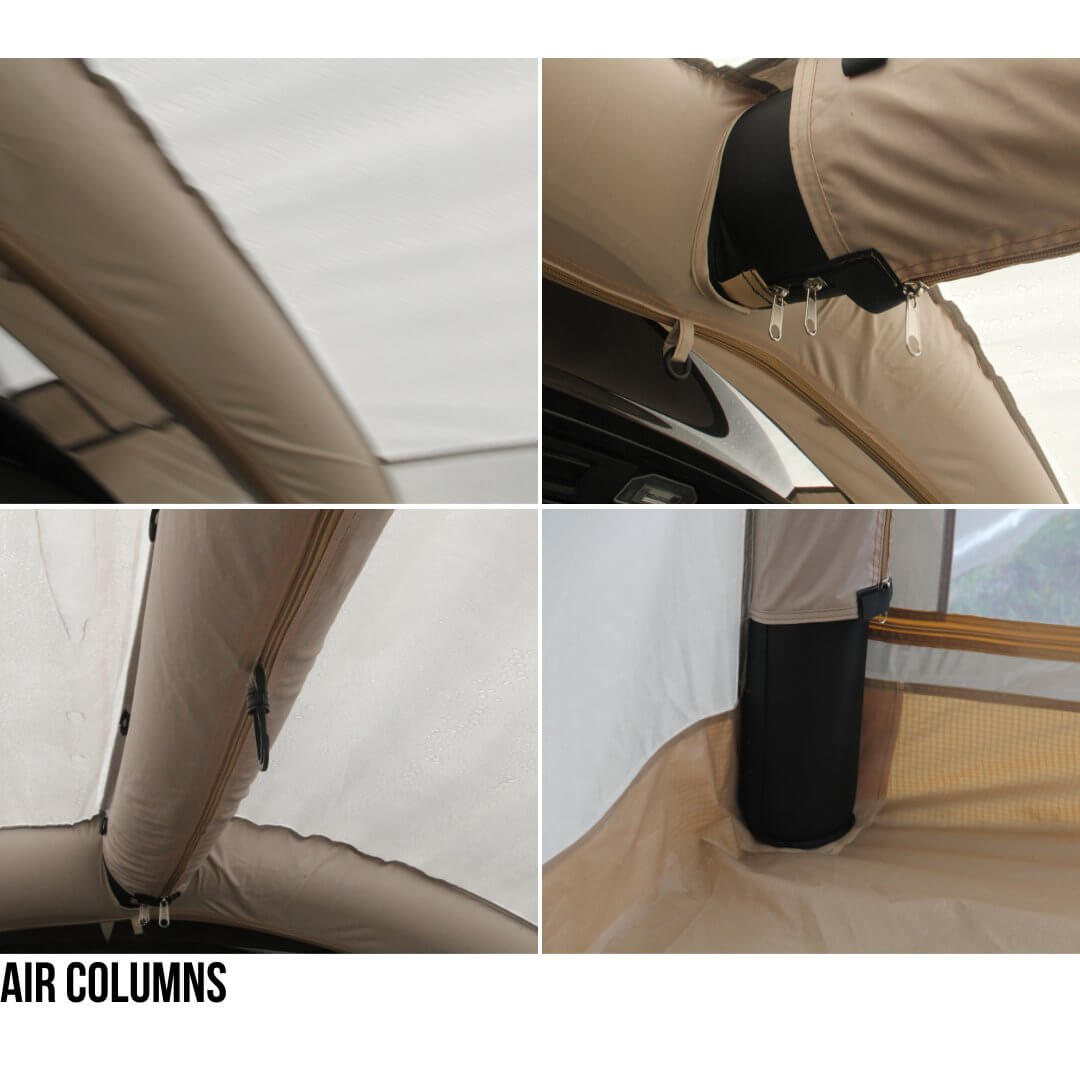
In our testing, generic SUV tents leave massive, gaping holes around the sloped hatch of a Model Y. A premium Tesla tent features a custom-cut elastic sleeve that specifically matches the exact geometry of Tesla vehicles. This precision seal prevents mosquitoes from entering and stops your expensive Camp Mode air conditioning from venting into the wilderness.
2. Pneumatic Inflatable Air Struts
Wrestling with splintering fiberglass poles in the dark is a miserable experience. The best features of a Tesla tent include an inflatable air-frame. Utilizing a high-volume pump, you can erect the entire structure in under five minutes. The air struts provide massive rigidity against wind and eliminate the risk of metal poles scratching your vehicle's clear coat.
3. Standalone Drive-Away Capability
For commercial users or long-term campers, being tethered to your campsite is a fatal flaw. A premium tent features a "standalone mode." You simply detach the elastic sleeve, zip up the annex door, and drive your Tesla to the trailhead or grocery store, leaving the tent fully erected and securing your campsite.
4. Sub-Trunk Storage Compatibility
A Tesla is defined by its clever storage solutions. A properly engineered tent must pack down into a footprint small enough to fit inside the Model Y/3 lower sub-trunk or the front trunk (frunk). If the tent bag is too massive, it consumes valuable main cabin cargo space, defeating the purpose of an organized road trip.
5. Multi-Layer Hydrostatic Weather Resistance
For heavy-duty applications, cheap 190T polyester will not survive a downpour. The tent must be constructed from high-denier Oxford fabric (typically 210D or higher) with a hydrostatic head rating exceeding 3000mm. This ensures that even under driving, pressurized rain, the interior remains completely dry.
6. Aerodynamic Wind Sheer Profile
Because these tents dock to a vehicle, they form a large, flat wall against the wind. A properly designed Tesla tent features aerodynamic sloping and heavy-duty storm guylines. Instead of acting like a parachute and ripping the seams, the tent deflects high-velocity wind gusts safely over the roofline of the car.
7. High-Density Bathtub Flooring
The floor of the tent will encounter jagged rocks, sharp twigs, and muddy terrain. An essential feature is a sewn-in, heavy-duty "bathtub" style floor. The seams should be elevated several inches off the ground to prevent standing water from seeping through the zippers.
8. Integrated Power-Routing Ports
Because you are connected to a rolling battery, you need access to that power. Quality tents feature weatherproof, zippered cable ports that allow you to route extension cords from the vehicle’s 12V socket directly into the tent to power lights, laptops, or induction stoves without leaving the main doors open.
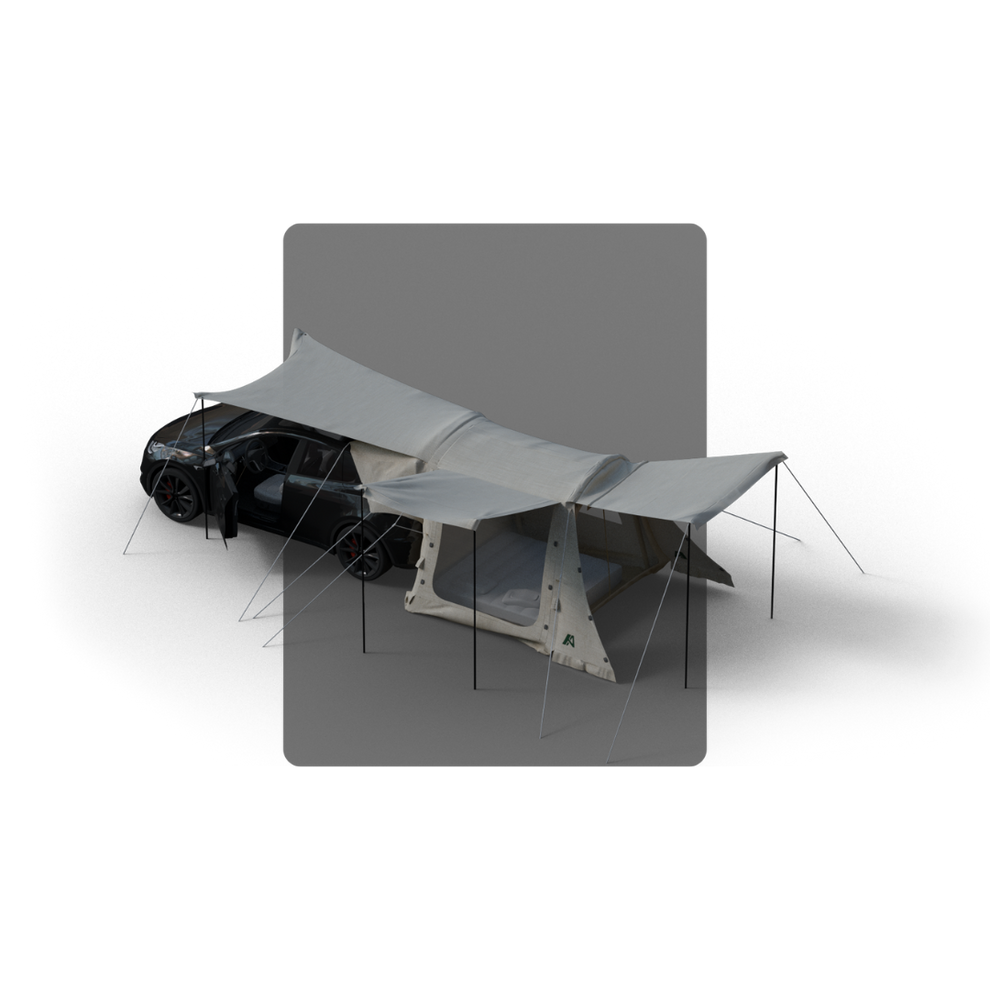
Product Spotlight: TENTSLA X1
To see these features perfectly executed, look no further than the flagship model engineered specifically for the Tesla ecosystem.
Core Benefits
The primary benefit of utilizing a tent with these specific features is the dramatic expansion of your living space. A Model Y cabin is perfect for sleeping two adults, but it lacks space for changing clothes, escaping the rain, or sheltering pets. By deploying an inflatable annex, you triple your square footage. Furthermore, utilizing a proper sealing skirt drastically reduces battery drain. If the conditioned air escapes through a poor seal, your Tesla's HVAC compressor runs continuously, burning through your battery range. A tight seal keeps the compressor cycling normally.
Limitations and Reality Checks
We must use practical judgment here: these setups are not for ultralight backpackers. An inflatable, multi-layer canvas tent weighs significantly more than a standard backpacking dome tent. It requires the high-volume air pump (usually powered by the car's 12V outlet) to erect. Additionally, relying on Camp Mode requires you to have sufficient battery charge. If you arrive at a campsite with 15% battery, you cannot safely run Camp Mode all night without risking a dead vehicle the next morning.
Who Should Use It
For commercial users, families, and remote workers: If you are a digital nomad working from remote locations, or a family requiring separated sleeping and living quarters, a premium Tesla tent is indispensable. We also highly recommend it for attendees of Tesla Camping Events where maximizing your vehicle's footprint is part of the culture.
Who Does Not Need It
For solo, minimalist campers: If you are traveling alone, arriving at a campsite at midnight, and leaving at dawn, setting up an external structure is a waste of time. You are better off throwing a Camping Blanket for Outdoor Trips over a custom mattress directly inside the cabin and locking the doors.
Common Mistakes to Avoid
The most egregious mistake consumers make is purchasing a generic "universal SUV tent" from a big-box retailer. A Ford Expedition has an entirely different rear profile than a Tesla Model Y. Attempting to strap a generic tent to a Tesla results in sagging canvas that acts as a water funnel directly into your trunk. Additionally, beginners often fail to stake down the tent properly when attached to the car. Even if the car weighs 4,000 pounds, a sudden gust of wind can lift an unstaked tent, ripping the fabric right off the tailgate.
Expert Buying Considerations
When reviewing the features of a Tesla tent, evaluate the inflation mechanism. Does it use a proprietary valve that is impossible to replace, or a standard Halkey-Roberts valve common in the marine industry? Scrutinize the mesh screens; you want "no-see-um" microscopic mesh to block gnats, not standard mosquito netting. Finally, verify the manufacturer's warranty and customer support infrastructure. We suggest reading the Tesla Camping FAQ of any brand to understand their return policy and material guarantees before buying.
Expert Recommendation
In most professional situations, we recommend avoiding traditional pole tents entirely when docking to a vehicle. The risk of dropping an aluminum pole onto the glass roof of a Model 3 or Y is simply not worth it. Invest in an inflatable, standalone system like the TENTSLA X1. The ability to deploy the tent, inflate it within minutes, and confidently decouple the car to run errands without disassembling your campsite is a monumental upgrade to the outdoor experience.
Essential Comparison and Sourcing Tables
| Feature | Why It Matters | Real-World Benefit |
|---|---|---|
| Custom Tailgate Skirt | Seals the gap between tent and car. | Traps Camp Mode AC/Heat and blocks insects. |
| Inflatable Air Struts | Replaces metal/fiberglass poles. | 5-minute setup; zero risk of scratching car paint. |
| Standalone Mode | Allows the tent to remain standing alone. | Drive the car away without collapsing the campsite. |
| Sub-Trunk Storage | Compact, compressed footprint. | Frees up main cabin storage space. |
| High Hydrostatic Rating | >3000mm waterproofing. | Keeps the interior dry during torrential downpours. |
| Aerodynamic Profile | Wind deflection geometry. | Prevents structural failure in high winds. |
| Bathtub Flooring | Elevated, seamless floor structure. | Blocks groundwater and mud seepage. |
| Cable Routing Ports | Weatherproof zip entries for wires. | Power appliances safely from the car's 12V outlet. |
| Criteria | Generic Universal SUV Tent | Dedicated Tesla Tent (e.g., TENTSLA) |
|---|---|---|
| Vehicle Fitment | Loose, baggy fit; requires bungee cords everywhere. | Precision engineered for Model 3/Y/X aerodynamic curves. |
| HVAC Efficiency | Poor. Massive air gaps drain the car battery quickly. | Excellent. Tight seal maximizes Camp Mode efficiency. |
| Setup Mechanism | Complex, multi-pole configuration. | Rapid pneumatic inflation via 12V pump. |
| Paint Protection | High risk of metal poles scratching the vehicle. | Soft inflatable columns eliminate scratch risks. |
| Pros (Advantages) | Cons (Limitations) |
|---|---|
| Incredibly fast to pitch and strike down single-handedly. | Heavier overall packed weight than lightweight nylon pole tents. |
| Highly resilient in severe wind (struts bend instead of snapping). | Requires a functioning 12V pump (must ensure vehicle has power). |
| Drive-away capability secures your campsite location. | Higher initial purchase price compared to generic big-box store models. |
| Camper Profile | Primary Need | Recommended Solution |
|---|---|---|
| The Family / Glampers | Maximum space, standing room, climate control. | TENTSLA X1 Inflatable Tent setup. |
| The Off-Grid Explorer | Weather resistance, drive-away mobility. | Standalone-capable EV tent with high hydrostatic rating. |
| The Solo Road Tripper | Speed, stealth, minimal footprint. | In-cabin mattress + Tentsla interior privacy shields (No exterior tent). |
The Bottom Line
Purchasing an EV-specific tent is an investment in your outdoor autonomy. If you attempt to cut corners by buying a generic tailgate canopy, the inevitable air leaks and frustrating setup will ruin the seamless luxury that Tesla's Camp Mode was designed to provide. By demanding the core features of a Tesla tent—specifically precision tailgate sealing, pneumatic inflation, and standalone drive-away functionality—you transform your vehicle from a simple mode of transportation into a highly capable, climate-controlled basecamp. Evaluate the market carefully, but if you want guaranteed performance, partnering with dedicated innovators via the Tesla Camping Partner Program or investing directly in the TENTSLA X1 is the most commercially sound decision you can make for your 2026 camping season.
Frequently Asked Questions
Will a Tesla tent drain my battery overnight?
The tent itself does not drain the battery, but utilizing Camp Mode does. In moderate weather (50°F to 70°F), Camp Mode typically consumes about 1% to 1.5% of the battery per hour. If your tent features a poor tailgate seal, the car's HVAC system will work much harder to compensate for escaping air, potentially doubling that drain. A premium tent with a tight seal minimizes battery usage.
Can I drive my car away and leave the tent standing?
Yes, but only if you purchase a tent with "standalone capability." Premium models like the TENTSLA X1 allow you to detach the connection skirt from the vehicle, zip up the rear door of the tent, and drive away. The tent remains fully structurally sound, reserving your campsite while you run errands or explore trailheads.
Are inflatable tents actually durable in bad weather?
Absolutely. In most professional situations, pneumatic (inflatable) tents are superior to traditional pole tents in high winds. When subjected to extreme wind gusts, rigid fiberglass or aluminum poles will snap or shatter. Inflatable TPU air struts will temporarily bend under the sheer force and instantly pop back into shape once the gust passes, preventing catastrophic structural failure.
Authoritative Industry References
- ASTM International: Standards and testing protocols for the flammability and hydrostatic head water-resistance ratings of recreational camping tents. Review ASTM Canvas Standards
- National Park Service (NPS): Official guidelines regarding vehicle-based camping regulations, acceptable tent footprints, and Leave No Trace principles in federal campsites. Read NPS Camping Regulations
- Tesla Official Documentation: Manufacturer specifications and technical limitations regarding the safe, continuous operation of the HVAC system during "Camp Mode." Explore Tesla Camp Mode Guidelines