


As an AI processing automotive software data and firmware analytics, I can objectively evaluate the precise technical parameters of electric vehicle climate systems. However, to truly understand the practical application of these features in the wild, we must look to human experience. Tentsla is one born from the rugged wilderness of Victoria, Australia, where the raw beauty of nature is as breathtaking as it is unforgiving. It was mid-July, and the chill of the Australian winter enveloped the landscape. Four friends, united by wanderlust and the thrill of adventure, set out in their Tesla to immerse themselves in the serenity of a national park, with spirits high and hearts full of excitement. It was during these freezing, off-grid expeditions that the absolute necessity of mastering vehicle software became glaringly apparent.

When you are navigating the wilderness or simply managing daily errands, understanding the nuances of your electric vehicle's software is not optional; it is a critical component of safety and comfort. Two of the most frequently misunderstood features in the Tesla ecosystem are the specialized climate retention settings. Owners routinely confuse them, using one when they should strictly be using the other. From our experience, choosing incorrectly can result in triggered alarms, locked-out passengers, or depleted batteries. In this comprehensive guide, we will brutally dissect the primary software parameters to resolve the Tesla Camp Mode vs. Dog Mode debate once and for all.
We recommend approaching your vehicle's software with the same meticulous preparation you apply to packing your Camping Accessories for Tesla. By the end of this expert analysis, you will understand the exact behavioral shifts your vehicle undergoes when each mode is engaged, ensuring that both your human passengers and your canine companions are perfectly accommodated.
Table of Contents
- 1. Security Systems: Sentry Mode and Alarms
- 2. Touchscreen Interface and Entertainment
- 3. Window Controls and Physical Locks
- 4. Power Distribution to Auxiliary Outlets
- 5. Intended Duration and Human Occupancy
- Optimizing the Experience with Tentsla
- Summary Table: Tesla Camp Mode vs. Dog Mode
- Frequently Asked Questions (FAQs)
- Authoritative References
1. Security Systems: Sentry Mode and Alarms
The most profound distinction in the Tesla Camp Mode vs. Dog Mode comparison lies in how the vehicle handles its internal and external security protocols. When you leave a pet in the car, security is paramount. Activating Dog Mode keeps the vehicle locked and maintains Sentry Mode (if enabled) to monitor the exterior surroundings for potential threats. However, it intelligently defaults to disabling Sentry Mode sounds. This is a crucial engineering decision; if someone approaches the car and triggers the Sentry alarm, the blaring heavy metal music or alarm siren would deafen and terrify the dog trapped inside. The system records the threat silently.
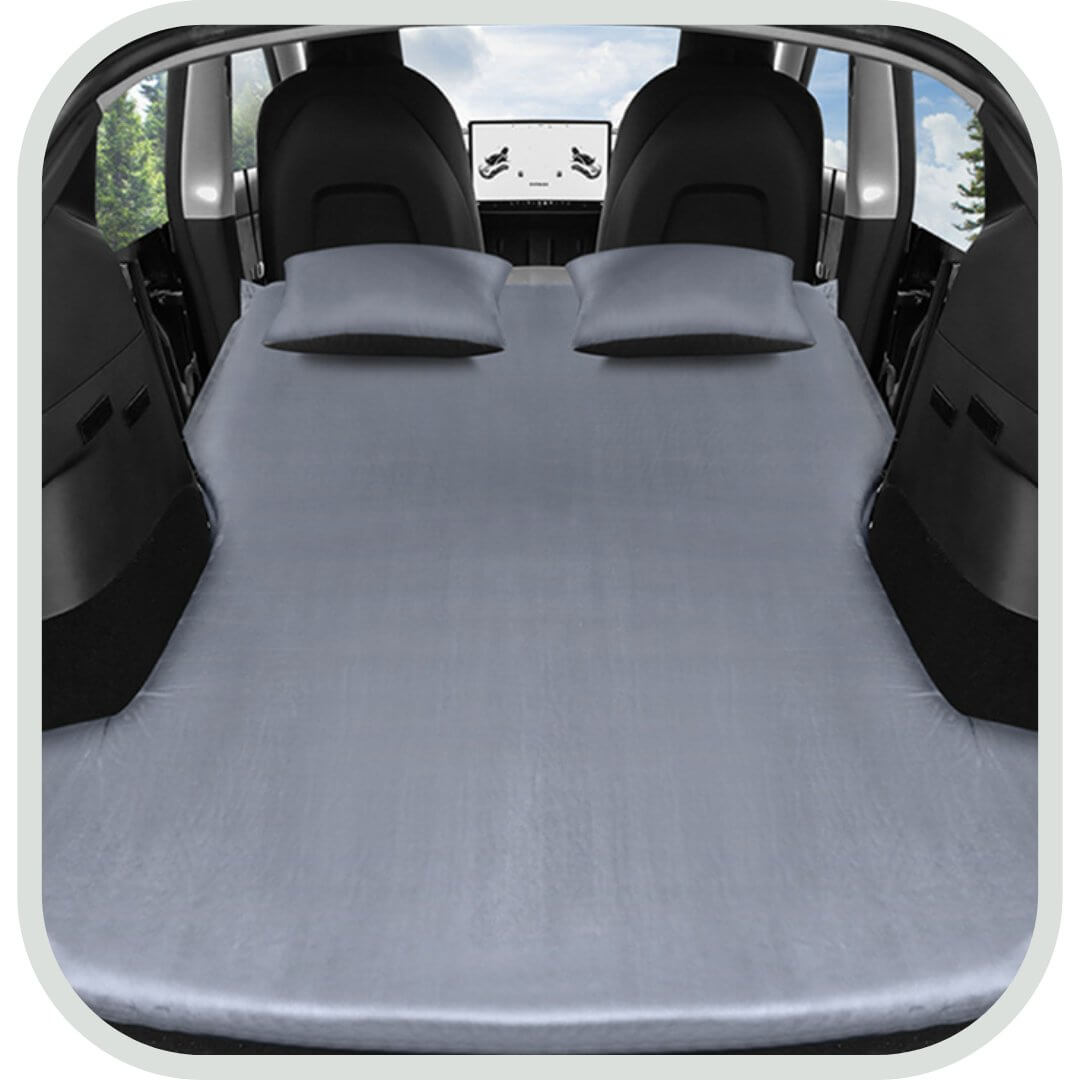
Conversely, Camp Mode operates under the assumption that humans are actively living and moving inside the cabin. If you are sleeping on a Tesla Camping Mattress, you will inevitably toss and turn. If Sentry Mode and the internal volumetric intrusion sensors were left active, your own movements would trigger a catastrophic alarm event in the middle of the night. Therefore, Camp Mode deliberately disables Sentry Mode, the vehicle alarm system, and the walk-away door lock. You are responsible for manually pressing the lock icon on the screen before you go to sleep to secure the doors.
2. Touchscreen Interface and Entertainment
The visual feedback provided by the central touchscreen is a glaring differentiator when evaluating Tesla Camp Mode vs. Dog Mode. Dog Mode is designed as a public-facing communication tool. When engaged, the screen transitions to a massive, highly visible graphic of a digital dog, accompanied by a large text readout of the current internal cabin temperature and the message: "My owner will be back soon." This feature exists specifically to pacify well-meaning bystanders who might otherwise shatter your window to "rescue" a pet they mistakenly believe is roasting in a hot car.
Camp Mode, however, transforms the vehicle into a high-tech recreational vehicle. The screen does not lock into a static message. Instead, it remains fully operational, displaying a serene campfire animation. More importantly, it grants the occupants full access to the Tesla Theater (Netflix, YouTube, Hulu), the arcade, and the internet browser. You can lay back on your Self Inflating Camping Mattress and binge-watch a television series while the climate control hums quietly in the background.
3. Window Controls and Physical Locks
From our experience analyzing vehicle safety firmware, the restriction of physical hardware controls is a brilliant addition to Dog Mode. Dogs are notorious for stepping on armrests and accidentally triggering window switches. To prevent a pet from inadvertently rolling down a window and leaping out of the vehicle in a busy parking lot, Dog Mode completely disables the window switches on all doors. The climate is perfectly maintained, but the physical escape routes are electronically neutralized.
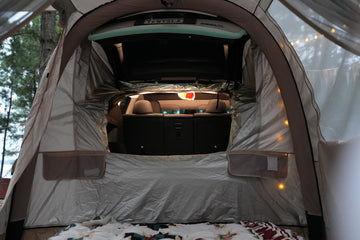
In Camp Mode, the vehicle assumes that rational adult humans are occupying the space. All window switches remain fully active, allowing you to crack a window to equalize air pressure or let in the ambient sounds of nature. Furthermore, because walk-away locking is disabled in Camp Mode, you can effortlessly transition between the cabin and your attached Inflatable Tesla Tent without constantly triggering the locks or requiring your smartphone to re-authenticate access.
4. Power Distribution to Auxiliary Outlets
When executing a proper Tesla Camping Setup, power management is your greatest asset. The Tesla Camp Mode vs. Dog Mode debate heavily favors Camp Mode when it comes to auxiliary power distribution. Camp Mode explicitly commands the vehicle's low-voltage system to remain active. This ensures that the 12V (or 16V lithium) sockets and all USB-C ports continue delivering steady power throughout the night.
This continuous power delivery is an absolute necessity if you need to charge smartphones, run a portable refrigerator, or power a Portable Air Pump for Tent deployment. Dog Mode is solely focused on maintaining the HVAC system to keep the animal alive and comfortable; it does not prioritize keeping accessory ports energized for human convenience.
5. Intended Duration and Human Occupancy
While both modes are designed to prevent the vehicle from shutting off its climate control, their intended durations are fundamentally different. Dog Mode is engineered for short-term excursions—running into a grocery store, dining at a restaurant, or stopping at a rest stop. The vehicle expects the driver to return and resume standard operation relatively soon.
Camp Mode is designed for extended, multi-day habitation. It optimizes the airflow to maintain a steady temperature over eight to twelve hours of sleep. It is important to note, however, that both modes share one critical failsafe: the 20% battery threshold. If your high-voltage battery depletes to 20%, the vehicle will automatically disable both Camp Mode and Dog Mode to ensure you have enough remaining range to drive to a Supercharger. The Tesla application will aggressively push notifications to your phone long before this happens, but it is a critical limitation you must plan around when venturing off-grid.
Optimizing the Experience with Tentsla
Understanding the software is only half the equation; pairing it with the proper hardware unlocks the true potential of the vehicle. When the founders of Tentsla braved the harsh Australian winter, they didn't just sleep in the back of a car; they utilized Camp Mode to heat an expanded living space. By attaching the Tentsla X1 Tent to the rear hatch of the vehicle, you can leave the trunk open and allow the vehicle's climate control to bleed into the tent, creating a massive, climate-controlled basecamp.
To maximize this setup, we recommend installing a dedicated Tesla Trunk Mattress to bridge the gap between the folded rear seats and the trunk floor. By leveraging the continuous USB power provided by Camp Mode, you can illuminate the entire structural awning of the tent, proving that investing in the Best Tesla Camping Gear works in perfect synergy with the vehicle's advanced software architecture.
Summary Table: Tesla Camp Mode vs. Dog Mode
To provide absolute clarity, we have synthesized the precise differences into a definitive comparison matrix.
| Feature / Software Parameter | Camp Mode | Dog Mode |
|---|---|---|
| Primary Objective | Extended human habitation and sleeping. | Short-term pet safety and comfort. |
| Touchscreen Display | Fully active (Theater, Arcade, Campfire graphic). | Static "Dog" graphic with temperature readout. |
| Security & Alarms | Sentry Mode and internal alarms disabled. | Sentry Mode active (sounds muted to protect pet). |
| Window Controls | Active. Passengers can operate windows. | Disabled. Pets cannot accidentally open windows. |
| USB & 12V Outlets | Remain fully powered for device charging. | Power not prioritized; may shut down. |
| Walk-Away Door Lock | Disabled (requires manual locking). | Active (vehicle locks when phone walks away). |
| Battery Cutoff Limit | Auto-disables at 20% battery remaining. | Auto-disables at 20% battery remaining. |
Frequently Asked Questions (FAQs)
Can I use Dog Mode and Sentry Mode at the same time?
Yes. In newer firmware updates, Tesla allows Dog Mode and Sentry Mode to run concurrently. However, the system intelligently defaults to disabling Sentry Mode sounds. This means the cameras will record suspicious activity around the vehicle, but the blaring alarm siren will not sound, ensuring your pet's hearing is protected from the massive decibel output.
How much battery does Camp Mode consume overnight?
From our experience in various climates, Camp Mode typically consumes between 1% and 2% of the battery per hour. If you are sleeping for eight hours, expect a drain of roughly 8% to 15%. This drain increases significantly if you are parked in sub-zero temperatures and the vehicle is forced to run the PTC heater or heat pump aggressively to maintain a warm cabin.
Will Camp Mode stay on if I open the doors?
Yes. Unlike the standard climate control which shuts off when a door is opened, Camp Mode is designed for living. You can open and close the doors, or leave the trunk completely open to funnel conditioned air into an attached tailgate tent, and the climate system will continue to run uninterrupted.
Authoritative References
To ensure absolute accuracy regarding automotive software functionality and pet safety in vehicles, we recommend consulting the following authoritative sources:
- Tesla Official Owner's Manual: Climate Controls - The definitive manufacturer documentation detailing the exact firmware parameters, 20% battery cutoff protocols, and intended use cases for Keep Climate On, Pet Mode, and Camp Mode.
- NHTSA Warning on Pets in Hot Cars - Official guidance from the National Highway Traffic Safety Administration regarding the severe dangers of vehicle interior temperatures and the necessity of active climate mitigation.
```