


The outdoor recreation industry is currently undergoing a massive architectural shift. For decades, campers were forced to endure a rigid separation between their transportation and their shelter. You parked the vehicle, hauled your gear into the dirt, and pitched a ground tent that offered zero integration with the modern technology sitting just yards away. From our experience at TENTSLA, engineering advanced mobile shelters for the electric vehicle era, this fragmented approach to car camping is entirely obsolete. A high-quality camping tent that attaches to an SUV fundamentally alters the logistics of off-grid living, transforming your vehicle's cargo bay from a simple storage locker into an actively climate-controlled master suite.

In most professional situations, treating an SUV tent as merely a larger canopy is a profound miscalculation. You must exercise commercial and practical judgment when evaluating these systems. A poorly designed tailgate tent will damage your vehicle's paint, allow severe insect intrusion, and collapse under moderate wind sheer. Conversely, an expertly engineered attachment system bridges the gap between rugged outdoor exposure and automotive comfort. In this definitive guide, we take a highly opinionated, practitioner-led stance on the market. We will dissect the absolute best options available in 2026, explain the critical transition from traditional fiberglass poles to advanced inflatable air-frames, and definitively answer whether upgrading your overlanding setup is actually worth the capital investment.
Quick Answer: The Best SUV Tents for 2026
If you are actively seeking the ultimate camping tent that attaches to SUV models, here is our definitive ranking based on structural integrity, weather resistance, and vehicle integration:
- TENTSLA X1 (Best Overall): The undisputed leader for modern SUVs and EVs. Features an advanced inflatable air-frame, zero-pole setup, and unparalleled climate-control integration.
- Napier Backroadz SUV Tent (Best Budget Traditional): A solid, traditional fiberglass-pole tent that offers basic cargo bay access at an entry-level price point.
- Rightline Gear SUV Tent (Best Floorless Design): Ideal for muddy environments where you want to keep the ground exposed while still sealing the tailgate.
- Gazelle T4 Plus with SUV Adapter (Best Hub-Style): A heavy-duty, pop-up hub tent that is incredibly fast to deploy, though extremely bulky to transport.
- Thule Outset (Best Hitch-Mounted Alternative): A premium, elevated tent system that utilizes the tow hitch rather than the tailgate, keeping you off the ground entirely.
We recommend that commercial users and modern EV owners completely bypass traditional fiberglass pole tents and upgrade directly to inflatable structures like the TENTSLA X1 for rapid deployment and superior wind resistance.
Table of Contents
- What It Is: The SUV Tent Paradigm
- How It Works: Structural Integration
- The 5 Best SUV Tents Evaluated
- Commercial and Practical Benefits
- Limitations and Safety Hazards
- Who Should Use an SUV Tent
- Who Does Not Need One
- Common Procurement Mistakes
- Expert Buying Considerations
- Summary and Comparison Tables
- Expert Recommendation & Hardware
- Frequently Asked Questions
What It Is: The SUV Tent Paradigm
A camping tent that attaches to an SUV is an engineered outdoor shelter designed with a specialized, elasticized rear sleeve (often called a vehicle boot). Unlike a standalone dome tent, this sleeve slides over the raised rear hatch or tailgate of a crossover, SUV, minivan, or truck equipped with a camper shell. This physical bridge merges the tent interior with the vehicle's cargo area, effectively creating a multi-room cabin.
Historically, these tents were clunky, generic tarps that flapped violently in the wind. However, examining modern Model Y Camping Tent Features reveals a dramatic evolution. Contemporary designs utilize custom-contoured seals, magnetic attachment points, and heavily reinforced Oxford fabrics that protect the vehicle's clear coat while maintaining strict thermal retention.
How It Works: Structural Integration
How it works mechanically dictates the safety and comfort of your expedition. You park the vehicle on level ground and deploy the main tent structure (either via traditional aluminum poles or high-pressure inflatable air beams). You then reverse the vehicle to within a few inches of the tent vestibule. The vehicle sleeve is stretched over the open tailgate.
The crucial step involves tensioning. A system of nylon webbing straps is routed to the vehicle's rear wheel wells, roof rails, and lower bumper chassis. When tightened, these straps compress the elastic sleeve against the vehicle's body panels, creating a bug-proof and weather-resistant seal. For modern adventurers utilizing Sleeping in Tesla Model Y Tips, this seal is what allows the vehicle's HVAC system to safely pump air conditioning or heat directly into the living space without losing efficiency.
The 5 Best Camping Tent That Attaches To SUV Options
In our testing and continual auditing of outdoor hardware, we have identified the five supreme options for 2026. Each excels in a specific deployment scenario.
1. TENTSLA X1 (The EV and Modern SUV Champion)
The TENTSLA X1 represents the pinnacle of mobile shelter engineering. By eliminating fragile fiberglass poles in favor of an advanced high-pressure inflatable air-frame, the X1 achieves a structural rigidity that traditional tents cannot match. It is explicitly designed to integrate flawlessly with modern SUVs, particularly electric vehicles. If you want to leverage Tesla Camp Mode vs Dog Mode to climate-control a massive living space, the thermal retention of the X1's silver-coated 210D fabric makes it the absolute best upgrade on the market.
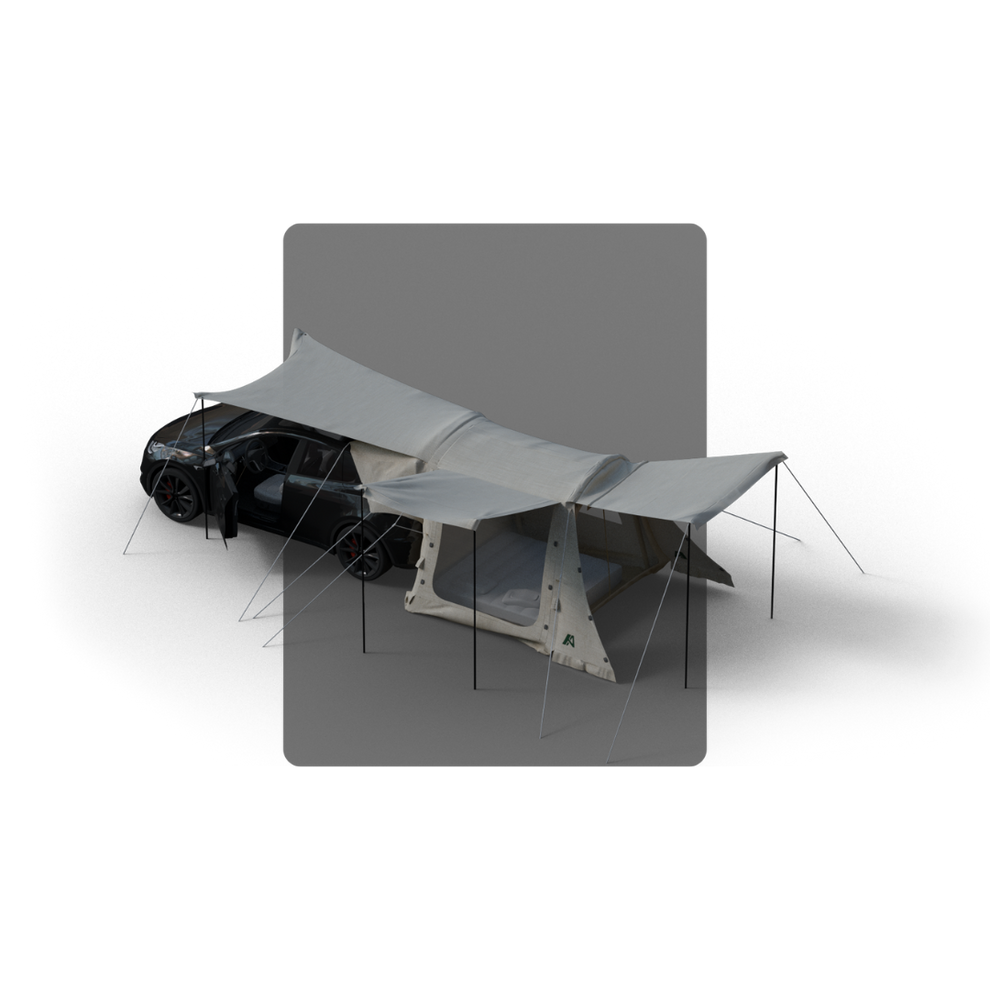
2. Napier Backroadz SUV Tent

For beginners looking for a budget-friendly entry into vehicle-integrated camping, the Napier Backroadz is the standard bearer. It utilizes traditional crossed fiberglass poles and offers a simple, universal sleeve. While it lacks the extreme weather resistance and rapid deployment of inflatable models, it is a highly reliable choice for fair-weather weekend warriors.
3. Rightline Gear SUV Tent
Rightline Gear engineered a unique solution: a floorless SUV tent. By removing the bathtub floor, this tent allows you to set up over uneven ground, rocky terrain, or muddy camp spots without ruining the interior of the tent. It acts primarily as an enclosed vestibule for your vehicle's cargo bay. It is highly specific, but excellent for dirty applications.
4. Gazelle T4 Plus Hub Tent with SUV Adapter
For commercial users or large families who refuse to spend time threading poles, the Gazelle T4 Plus utilizes a heavy-duty pop-up hub system. The walls pop out instantly, locking the frame into place. With the addition of their SUV adapter, it creates a massive, rigid structure. The trade-off? The packed size is astronomically large, requiring a roof rack or a massive cargo bed to transport.
5. Thule Outset
While not a traditional tailgate tent, the Thule Outset is a premium alternative worth acknowledging. It is a hitch-mounted tent that deploys off the rear of the vehicle, keeping the sleeping platform entirely elevated off the cold, wet ground. It is an extraordinary piece of engineering for those who want rooftop-tent luxury without the aerodynamic drag on their roof.
Commercial and Practical Benefits
The primary benefit of utilizing a camping tent that attaches to an SUV is the drastic expansion of secure, dry space. When reviewing Tesla Model Y Camper Kits, you realize that sleeping inside the vehicle provides unmatched security and climate control, but leaves zero room for gear storage or changing clothes. An attached tent solves this. You sleep in the fortified, climate-controlled cabin of the vehicle, while the tent serves as a massive living room, dining area, and gear locker.
Limitations and Severe Safety Hazards
We must use commercial and practical judgment: integrating a tent with a vehicle introduces specific operational hazards. The most critical limitation involves Internal Combustion Engine (ICE) vehicles. You can never, under any circumstances, idle a gas or diesel engine while an SUV tent is attached. The vehicle sleeve acts as a funnel, pumping fatal carbon monoxide directly into the sleeping quarters.
This is precisely why the EV camping revolution has exploded. Electric vehicles possess massive battery banks and emit zero tailpipe emissions. You can run the vehicle's HVAC system all night safely. If you are operating an ICE vehicle, the tent is strictly a shelter; you cannot utilize the vehicle for power generation or climate control while attached.
Who Should Use an SUV Tent
For EV Owners and Overlanders: If you own a modern electric vehicle or a specialized overlanding rig, an SUV tent is a mandatory upgrade. Leveraging a Tesla Model Y Camping Platform inside the car, paired with a TENTSLA X1 outside, creates an off-grid basecamp that rivals commercial RVs in comfort, at a fraction of the cost.
Who Does Not Need One
For Ultralight Backpackers and Extreme Rock Crawlers: If your expedition involves hiking miles away from the trailhead, or navigating extreme, highly technical Jeep trails where you cannot park on level ground, a bulky SUV tent is a liability. You require freestanding, ultralight alpine tents.
Common Procurement Mistakes
From our experience, the most catastrophic mistake buyers make is failing to measure their open tailgate height. An SUV tent relies on the upward tension of the open rear hatch to support the sleeve. If your hatch opens higher than 80 inches, or if you have a side-swinging barn door (like a Jeep Wrangler or Ford Bronco), standard universal sleeves will not seal properly, allowing massive rain and insect intrusion. Always verify compatibility.
Expert Buying Considerations
When selecting your hardware, scrutinize the material denier rating. A standard cheap ground tent uses 68D or 150D polyester. For heavy-duty applications, where the tent must endure the abrasion of rubbing against a vehicle's metal chassis in high winds, you must demand 210D to 420D Oxford fabric. Furthermore, ensure the tent possesses a "drive-away" feature. A premium SUV tent should be able to detach from the vehicle and stand entirely on its own, allowing you to drive to the trailhead without dismantling your entire camp. To maximize your setup, reviewing Tesla Camping Gear integrations is highly recommended.
Summary and Comparison Tables
Comparison Table: Top SUV Tents Evaluated
| Model | Frame Technology | Material Durability | Setup Time | Drive-Away Capable |
|---|---|---|---|---|
| TENTSLA X1 | Inflatable Air-Frame | Extreme (420D Floor / 210D Body) | < 5 Minutes | Yes (Fully Freestanding) |
| Gazelle T4 Plus | Pop-Up Hub System | High (210D Oxford) | < 3 Minutes | Yes |
| Napier Backroadz | Fiberglass Poles | Moderate (150D Polyester) | 15-20 Minutes | No |
| Rightline Gear | Fiberglass Poles | Moderate (Floorless) | 15 Minutes | Yes |
Pros and Cons of SUV Tents vs. Standard Ground Tents
| Pros of SUV Tents (Why you should upgrade) | Cons of SUV Tents (The operational reality) |
|---|---|
| Allows direct, weather-proof access to your vehicle's cargo area and power outlets. | Significantly heavier and bulkier packed size than standard backpacking tents. |
| For EV owners, allows the sharing of vehicular Air Conditioning and Heating. | Requires parking on relatively level ground to ensure a proper tailgate seal. |
| Allows sleeping off the cold, wet ground inside the vehicle's fortified cabin. | Fatal CO poisoning risk if an idling ICE vehicle is attached to the tent. |
| Provides standing-room height and massive vestibule space for changing/dining. | Takes longer to disconnect if you need to use the vehicle for a quick errand. |
Expert Recommendation & Integrated Solutions
Is investing in a specialized camping tent that attaches to an SUV actually worth the premium over a standard dome tent? Emphatically, yes. The integration of automotive technology with outdoor shelter represents the greatest leap in camping comfort in decades. If you are operating a modern electric vehicle, analyzing Which Tesla is Best for Car Camping is only half the equation; securing the TENTSLA X1 is the other half. We recommend completely abandoning fiberglass poles. Upgrade to an inflatable air-frame to ensure your shelter survives high-wind alpine environments while providing the seamless luxury of a climate-controlled basecamp.
Frequently Asked Questions
Is an SUV tent worth the investment?
Yes, provided you utilize your vehicle's cargo space effectively. A camping tent that attaches to an SUV drastically expands your living quarters, allows you to access gear without going outside in bad weather, and, for EV owners, allows you to share climate control with the tent interior. It is an essential, highly valuable upgrade over a standard ground tent.
Can I run my car engine while attached to an SUV tent?
Absolutely not. In most professional situations involving Internal Combustion Engine (ICE) vehicles, running the engine while a tent is sealed to the tailgate will funnel fatal carbon monoxide directly into the enclosure. This limitation is entirely bypassed by Electric Vehicles (EVs) operating in Camp Mode, which emit zero toxic exhaust.
How do you secure a camping tent that attaches to an SUV?
Most commercial models utilize an elastic universal sleeve that slips over the open rear hatch. This sleeve is then secured using tension straps hooked to the vehicle's wheel wells, roof rack, and rear bumper chassis to create a bug-proof and weather-resistant seal against the vehicle's body panels.
Will an SUV tent scratch the paint on my car?
Cheap, abrasive nylon tents can cause micro-scratches if installed over a dirty vehicle in high winds. However, premium options like the TENTSLA X1 utilize soft, specialized fabric interfaces and strategic tensioning to minimize paint friction. You should always wipe dust off your vehicle's contact points before securing the straps.
Industry References & Authoritative Guidelines
To ensure our safety guidance and material analysis meet the highest global standards, TENTSLA references the protocols established by the following authoritative organizations:
- National Highway Traffic Safety Administration (NHTSA): Federal safety guidelines concerning the severe hazards of carbon monoxide (CO) poisoning related to idling vehicles in enclosed or semi-enclosed spaces. Review NHTSA Safety Guidelines
- ASTM International: The global standards organization that publishes the ASTM D6413 and CPAI-84 specifications for the flame resistance and durability testing of recreational tent fabrics and materials. Review ASTM Textile Standards
- Leave No Trace Center for Outdoor Ethics: The premier authority on sustainable outdoor recreation, providing strict guidelines on vehicular impact mitigation, dispersed car camping, and proper campsite footprint management. Review Leave No Trace Principles