


If you consume mainstream automotive media, you might believe there is a massive exodus from the electric vehicle market. Headlines constantly ask why so many people getting rid of their Teslas are returning to internal combustion engines or hybrid platforms. The reality on the ground is significantly more nuanced. From our experience at TENTSLA, interacting daily with thousands of EV owners, overlanders, and outdoor enthusiasts, the churn in the secondary Tesla market is rarely about the vehicle failing; it is usually about the driver failing to understand the vehicle's optimal utility.

In most professional situations, treating a Tesla Model Y or Model 3 purely as a sterile commuting appliance guarantees you will overlook its most profound capabilities. Owners become frustrated by fluctuating insurance premiums, strict proprietary repair networks, and public charging infrastructure bottlenecks in rural areas. However, many are selling their vehicles to buy gas-guzzling SUVs for "weekend adventures," completely unaware that a Tesla, when properly equipped, is the most technologically advanced off-grid camping cabin ever produced. You must apply commercial and practical judgment before liquidating a depreciated asset. In this definitive guide, we take an unapologétic position on the current EV market, dismantling the myths of why so many people getting rid of their Teslas are making a financial mistake, and detailing how you can transform your vehicle into the ultimate adventure platform.
Quick Answer: Why Are So Many People Getting Rid of Their Teslas?
The primary reasons driving the current influx of used Teslas into the secondary market include:
- The Upgrade Cycle: The vast majority are not abandoning the brand; they are simply trading in older Model 3s to acquire the larger Model Y or the newer Cybertruck for increased payload and utility.
- Insurance and Repair Monopolies: Collision repair costs for EVs remain aggressively high, driving up monthly insurance premiums beyond what entry-level buyers anticipated.
- Infrastructure Incompatibility: Buyers who purchased Teslas while living in apartments without overnight home charging quickly experience "supercharger fatigue."
- The Lifestyle Misunderstanding: Owners mistakenly believe they need a traditional gas SUV or RV for outdoor adventures, failing to leverage the vehicle's incredible Camp Mode capabilities.
We recommend that before you sell your Tesla at a depreciated loss to buy an overland rig, you evaluate its native off-grid potential. With the right hardware, it is an unparalleled camping machine.
Table of Contents
- What It Is: The EV Market Correction
- How It Works: Depreciation and the Upgrade Cycle
- The Unmatched Benefits of Keeping Your Tesla
- Legitimate Limitations (When to Sell)
- Who Should Keep and Utilize Their Tesla
- Who Does Not Need an EV
- Common Mistakes Leading to Premature Sales
- Expert Buying (and Keeping) Considerations
- Summary and Comparison Tables
- Expert Recommendation & Product Spotlight
- Frequently Asked Questions
What It Is: The EV Market Correction
To understand why so many people getting rid of their Teslas dominates the news, we must look at the data. What we are witnessing is not a rejection of electric vehicles; it is a market correction. During the pandemic supply chain crises, Tesla vehicles were heavily overvalued, often appreciating in the secondary market. As production normalized and aggressive price cuts were introduced to stimulate new sales, the used market flooded.
Many early adopters are simply cycling out of their leases or trading up to newer Hardware 4 (HW4) models. However, a vocal subset of the population is reverting to Internal Combustion Engine (ICE) vehicles. This specific churn is characterized by a failure to adapt to the EV paradigm. They attempt to refuel an EV exactly like a gas car—waiting until the battery is at 5% and relying solely on public infrastructure—rather than treating it like a smartphone that charges overnight.
How It Works: Depreciation and the Upgrade Cycle
How it works financially is brutal for short-term owners. If you bought a Model Y in 2022 at peak pricing, the subsequent manufacturer price cuts have slashed your equity. Selling the vehicle now solidifies a massive financial loss. Instead of selling to buy a specialized adventure vehicle, the mathematically sound strategy is to maximize the utility of the depreciated asset.
This is where the Outdoor Tesla Lifestyle intervenes. Your vehicle is essentially a massive rolling battery bank with sophisticated HVAC controls. By understanding Tesla Camping Mode Battery Drain, you realize that you can maintain a perfect 70-degree cabin temperature in freezing weather for days on a single charge. Selling this capability to buy a gas-powered Jeep and a damp ground tent is a tremendous downgrade in quality of life.
The Unmatched Benefits of Keeping Your Tesla
The benefits of retaining your Tesla for commercial, personal, or recreational use are profound once you break the commuter mindset. In our testing, the Model Y is one of the most competent off-grid sleepers available today.
Unlike a gas vehicle, which cannot idle overnight safely due to carbon monoxide poisoning, a Tesla emits zero emissions. You can sleep inside it inside a closed garage, a national park, or an integrated tent structure. When paired with a Tesla Camping Air Mattress and the native Camp Mode software, the vehicle provides climate control, HEPA air filtration, entertainment (Netflix, YouTube), and device charging capabilities that rival a luxury RV, all without the maintenance overhead of a secondary vehicle.
Legitimate Limitations (When to Sell)
We must apply commercial and practical judgment: there are highly specific scenarios where selling is the correct decision. The primary limitation of a Tesla is extreme remote towing. If you are towing a 4,000-pound travel trailer into deep wilderness areas without supercharger access, the aerodynamic drag will decimate your range. For heavy-duty applications involving constant, max-payload towing across state lines, a heavy-duty diesel truck remains the superior tool.
Additionally, if you have moved to a dense urban apartment complex where you absolutely cannot charge at home or at work, relying entirely on public supercharging degrades the battery faster and eliminates the convenience that makes EV ownership worthwhile.
Who Should Keep and Utilize Their Tesla
For Beginners and Outdoor Enthusiasts: If you enjoy weekend road trips, state park camping, music festivals, and tailgating, you should never sell your Tesla. It is the ultimate recreational basecamp. By reviewing our Tesla Model Y Camp Mode Guide, you can immediately elevate your outdoor experience from "roughing it" to high-tech glamping.
Who Does Not Need an EV
If your primary residence lacks reliable electrical infrastructure, or if your daily commute involves hauling construction materials to off-grid job sites where charging is a physical impossibility, the EV platform will cause friction. In these rare instances, transitioning back to a plug-in hybrid or ICE vehicle is justified.
Common Mistakes Leading to Premature Sales
From our experience, the most catastrophic mistake owners make is falling victim to "range anxiety" myths rather than relying on the vehicle's superior trip-planning software. Owners panic when they see the battery percentage drop during a road trip, unaware that the Tesla navigation system calculates elevation, temperature, and wind speed to route them flawlessly to the next charger.
Another massive mistake is failing to properly equip the vehicle. People attempt to sleep in the back using thin yoga mats, wake up with back pain, and decide the car is useless for camping. Proper hardware is required. Integrating a Camping Blanket for Outdoor Trips and a purpose-built mattress changes the paradigm entirely.
Expert Buying (and Keeping) Considerations
If you are debating why so many people getting rid of their Teslas might present a buying opportunity for you, the secondary market is currently rich with value. When evaluating a used Tesla, focus on the battery degradation report (usually minimal) and the hardware version. If you are keeping your current Tesla, consider the return on investment of retrofitting it. Spending $1,000 on premium camping gear effectively turns your commuter car into a $50,000 RV alternative. If you own a sedan, exploring a Tesla Model 3 Camping Tent proves that you do not need an SUV to camp comfortably.
Summary and Comparison Tables
Comparison Table: Selling vs. Upgrading for Adventure
| Metric | Sell Tesla for a Gas Overlander (Jeep/Tacoma) | Keep Tesla & Equip with TENTSLA Gear |
|---|---|---|
| Capital Expenditure | High (Loss on depreciation + cost of new vehicle) | Low (Cost of tent and mattress integration) |
| Climate Control Overnight | Impossible (Risk of Carbon Monoxide) | Perfect (Camp Mode runs AC/Heat safely) |
| Daily Commuting Efficiency | Terrible (15-20 MPG) | Excellent (120+ MPGe) |
| Entertainment / Power | Requires noisy external gas generators | Silent, native 12V and USB-C power delivery |
Pros and Cons of the Current Tesla Ecosystem
| Pros (Why you should keep it) | Cons (Why people are selling) |
|---|---|
| Unmatched software ecosystem and over-the-air updates. | Aggressive price cuts have hurt secondary resale value. |
| Camp Mode turns the vehicle into a mobile, climate-controlled cabin. | High insurance premiums due to proprietary structural repair costs. |
| Zero oil changes, zero transmission fluid, virtually zero maintenance. | Supercharger networks in highly dense areas can experience wait times during holidays. |
| The Supercharger network remains the gold standard for road-tripping. | Elon Musk's polarizing public persona causes brand fatigue for some buyers. |
Expert Recommendation & Product Spotlight
Is it actually worth keeping your Tesla when the market narrative suggests jumping ship? Emphatically, yes. Selling an advanced, low-maintenance electric vehicle at the bottom of its depreciation curve is a severe financial error. We recommend that commercial users, families, and solo travelers stop viewing their Tesla as a fragile piece of technology and start utilizing it as the rugged, capable adventure platform it was designed to be.
To truly unlock this potential, you must bridge the gap between the vehicle and the outdoors. This is why we engineered the TENTSLA X1. When reviewing the Popular Tesla Camping Tents on the market, nothing integrates as seamlessly with the vehicle's tailgate, transforming your trunk into a multi-room camping estate.
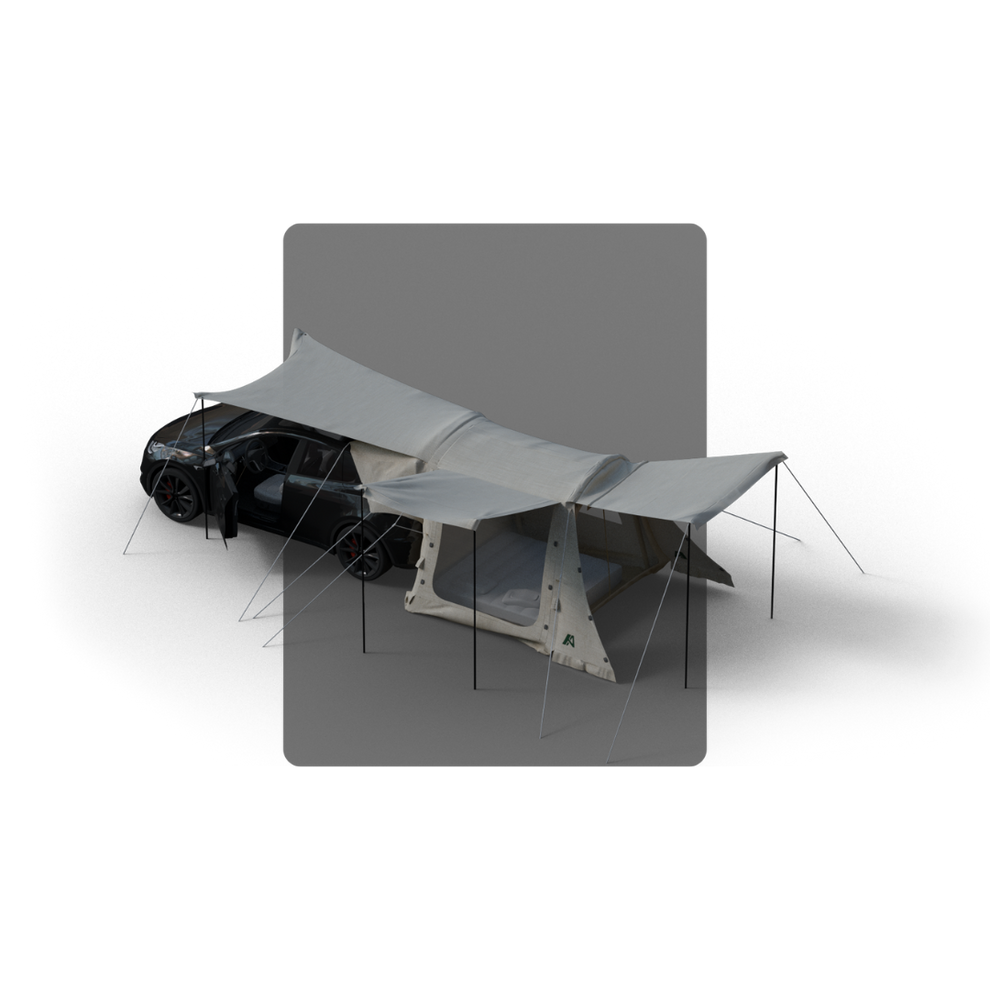
If you are an outdoor content creator or brand looking to demonstrate the true utility of electric vehicles, we highly encourage you to explore our Tesla Camping Collaboration and Tesla Camping Partner Program. For any logistical questions regarding fitment or shipping, please consult our Tesla Camping FAQ.
Frequently Asked Questions
Why are so many people getting rid of their Teslas in 2026?
In most professional situations, the turnover is largely due to the standard upgrade cycle. Owners of older Model 3s are trading them in for the larger Model Y or the Cybertruck. Additionally, some users sell due to high insurance premiums or realizing they lack the necessary home-charging infrastructure to make EV ownership convenient.
Is it bad for the battery to use Camp Mode all night?
No. Using Camp Mode utilizes the high-voltage battery to run the HVAC system and low-voltage accessories. A typical 8-hour night in Camp Mode consumes roughly 10% to 15% of the battery, depending on exterior temperatures. It is perfectly safe and does not cause undue degradation to the battery chemistry.
Can I use a Tentsla tent if I don't have a Tesla?
While the TENTSLA X1 is specifically engineered to form a weatherproof seal against the aerodynamic curves of the Tesla Model Y, Model X, and Model 3 hatchbacks, it can function as a standalone inflatable tent. However, you will lose the seamless HVAC integration that makes it superior to standard ground tents.
Does selling a Tesla right now result in a financial loss?
Yes, due to aggressive price cuts by the manufacturer over the last two years, the secondary market value of used Teslas has dropped significantly. We recommend keeping the vehicle and maximizing its utility rather than absorbing a massive depreciation hit.
Industry References & Authoritative Data
To ensure our market analysis and automotive recommendations are accurate, TENTSLA references data from the following authoritative bodies regarding EV ownership, safety, and infrastructure:
- Environmental Protection Agency (EPA): Official government data regarding electric vehicle efficiency, MPGe ratings, and the environmental impact of zero-emission idling during camping applications. Review EPA Green Vehicle Data
- Insurance Institute for Highway Safety (IIHS): Authoritative standards organization providing data on collision repair costs, structural safety ratings, and insurance claim frequencies for electric vehicles. Review IIHS Safety Standards
- Reuters Automotive: Global media reporting on automotive supply chain economics, secondary market vehicle depreciation, and manufacturer pricing strategies. Review Reuters Automotive Market Analysis