


Let us cut straight through the marketing noise. When evaluating Rooftop Tents for Tesla Model 3, you are dealing with a vehicle engineered for maximum aerodynamic efficiency, topped with a delicate panoramic glass roof. From our experience at TENTSLA, slapping a heavy, un-aerodynamic box on top of a Model 3 is the fastest way to destroy your battery range and risk catastrophic structural damage to your vehicle's glass if you exceed the dynamic load limit.

The OEM Tesla Model 3 roof rack has a strict dynamic load limit of 150 lbs (68 kg). This means the tent itself, plus the crossbars, must weigh less than 150 lbs while the vehicle is in motion. In most professional situations, a standard rooftop tent (RTT) weighs between 140 and 180 lbs, immediately putting your Model 3 in the danger zone. To camp safely on the roof of this specific EV, you must source ultralight, highly specialized gear. This guide will brutally evaluate the market, expose the reality of aerodynamic range loss, and review the only four rooftop tents we deem safe for a Model 3. Furthermore, we will explain whether investing in an RTT is actually worth it, or if a specialized tailgate integration is the superior choice for your EV.
Quick Answer: Top Ultralight RTTs for Model 3
If you are committed to sleeping on the roof, you must prioritize weight above all else. Here is our commercial judgment on the top 4 Rooftop Tents for Tesla Model 3 that keep you under the critical 150 lb dynamic load limit.
| Brand & Model | Weight (lbs) | Profile Type | Commercial Verdict |
|---|---|---|---|
| Inspired Overland Carbon Fiber | 87 lbs | Ultra-Low Clamshell | The absolute best choice for minimizing range loss and roof strain. |
| Roofnest Meadowlark | 90 lbs | Soft Shell Fold-Out | Excellent for beginners looking for a compact footprint. |
| Thule Tepui Low-Pro 2 | 105 lbs | Soft Shell | Reliable, low-profile design from a legacy brand. |
| iKamper Skycamp Mini 3.0 | 125 lbs | Hard Shell Fold-Out | Premium build, but pushes the absolute limit of the Model 3 rack capacity. |
Expert Caveat: While these are the best RTT options, we recommend avoiding roof loads entirely. Utilizing a ground-based integration like the TENTSLA X1 eliminates range anxiety and allows you to utilize Tesla's Camp Mode HVAC system.
Table of Contents
- What It Is and How It Works
- Benefits of Rooftop Tents
- Limitations and Range Impact
- Who Should Use It (And Who Does Not Need It)
- Common Mistakes When Roof Camping on a Model 3
- Buying Considerations: How Professionals Choose
- The 4 Best Rooftop Tents for Tesla Model 3
- Expert Recommendation: The Ultimate Alternative
- Frequently Asked Questions (FAQ)
What It Is and How It Works
Rooftop Tents for Tesla Model 3 are collapsible sleeping quarters mounted directly to the vehicle's OEM or aftermarket crossbars. How it works involves two critical metrics: the dynamic load limit (the weight the roof can support while driving and braking) and the static load limit (the weight the roof can support while parked).
The Model 3 transfers roof weight through specific reinforced mounting points hidden under the glass roof trim, directing the load into the high-strength steel chassis. While parked, the static limit can safely support 400 to 500 lbs—easily enough for a tent and two adults. However, the dynamic limit remains at 150 lbs. You must ensure the dry weight of your tent falls well below this threshold to account for the weight of the mounting hardware and wind shear forces at 70 mph.
Benefits of Rooftop Tents

Why do EV owners tolerate the aerodynamic penalties of a rooftop tent? In our testing, RTTs offer specific off-grid advantages.
- Elevated Security: Sleeping six feet off the ground provides peace of mind against wildlife, unpredictable weather, and uneven terrain.
- Rapid Deployment: Hard shell clamshell tents can be unlatched and popped open in under 60 seconds, drastically reducing camp setup time.
- Freed Interior Space: By sleeping on the roof, you preserve the entire cabin and trunk space for gear, coolers, and passengers.
Limitations and Range Impact
You cannot cheat physics. The Model 3 achieves its impressive EPA range due to a drag coefficient of roughly 0.23 Cd. Placing a square block on the roof ruins this aerodynamics profile.
| Pros | Cons (The Reality) |
|---|---|
| Keeps you off cold, uneven ground. | Range Hit: Expect a 15% to 25% reduction in highway range. |
| Leaves the trunk empty for storage. | No HVAC: You cannot funnel Tesla's Camp Mode AC/Heat into a roof tent. |
| Fast 60-second setup times. | Wind Noise: Severe whistling and buffeting at highway speeds. |
| Built-in high-density foam mattresses. | Glass Roof Risk: Overtightening clamps can instantly shatter the glass. |
If you are planning long road trips between Superchargers, that 20% range loss is a massive logistical nightmare. You will find yourself charging more frequently and driving slower to conserve electrons.
Who Should Use It (And Who Does Not Need It)
Who Should Use It: We recommend Rooftop Tents for Tesla Model 3 exclusively for commercial users, overlanding enthusiasts, or campers navigating highly uneven, rocky, or muddy terrain where deploying a ground tent is physically impossible. If you are lifting your Model 3 and adding all-terrain tires, an ultralight RTT completes the build.
Who Does Not Need It: For beginners, weekend state-park campers, and standard road-trippers, an RTT is a waste of money and battery range. You are vastly better off learning to Sleep in Tesla Model 3 utilizing the cabin space, or deploying a high-quality tailgate ground tent that integrates with the vehicle.
Common Mistakes When Roof Camping on a Model 3
The most catastrophic mistake we see is ignoring the dynamic weight limit. Buying a cheap, 160 lb generic rooftop tent from Amazon and strapping it to a Model 3 will cause the crossbars to flex under hard braking, potentially cracking the panoramic glass roof—a $1,500+ repair.
Another major error is failing to utilize Camp Mode efficiently. Many buyers assume they can run a hose from the window to the roof tent to steal AC from the car. In practice, this fails miserably and causes extreme Tesla Camping Mode Battery Drain as the car attempts to condition the outside air.
Buying Considerations: How Professionals Choose
If you have decided that an RTT is exactly what you need, you must evaluate the market with extreme prejudice regarding weight and profile.
| Factor | Professional Standard | Why It Matters for Model 3 |
|---|---|---|
| Total Weight | Strictly under 110 lbs. | Leaves 40 lbs of buffer for crossbars and safety margins against the 150 lb limit. |
| Closed Profile Height | Under 7 inches. | Reduces frontal area drag, preserving your Wh/mi efficiency on the highway. |
| Mounting Hardware | Low-clearance brackets. | Ensures the tent sits as close to the roof as safely possible without scratching the glass. |
| Shell Material | Carbon Fiber or ABS Plastic. | Canvas soft-shells act like parachutes on the highway; hard shells slip through the air better. |
The 4 Best Rooftop Tents for Tesla Model 3
Applying our strict buying considerations, these are the only four Rooftop Tents for Tesla Model 3 we deem acceptable for the 2026 camping season.
1. Inspired Overland Lightweight RTT (Top Pick)
In our testing, Inspired Overland has disrupted the market by producing a hard-shell clamshell tent that weighs an astonishing 87 lbs. This is the holy grail for Model 3 owners. It sits extremely low to the roofline (just 4 inches thick when closed), minimizing aerodynamic drag. It opens in 30 seconds via gas struts and utilizes waterproof PVC-coated fabric. If you must put a tent on a Model 3, this is the safest and most efficient choice.
2. Roofnest Meadowlark
At 90 lbs, the Roofnest Meadowlark is a brilliant soft-shell alternative. Unlike traditional bulky soft-shells, the Meadowlark is stripped down to the essentials. It does not have a massive overhanging annex, which keeps the weight down. When packed, its footprint is small enough to avoid creating a massive wind block above the windshield. It is highly recommended for beginners looking for a premium build without the weight penalty.
3. Thule Tepui Low-Pro 2
Thule is a legacy brand with unmatched warranty support. The Tepui Low-Pro 2 utilizes advanced thermoplastic materials in its base to bring the weight down to 105 lbs. Its tubular aluminum frame is robust, and the low-profile design (7 inches closed) is aerodynamically superior to older Tepui models. For heavy-duty applications in high winds, the Thule framing holds up exceptionally well.
4. iKamper Skycamp Mini 3.0
We include the Skycamp Mini with a strict warning: at 125 lbs, you are pushing the absolute edge of the Model 3’s 150 lb dynamic limit once you factor in the 15 lb roof rack. However, for commercial users or overlanders who demand unparalleled interior space and a fold-out hard-shell design, iKamper is the gold standard. The aerodynamic FRP (fiber-reinforced plastic) shell cuts through the wind beautifully, but you must drive conservatively to avoid dynamic load spikes during emergency braking.
Expert Recommendation: The Ultimate Alternative
We promised you a reality check. While the four tents listed above are the best in the rooftop category, we strongly recommend abandoning the rooftop concept for the Model 3 entirely.
The aerodynamic penalties, the constant fear of cracking the glass roof, and the inability to use Tesla's incredible Camp Mode HVAC system make RTTs fundamentally flawed for this specific vehicle. You are paying a premium to degrade your EV's performance. Instead, the ultimate solution is to integrate a premium ground tent with your trunk. This allows you to utilize a proper Tesla Model 3 Mattress Size inside the climate-controlled cabin, while the tent serves as a massive living room and changing area.
TENTSLA X1: The Smarter Way to Camp with a Model 3
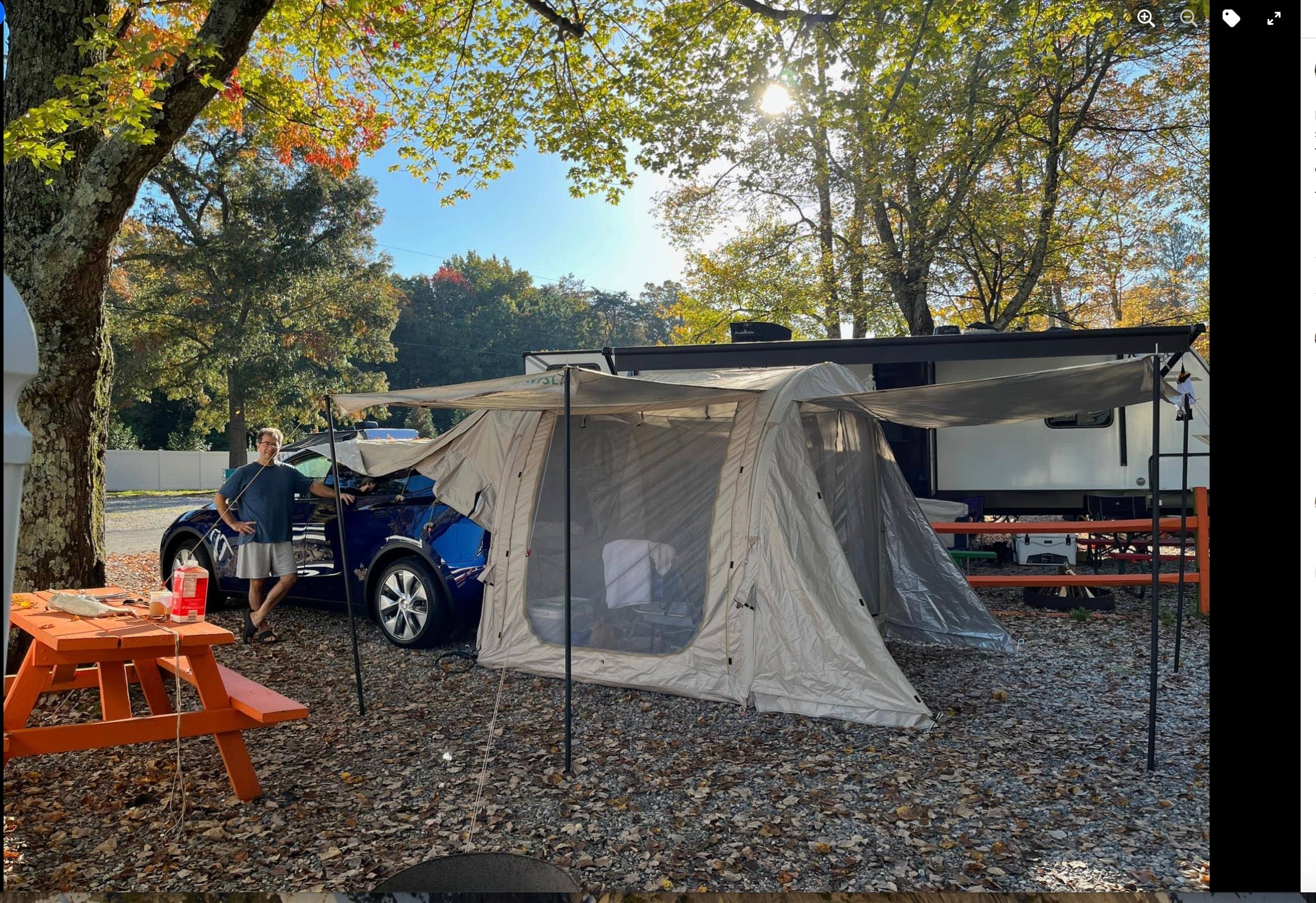
The TENTSLA X1 Tesla camping Tent is custom-engineered for the Model 3, Model Y, and Model X. Instead of destroying your aerodynamics on the highway, it packs neatly into your sub-trunk. When deployed, it attaches seamlessly to your open tailgate, creating a massive, weather-resistant living space that shares the AC and heat from your Tesla cabin.
Premium Weather-Resistant Construction: Tentsla uses carefully selected outdoor-grade materials to deliver excellent durability and water resistance.
- Inner Fabric: 210D Oxford Fabric
- Outer & Floor Fabric: 420D Oxford Fabric
- Support Poles: Lightweight Aluminum
- Protection: Silver Coated Fabric for UV Protection & Heat Insulation
By keeping the weight off your roof, you preserve 100% of your highway range, eliminate wind noise, and protect your glass. Before you spend $3,000 on an RTT, analyze the Tesla Tent Price 2026 market and review the Tesla Model 3 Camping Tent alternatives. The tailgate integration is, without question, the superior commercial choice.
Frequently Asked Questions (FAQ)
Will a rooftop tent crack the Tesla Model 3 glass roof?
In most professional situations, the glass roof will not crack if you strictly adhere to the 150 lb dynamic load limit and properly install the OEM roof rack. The weight rests on the high-strength steel chassis points, not the glass itself. However, overtightening the clamps or carrying a tent heavier than 150 lbs can cause flex that shatters the glass.
How much does a rooftop tent reduce Tesla Model 3 range?
Depending on your driving speed and the aerodynamic profile of the tent, expect a range reduction of 15% to 25% at highway speeds (65+ mph). The blocky shape disrupts the airflow over the vehicle, forcing the motors to consume significantly more energy to maintain speed.
Can I use Tesla Camp Mode with a rooftop tent?
No. Tesla Camp Mode relies on the vehicle's internal HVAC system to regulate the temperature inside the cabin. Because a rooftop tent is entirely external and disconnected from the cabin air vents, you will not receive any heating or air conditioning while sleeping in an RTT. To read more about optimizing your HVAC, see our Tesla Model 3 Camping Tips.
Authoritative References
To ensure our safety guidelines and aerodynamic data align with industry standards, we consult the following authoritative bodies regarding EV performance and structural load limits:
- Society of Automotive Engineers (SAE) - For peer-reviewed data on aerodynamic drag coefficients and their direct impact on electric vehicle battery consumption.
- National Highway Traffic Safety Administration (NHTSA) - For safety standards regarding vehicle roof crush resistance and dynamic load shifting.
- FuelEconomy.gov (U.S. Department of Energy) - For official metrics on how external cargo modifications affect EV EPA range estimates.