


Let us confront the operational reality immediately: the Tesla Model 3 was engineered as an aerodynamic executive sedan, not an overland recreational vehicle. Unlike its larger sibling, the Model Y, the Model 3 features a fixed rear parcel shelf and a noticeable incline when the rear seats are folded flat. If you attempt to throw a cheap sleeping bag directly into the trunk, you will experience a miserable night characterized by back pain and claustrophobia. However, from our experience engineering premium vehicle integrations, if you understand the spatial geometry and employ the right gear, it is entirely possible to turn this sedan into a hyper-efficient, climate-controlled micro-camper.
In most professional situations, we see new owners make critical errors in their Tesla Camping Setup, prioritizing aesthetics over structural comfort. Today, we will dissect the 5 best ways to sleep in tesla model 3, evaluating exactly what works, what fails, and whether upgrading to a specialized tent extension is actually worth your capital investment.

Quick Answer: How to Sleep in Tesla Model 3
To successfully sleep in tesla model 3, you must utilize the vehicle's dedicated "Camp Mode" to maintain overnight climate control. The most comfortable method is combining a custom-cut Tesla Camping Mattress (which bridges the gap between the folded rear seats and the front console) with a tailgate tent extension like the Tentsla X1. This specific combination eliminates the Model 3's severe lack of headroom while providing necessary ventilation and additional living space for gear storage.
Table of Contents
- What It Takes to Sleep in a Model 3 (And How It Works)
- The 5 Best Ways to Sleep in Tesla Model 3
- Benefits and Limitations of Model 3 Camping
- Who Should Camp in a Model 3 (And Who Does Not Need To)
- Common Mistakes that Ruin the Experience
- Comparison Table: Top 5 Sleeping Methods
- Pros and Cons: In-Car vs. Tent Extension
- Buying Considerations for Sleep Systems
- Expert Recommendation from TENTSLA
- The Bottom Line
- Frequently Asked Questions (FAQ)
What It Takes to Sleep in a Model 3 (And How It Works)
Before selecting a sleeping surface, you must understand the operational mechanics of the vehicle. Sleeping inside an internal combustion engine (ICE) vehicle is dangerous due to carbon monoxide risks and lack of temperature control. Your Tesla, however, operates essentially as a massive, wheeled HVAC unit.
How it works: By accessing the climate menu and selecting "Camp Mode," the vehicle bypasses its normal idle-shutdown sequence. It maintains your desired cabin temperature, keeps the USB-C ports energized, powers the 12V socket, and disables the interior Sentry Mode alarm so you do not trigger the security system when you roll over in your sleep. From a structural standpoint, preparing the sleep area involves pushing the front driver and passenger seats completely forward, folding the rear 60/40 split seats down, and laying down a bridging mechanism to cover the gap behind the front seats.
The 5 Best Ways to Sleep in Tesla Model 3 (Ranked by Efficacy)
1. The Premium Setup: Tailgate Tent Extension (Best Overall)
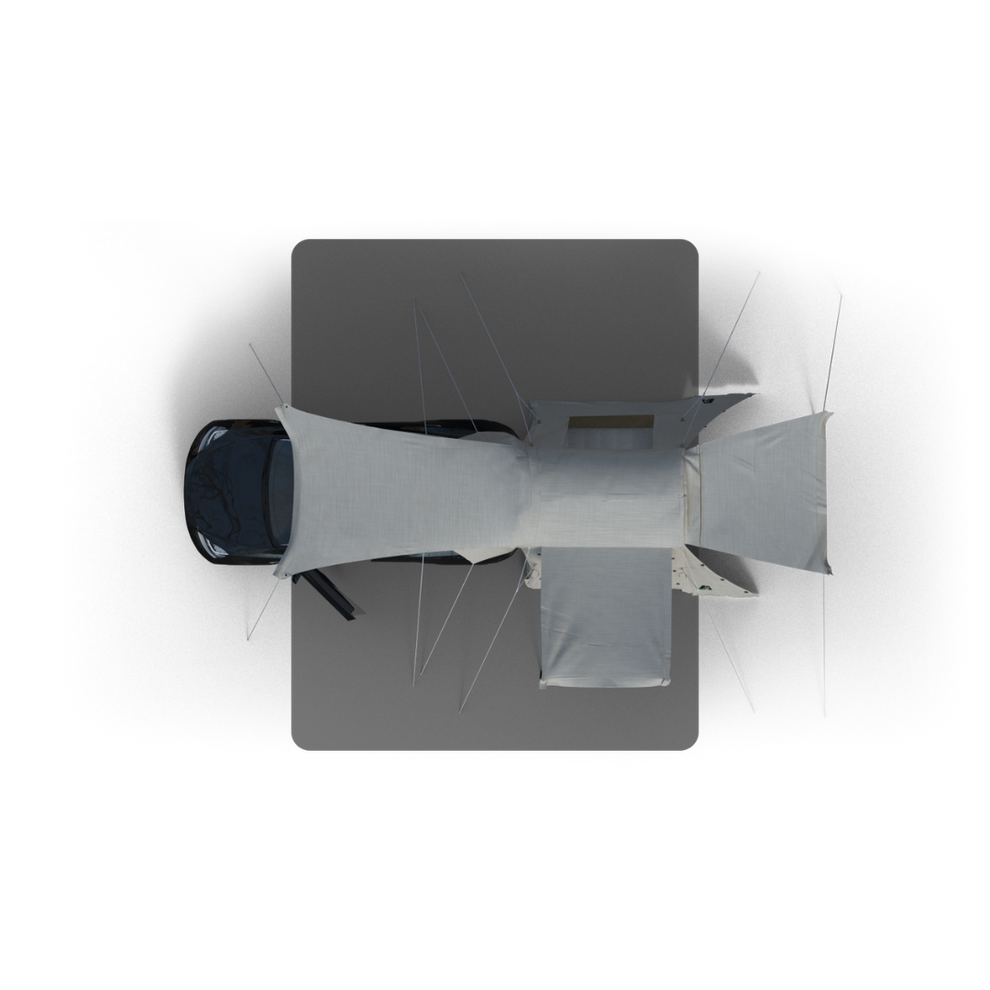
From our testing, the single biggest limitation of the Model 3 is vertical clearance. Because of the fixed rear decklid (where the rear speakers sit), you cannot sit up straight in the back of a Model 3. If you camp more than one weekend a year, we recommend attaching a Tesla Camping Tent to the rear trunk. By leaving the trunk open and sealing a specialized tent over the rear of the vehicle, you dramatically expand your living space. You sleep inside the climate-controlled cabin, but you have a weather-proof room attached to the bumper to stand up, change clothes, and store your gear.
2. The Custom-Fit Memory Foam Mattress
If you prefer stealth camping without deploying external gear, you need a mattress cut specifically for the Model 3's wheel wells. Standard household mattresses will bunch up at the sides, ruining your sleeping posture. A custom-cut foam mattress utilizes multi-density layers to absorb the slight incline of the folded seats, ensuring your spine remains neutral. The downside? Memory foam does not pack down small, consuming a significant portion of your sub-trunk storage.
3. The Self-Inflating Hybrid Mattress
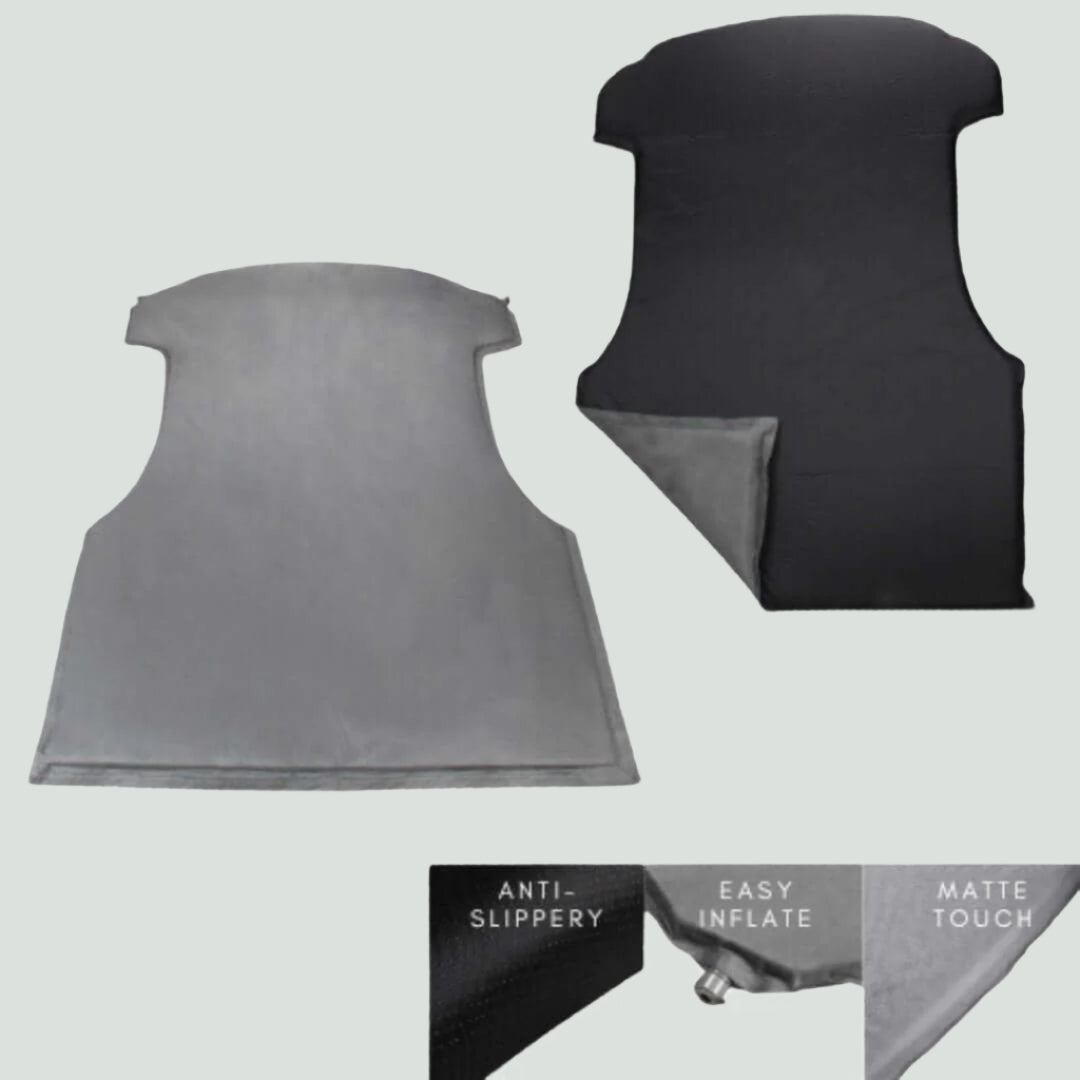
For commercial users or cross-country road-trippers who need to maximize cargo space, a Tesla Trunk Mattress featuring self-inflating technology is the optimal compromise. These utilize an open-cell foam core wrapped in an airtight shell. When you open the valve, the foam expands, pulling air in. It provides the firm support of foam but compresses down much smaller than solid memory foam. You will need a reliable Portable Air Pump for Tent setups to rapidly deflate it when breaking camp.
4. The Budget Air Mattress (Not Recommended)
Many beginners attempt to buy a $30 generic twin-sized air mattress. We advise strongly against this. Generic air mattresses do not account for the center console intrusion or the wheel well dimensions. More critically, pure air mattresses act as thermal heat sinks. The cold air radiating from the vehicle's floorboard cools the air inside the mattress, effectively freezing you from below, regardless of what temperature Camp Mode is set to.
5. Reclining the Front Seats (Emergency Only)
If you are stranded at a Supercharger during a blizzard and have zero Camping Accessories for Tesla, your final option is to remove the front seat headrests, push the seats completely back, and recline them as far as the motors allow. It is functionally miserable for a full night's sleep and will likely result in lower back stiffness, but it keeps you inside the climate-controlled envelope.
Benefits and Limitations of Model 3 Camping
The Benefits: The primary advantage is absolute climate supremacy. Whether you are in the freezing mountains or a humid desert, Camp Mode delivers an ambient 70 degrees Fahrenheit with continuous fresh air filtration. Furthermore, your vehicle serves as a massive battery bank, capable of powering laptops, induction cooktops, and lighting.
The Limitations: The Model 3 is not an SUV. The trunk opening is narrow, and the interior volume is restricted. If you do not utilize a Tentsla X1 Tent or similar extension, you must maneuver inside the cabin on your hands and knees. Furthermore, moisture management is a challenge; two adults breathing in a small cabin overnight will cause severe window condensation unless the AC is actively pulling humidity out of the air.
Who Should Camp in a Model 3 (And Who Does Not Need To)
Who should use it: Weekend warriors, climbers, photographers, and festival-goers who need a secure, climate-controlled basecamp without the massive fuel penalties of driving an RV. For these users, investing in proper sleep gear transforms the vehicle into a high-tech sleeping pod.
Who does not need it: Families of three or more. The physical footprint of the folded rear seats in a Model 3 can comfortably accommodate two adults (up to roughly 6'2"). If you have children or large dogs, the Model 3 internal cabin is insufficient. In those scenarios, you must utilize an external tent, or you simply should not camp in this specific vehicle.
Common Mistakes that Ruin the Experience
In our testing, we consistently see new campers make the same operational errors:
- Ignoring the "Trunk Gap": When you push the front seats forward, a massive physical gap is created between the folded rear seats and the front console. If your mattress does not have a rigid board insert to bridge this gap, your pillows (and your head) will collapse into the rear footwells.
- Failing to Level the Vehicle: If you park on a 5-degree incline with your head pointing downhill, all the blood will rush to your head, ruining your sleep. Always carry leveling blocks or actively seek out perfectly flat topography.
- Forgetting Window Privacy Covers: Without blackout shades, you will wake up at 5:30 AM to blinding sunlight. Furthermore, glass is a terrible insulator; covers help your HVAC system run more efficiently overnight.
Comparison Table: Top 5 Sleeping Methods
| Sleeping Method | Comfort Level | Storage Space Required | Best Use Case |
|---|---|---|---|
| 1. Tailgate Tent + Custom Mattress | Exceptional (10/10) | High (Frunk + Sub-trunk) | Multi-day camping, poor weather conditions |
| 2. Custom Memory Foam | High (8/10) | High (Takes up trunk space) | Stealth camping, single-night urban stops |
| 3. Self-Inflating Hybrid | Moderate-High (7/10) | Medium (Fits in sub-trunk) | Road trips where cargo space is critical |
| 4. Generic Air Mattress | Poor (3/10) | Low (Folds very small) | Do not recommend (poor thermal insulation) |
| 5. Reclined Front Seats | Very Poor (1/10) | None | Absolute emergencies only |
Pros and Cons: In-Car vs. Tent Extension
| Setup Type | Pros | Cons |
|---|---|---|
| In-Car Only (Stealth Mode) | No setup time; invisible to the outside; maximum security against wildlife. | Severe lack of headroom; nowhere to store dirty shoes or gear; difficult to change clothes. |
| Tailgate Tent Extension | Doubles living space; allows you to stand up; excellent gear storage; improved ventilation. | Requires 10 minutes to setup/teardown; cannot be used in stealth urban environments. |
Buying Considerations for Sleep Systems
| Feature to Evaluate | Why It Matters for the Model 3 | Professional Standard to Look For |
|---|---|---|
| Fabric Durability (Tents) | A tent stretching over a car's metal edges will tear if the denier count is too low. | Look for 210D Oxford Fabric inner layers and 420D Oxford Fabric outer floors. |
| Thermal Insulation | Glass roofs turn vehicles into greenhouses in the morning. | Ensure your setup includes Silver Coated Fabric for UV protection and heat deflection. |
| Structural Support | Wind shear across a vehicle can collapse cheap fiberglass poles. | Demand Aluminum Support Poles and heavy-duty Steel Tent Pegs. |
Expert Recommendation from TENTSLA
If you are serious about understanding how to sleep in tesla model 3 without compromising your physical comfort, you must address the vehicle's structural limitations. We recommend the Tentsla X1 specifically because it was engineered to solve the Model 3's headroom deficit. Utilizing robust 210D Oxford inner fabric and 420D floor fabric, paired with aerospace-grade aluminum poles, this system transforms the aerodynamic trunk into a fully functional basecamp. Do not settle for generic gear that fails to utilize the precise contours of your Tesla. Equip your vehicle with purpose-built integration, and your camping experience will rival traditional RVing at a fraction of the cost.
The Bottom Line
Deciding to sleep in tesla model 3 is a brilliant way to leverage your EV's massive battery and climate control system for outdoor adventures. However, throwing a cheap sleeping bag into the back of a luxury sedan is a recipe for a terrible night. By utilizing Camp Mode, investing in a custom-contoured mattress to flatten the load floor, and deploying a tailgate tent extension for essential headroom, you elevate the experience from "survival" to genuine outdoor luxury. Make the commercial decision to invest in vehicle-specific gear—your back will thank you.
Frequently Asked Questions (FAQ)
From our experience, Camp Mode typically consumes roughly 1% of the battery capacity per hour in moderate weather (around 60-70 degrees outside). In extreme cold (sub-freezing) where the heater must run aggressively, expect it to consume between 1.5% to 2.5% per hour. Over an 8-hour sleep cycle, you will generally use 8% to 20% of your total battery range.
No. When Camp Mode is engaged, the HVAC system constantly draws fresh air from the outside, filters it through the cabin air filters, and circulates it throughout the interior. The vehicle is not hermetically sealed, so oxygen depletion is not a risk as long as the climate control is actively running.
No, the Model 3 rear seats do not fold perfectly flat. They sit at a slight upward angle. To combat this, you can physically unbolt and remove the bottom seat bench cushion before folding the seatbacks down (which helps flatten the angle), or simply use a purpose-built mattress designed with thicker foam at the bottom to offset the incline.
Authoritative References
- U.S. Department of Energy (DOE) - Technical data regarding electric vehicle battery efficiency, auxiliary loads, and HVAC power consumption during prolonged stationary operations.
- National Highway Traffic Safety Administration (NHTSA) - Federal guidelines on vehicle safety, off-road parking protocols, and the dangers of carbon monoxide in traditional internal combustion vehicles compared to EVs.
- Sleep Foundation - Clinical research on the necessity of ambient temperature regulation (ideally around 65 degrees Fahrenheit) for achieving restorative REM sleep cycles.