


Buying a used electric vehicle in 2026 is no longer a niche endeavor; it is a mainstream financial decision. However, the secondary market is currently flooded with out-of-warranty, first-generation vehicles that carry catastrophic repair liabilities. As specialists in outfitting Teslas for off-grid outdoor experiences at TENTSLA, our team spends thousands of hours inside these vehicles. We have seen firsthand which battery packs fail during extreme weather camping, which suspension systems collapse under payload, and which infotainment screens leak adhesive in the summer heat.

From our experience, the assumption that all Teslas are technologically immune to aging is a dangerous myth. If you are asking which Tesla models to stay away from, you must evaluate the vehicle not just by its software version, but by its physical hardware generation. A poorly chosen used Tesla can easily result in a $15,000 High Voltage (HV) battery replacement bill, entirely wiping out your gas savings.
In this comprehensive guide, we will answer your search intent directly. We will outline exactly which Tesla models to stay away from, explain the mechanical and commercial reasons behind these warnings, and provide a clear framework for making a safe, reliable purchase for your daily commute or your next overland adventure.
Quick Answer: Which Tesla Models to Stay Away From?
In 2026, you should absolutely stay away from the pre-2016 Model S (85kWh versions) due to rampant drive unit failures, MCU1 screen delamination, and severe battery degradation caps. You must also avoid the 2016-2018 Model X; the early Falcon Wing doors suffer from chronic sensor and actuator failures that cost thousands to repair out of pocket. Finally, avoid early production 2017-2019 Model 3s, which lack the highly efficient heat pump (critical for range retention in cold weather) and suffer from notorious early-build suspension squeaks and panel alignment issues. For heavy-duty applications or reliable daily driving, always target a 2021 or newer model featuring the AMD Ryzen processor and the heat pump system.
Table of Contents
- 1. Quick Summary Table: Avoid vs. Buy
- 2. The Danger Zone: Pre-2016 Model S
- 3. The Money Pit: 2016-2018 Model X
- 4. The Compromise: Early 2017-2019 Model 3
- 5. The Hidden Trap: Ex-Rental Fleet Vehicles
- 6. How Bad Battery Health Ruins Camp Mode
- 7. Pros and Cons: Buying Old vs. New
- 8. Professional Buying Considerations (Checklist)
- 9. Expert Recommendation & TENTSLA Gear
- 10. Frequently Asked Questions (FAQ)
- 11. Authoritative References
1. Quick Summary Table: Avoid vs. Buy
In most professional situations, we categorize the used Tesla market by hardware iterations rather than just the model name. Here is a high-level overview of which Tesla models to stay away from versus which are safe buys.
| Tesla Model & Year | Our Verdict | Primary Fatal Flaws |
|---|---|---|
| Model S (2012-2015) | Stay Away | HV battery failure, MCU1 memory wipe, Door handles failing. |
| Model X (2016-2018) | Stay Away | Falcon wing door sensor failure, excessive front half-shaft shudder. |
| Model 3 (2017-2019) | Proceed with Extreme Caution | No heat pump, resistive heater failure, upper control arm squeaks. |
| Model Y (2020) | Proceed with Caution | Harsh suspension, early heat pump sensor teething issues. |
| Model 3 / Model Y (2021-Present) | Highly Recommended | Resolved suspension, AMD Ryzen chip, robust heat pump, LFP batteries (RWD). |
2. The Danger Zone: Pre-2016 Model S (85kWh, P85)
If you want to know which Tesla models to stay away from, the 2012-2015 Model S is at the top of the list. While they look enticing priced under $20,000, they are mechanical and digital time bombs.
First, the original 85kWh battery packs have proven to be highly problematic. In response to fire risks, Tesla pushed software updates that artificially capped the charging voltage and dramatically reduced Supercharging speeds. A pre-2016 Model S might take well over an hour to charge at a station, making road trips excruciating. Second, the MCU1 (Media Control Unit) features an eMMC flash memory chip that is guaranteed to burn out due to excessive data logging, resulting in a blank screen and a bricked car. Replacing this out of warranty is a massive expense.
3. The Money Pit: 2016-2018 Model X
The Model X is a technological marvel, but early iterations were notoriously over-engineered. We explicitly warn buyers away from the 2016-2018 Model X. The primary culprit is the Falcon Wing doors. In our testing, the ultrasonic sensors embedded in the early doors fail at an alarming rate, either refusing to open or slamming shut unpredictably. Because these models are now entirely out of their basic 4-year/50,000-mile warranty, you will be paying luxury-car labor rates to fix these proprietary systems.
Furthermore, early Model X variants suffer from the "acceleration shudder"—a severe vibration caused by failing front half-shafts when accelerating under load. For heavy-duty applications or towing, these early drivetrains simply do not hold up.
4. The Compromise: Early 2017-2019 Model 3
The early Model 3 represents a grey area. While not catastrophic, we still categorize the 2017-2019 Model 3s under which Tesla models to stay away from if you have the budget for a newer one. Why? The lack of a heat pump.
Pre-2021 Model 3s utilize a resistive PTC heater to warm the cabin. In winter conditions, this heater aggressively drains the HV battery, resulting in up to a 40% range loss in freezing temperatures. Additionally, these early builds suffer from notorious squeaking in the front upper control arms due to unsealed ball joints. We recommend spending the extra premium to secure a 2021 or newer Model 3 that includes the "Octovalve" heat pump, power trunk, and double-paned acoustic glass.
5. The Hidden Trap: Ex-Rental Fleet Vehicles
In 2024 and 2025, major rental companies like Hertz dumped tens of thousands of Model 3s and Model Ys onto the used market. You must stay away from these ex-rental vehicles unless they are priced at an extreme discount. Rental EVs are routinely supercharged to 100% and driven aggressively by people unfamiliar with regenerative braking. This sustained high-voltage DC fast charging accelerates battery degradation significantly faster than a privately owned Tesla charged at home on Level 2 AC power.
6. How Bad Battery Health Ruins Camp Mode
At TENTSLA, our focus is transforming your vehicle into the ultimate overland basecamp. If you buy an older, degraded Tesla, you ruin this experience. When using Camp Mode to run the climate control all night, the vehicle pulls power directly from the HV battery. To understand the exact math, read our guide on Tesla Camping Mode Battery Drain.
A degraded 2014 Model S might lose 25% of its battery overnight running the AC. Conversely, a 2022 Model Y with a heat pump will only lose 8-10%. If you want to safely Sleep Two Adults in Tesla Model Y and still have enough range to drive out of the wilderness the next morning, you cannot rely on an 8-year-old battery. Furthermore, ensuring you have the right Tesla Camping Mattress and a reliable climate control system is paramount for Tesla Model Y Sleeping Safety.
7. Pros and Cons: Buying Older Teslas vs. Newer Teslas
| Older Teslas (Pre-2019) | Newer Teslas (2021-Present) |
|---|---|
| Pro: Significantly lower upfront purchase price. | Pro: Active factory warranties (Basic and Battery). |
| Pro: Some feature free lifetime Supercharging (Model S/X). | Pro: AMD Ryzen processor for lag-free infotainment. |
| Con: Severe risk of out-of-warranty battery failure ($15k+). | Pro: Heat pump standard (massive winter range improvement). |
| Con: Outdated MCU1/MCU2 screens that freeze or delaminate. | Con: Higher upfront cost and depreciation curve. |
| Con: Inefficient resistive heating drains battery fast in Camp Mode. | Con: Removal of Ultrasonic Sensors (Tesla Vision only). |
8. Professional Buying Considerations (Checklist)
If you are navigating the used market in 2026, use this commercial-grade checklist to avoid buying a liability.
| Component to Check | What to Look For | Why It Matters |
|---|---|---|
| High Voltage (HV) Battery Warranty | Ensure there are at least 2 years or 20,000 miles left on the 8-year/100k-120k mile warranty. | An HV battery replacement costs between $12,000 and $18,000. Never buy a Tesla with an expired battery warranty unless it is drastically discounted. |
| Processor Type | Go to Software > Additional Vehicle Information. Look for "AMD Ryzen". Avoid "Intel Atom". | The Intel Atom is obsolete in 2026. UI updates, web browsing, and video streaming will lag severely on the old chip. |
| Suspension Creaks | Turn the steering wheel lock-to-lock while parked. Listen for groaning or squeaking. | Indicates failing upper control arms, a widespread issue on 2017-2020 Model 3s and early Model Ys. |
| Low Voltage Battery | Ask if it has the 12V Lead-Acid or the 16V Lithium-Ion battery. | Older 12V batteries fail abruptly every 2-3 years, leaving you stranded. The newer 16V Li-ion lasts the life of the car. |
9. Expert Recommendation & TENTSLA Gear
The TENTSLA Verdict
From our experience engineering outdoor solutions for EV owners, your best investment in 2026 is a used 2022 or 2023 Tesla Model Y Long Range. It bypasses all the early production flaws, includes the highly efficient heat pump, features the AMD Ryzen processor, and still carries years of factory battery warranty.
If you are outfitting your vehicle for camping, understanding Tesla Model Y Camp Mode Guide and pairing it with proper Tesla Camping Accessories is crucial. Once you have secured a reliable vehicle, the final step is expanding your living space.
We recommend pairing your reliable Model Y (or post-2021 Model 3) with the ultimate camping integration. Instead of sleeping cramped in the back, deploy a dedicated shelter designed specifically for your tailgate.
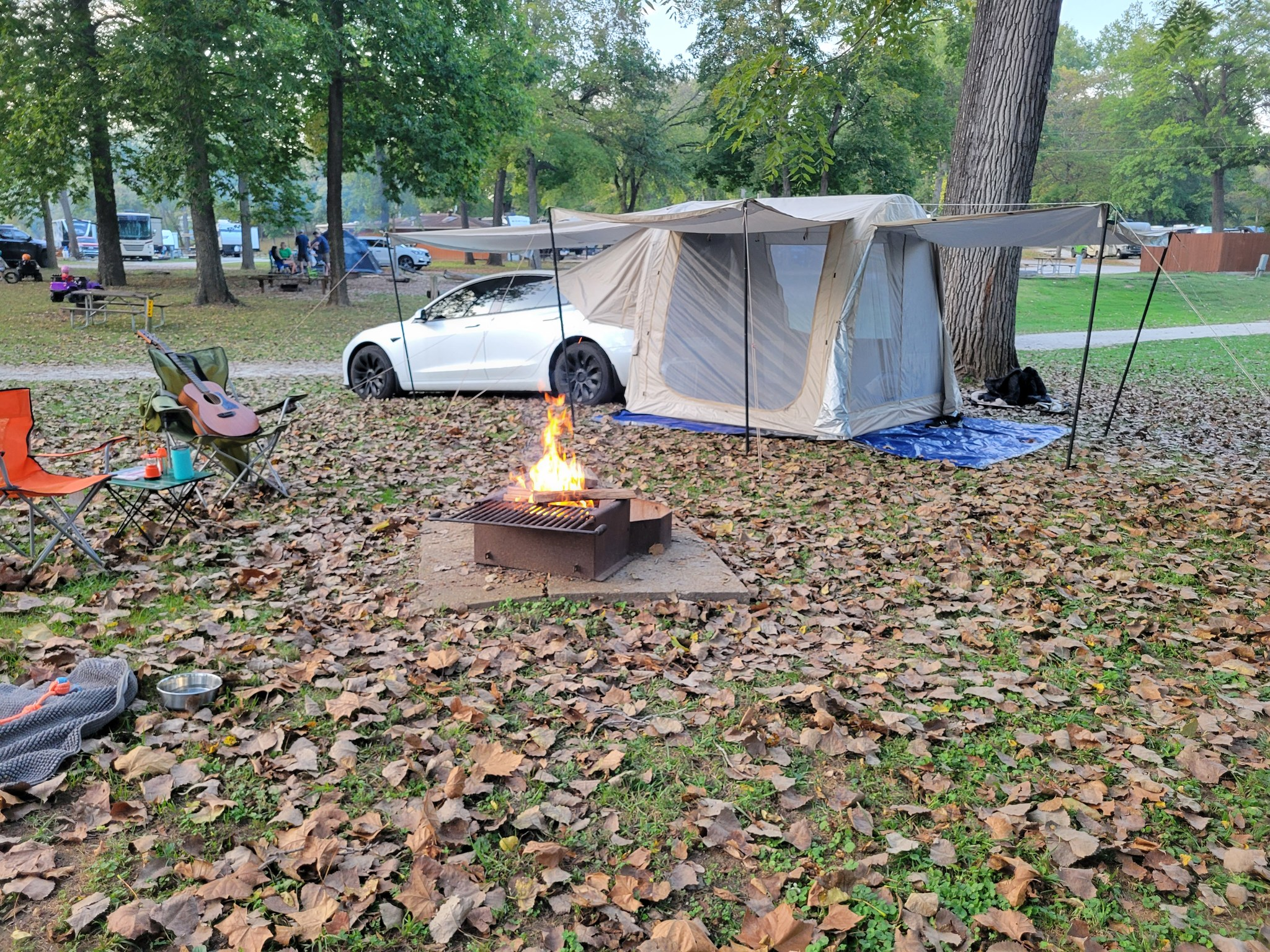
TENTSLA X1 Tesla Camping Tent
Designed seamlessly for the Tesla Model 3, Model Y, and Model X, the Tentsla X1 transforms your reliable EV into a premium off-grid cabin. Utilizing your Tesla's climate control, the X1 provides a spacious, weather-controlled annex.
Premium Weather-Resistant Construction
Tentsla uses carefully selected outdoor-grade materials to deliver excellent durability, water resistance, and long-lasting performance in various weather conditions.
- Inner Fabric: 210D Oxford Fabric
- Outer & Floor Fabric: 420D Oxford Fabric
- Support Structure: Aluminum Poles & Advanced Inflatable Air-Frame
- Insulation: Silver Coated Fabric for UV Protection & Heat Insulation
Fast Inflatable Installation
Tentsla’s advanced inflatable air-frame system enables fast and effortless setup in just a few minutes. Simply inflate the structure, secure the tent, and start enjoying your outdoor experience without the hassle of traditional tent assembly.
For alternatives, check out our guide on the Popular Tesla Camping Tents or specific setups like Tesla Model Y Camper Kits and Tesla Model Y Camping Platform.
10. Frequently Asked Questions (FAQ)
Are high-mileage Teslas worth buying?
It depends on the battery chemistry and charging history. High-mileage Model 3 Standard Range models with LFP (Lithium Iron Phosphate) batteries are incredibly robust and degrade very slowly. However, high-mileage Model S vehicles (NCA batteries) driven exclusively on Superchargers should be avoided due to severe degradation risks.
Which year did Tesla introduce the heat pump?
The heat pump (Octovalve) was introduced with the launch of the Model Y in 2020. It was subsequently integrated into the Model 3 starting with the 2021 model year refresh. We strongly recommend only purchasing vehicles equipped with this system for optimal range retention.
How much does a Tesla battery replacement cost out of warranty?
Out-of-warranty High Voltage (HV) battery replacements typically range from $12,000 to $18,000 depending on the model and pack size. This is why purchasing a vehicle with an active 8-year factory battery warranty is critical.
11. Authoritative References
To ensure our safety and reliability claims are grounded in factual industry standards, we reference the following authoritative organizations:
- National Highway Traffic Safety Administration (NHTSA) - Official database for vehicle recalls, specifically tracking early Model S and Model X suspension and MCU failures.
- Consumer Reports - Independent reliability testing data highlighting the build quality improvements in post-2021 Tesla Model 3 and Model Y variants.
- Kelley Blue Book (KBB) - Authoritative data on EV depreciation, battery replacement costs, and secondary market valuations for ex-rental fleet vehicles.