


An SUV rear tent can turn your vehicle into a practical camping base without requiring you to carry a separate traditional tent for every trip. The best type depends on how you travel, how many people need to sleep inside, whether you want to access the vehicle from the shelter, and how much setup time you are willing to accept.
For most SUV campers, the four options worth comparing are a rear hatch tent, a vehicle-specific inflatable tent, a freestanding or standalone SUV awning tent, and a tailgate-connected extension tent. They overlap in some designs, but they solve different problems. A compact hatch shelter is convenient for short trips, while an inflatable or extended shelter may be more suitable for longer stays and changing weather.

Our recommendation is to choose based on your actual vehicle dimensions, sleeping arrangement, weather exposure and campsite routine—not just the tent's advertised capacity. For Tesla owners, compatibility deserves particular attention because rear hatch geometry, tailgate clearance and vehicle-specific camping requirements can affect the experience.
Quick Answer: What Type of SUV Rear Tent Should You Buy?
A rear hatch tent is usually best for quick stops, tailgate cooking and compact shelter. An inflatable vehicle tent is worth considering if you want faster setup and fewer rigid poles. A freestanding SUV tent is better when you want to leave the campsite without dismantling the entire shelter. A tailgate extension tent suits campers who need extra sheltered living space or room for gear.
Before buying, confirm the tent's attachment method, rear-door clearance, dimensions, weather protection, ventilation and whether it can remain standing when the vehicle drives away. For Tesla owners seeking a vehicle-specific camping setup, the TENTSLA X1 is one option to evaluate against these requirements.
Quick Summary Table: Four SUV Rear Tent Types
| Tent type | Best use | Main advantage | Main limitation | Best for |
|---|---|---|---|---|
| 1. Rear hatch tent | Short trips, tailgate shelter and quick overnight stops | Compact and generally simple to deploy | Coverage and sleeping space may be limited | Solo campers and couples who prioritize simplicity |
| 2. Inflatable SUV tent | Frequent camping and flexible outdoor setups | Air-frame design can simplify setup | Requires an appropriate pump and careful anchoring | Campers who value convenient installation |
| 3. Freestanding SUV tent | Multi-day camps and flexible campsite use | Some models can stay pitched after the vehicle leaves | Can be bulkier and may require more assembly | Families and campers who explore away from camp |
| 4. Tailgate extension tent | Longer stays, changing weather and extra living space | Creates a larger sheltered area behind the vehicle | Compatibility and attachment points require careful checking | Road trippers and campers carrying more gear |
What Is an SUV Rear Tent?
An SUV rear tent is a shelter designed to attach to, extend from or sit beside the rear of a sport utility vehicle. Depending on the design, it may connect to the open tailgate, create a covered area for cooking or changing, or provide additional sleeping and storage space. Some models use conventional poles, while others use inflatable air beams or a freestanding frame.
The key difference between a rear tent and an ordinary ground tent is the relationship with the vehicle. A rear tent can make it easier to access luggage, keep equipment under cover and use the vehicle as part of the campsite. However, not every product creates a fully sealed connection, and not every design is suitable for sleeping directly inside the vehicle.
How does an SUV rear tent work?
Most models use straps, sleeves, magnets where appropriate, guy lines or other attachment points to connect the shelter to the rear hatch or vehicle body. The lower edges are secured to the ground with stakes or suitable anchors. Freestanding versions support themselves with their own structure, while inflatable models use air beams to establish the tent shape.
The correct installation method depends on the manufacturer's instructions and the vehicle's shape. Do not assume a tent designed for one SUV will fit another just because the vehicles have similar dimensions. Tailgate height, hatch opening width, rear bumper shape and attachment points all affect compatibility.
Who should consider an SUV rear tent?
Rear tents are particularly useful for road trippers, weekend campers, outdoor photographers, anglers and families who want a sheltered area close to the vehicle. They can be helpful when a conventional tent feels inconvenient or when the tailgate is a natural place to organize equipment.
They may be less suitable for campers who need a lightweight backpacking shelter, regularly pitch on exposed terrain with severe weather, or require a fully independent tent that works with many vehicle types. For those users, a conventional freestanding tent may be the more practical purchase.
Type 1: Rear Hatch Tent — Best for Quick Stops and Simple Camping
A rear hatch tent connects to the open rear hatch of an SUV, creating a covered space behind the vehicle. Depending on the design, it can function as a changing area, a sheltered place to sit, a kitchen cover or an extension of the vehicle's rear cargo area.
Why choose a rear hatch tent?
The main attraction is simplicity. A basic design may take less time to set up than a large multi-room shelter, and it can make a short stop more comfortable when the weather is sunny or lightly rainy. It also keeps frequently used items close to the vehicle instead of scattered around the campsite.
For a couple taking a weekend road trip, a compact hatch tent may provide enough covered space for bags, chairs and meal preparation. It is particularly appealing when the priority is a convenient base rather than a large enclosed living room.
Limitations to consider
A hatch tent may not provide enough room for several people to sleep comfortably. Its performance in wind-driven rain depends on the shape of the connection, the quality of the fabric and how well the shelter is secured. Some models also depend on the hatch remaining open, which can affect vehicle access and use.
Before buying, check whether the tent is intended for shelter only or for sleeping. Confirm the hatch can open without putting excessive tension on the fabric and that the attachment does not interfere with seals, trim or the vehicle's closing mechanism.
Type 2: Inflatable SUV Rear Tent — Best for Convenient Setup
An inflatable SUV tent uses air beams or inflatable structural elements instead of relying entirely on traditional rigid poles. The user inflates the frame, positions the shelter, attaches the vehicle connection where required and secures the tent with guy lines and anchors.
For frequent campers, this design can reduce the effort involved in assembling a frame. It is especially attractive to people who arrive at a campsite after a long drive and want to get organized quickly. However, setup time still depends on tent size, wind, ground conditions and how familiar the user is with the product.
Advantages of an inflatable tent
- Air beams can simplify the main structure compared with a complex pole assembly.
- Some designs provide generous headroom and a flexible living area.
- The packed structure may be convenient for vehicle-based camping.
- Many models can be set up by one person, depending on size and weather conditions.
What are the drawbacks?
Inflatable tents depend on airtight structural components, valves and compatible inflation equipment. A puncture or valve issue can affect setup, so repair materials and the manufacturer's maintenance instructions matter. The tent must also be anchored correctly; an inflatable frame does not eliminate the need for guy lines and suitable ground stakes.
Do not judge an inflatable tent solely by the claim that it sets up in minutes. Ask whether that time includes inflation, vehicle attachment, anchoring and rain protection. In practice, a quick inflation step is only one part of a safe and stable campsite setup.
Do you need a dedicated air pump?
Use the pump specified or approved by the tent manufacturer. Excessive pressure or an incompatible pump can damage inflatable beams, while inadequate pressure may leave the structure unstable. A compact portable pump can be useful for vehicle campers, but compatibility and the correct pressure limit are more important than maximum pumping speed.
For a convenient setup, consider a compatible portable air pump for tent inflation. Check the pump's connection, power requirements and instructions before using it with any inflatable tent.
Type 3: Freestanding SUV Tent — Best for Flexible Multi-Day Camping
A freestanding SUV tent uses its own frame to support the shelter rather than relying entirely on the vehicle. Some models can connect to an SUV's rear hatch while still standing independently. When the connection is detached correctly, the tent may remain pitched while the vehicle is used for a day trip.
This feature is valuable for campers who establish a base for several nights. Instead of dismantling the whole shelter whenever they need to drive to a trailhead, grocery store or sightseeing destination, they can separate the vehicle and tent if the design supports it.
Advantages for families and longer stays
Freestanding designs often offer more flexibility in how the campsite is arranged. Some include separate sleeping and living areas, additional doors or larger vestibules. These features can improve organization when several people are sharing the space or when wet gear needs to be stored separately from sleeping equipment.
What to check before buying
Freestanding does not mean windproof or safe in every condition. The shelter still needs to be anchored, and the frame must be used within the manufacturer's weather limits. Larger tents may also be heavier, bulkier to store and slower to pitch than compact hatch shelters.
Check whether the tent can actually detach from the vehicle while remaining stable. Some designs require the rear connection to be adjusted or closed before driving away. Never move the vehicle while the tent remains attached unless the manufacturer explicitly provides a safe procedure for that specific configuration.
For family camping, compare usable floor dimensions rather than the maximum person count alone. Sleeping bags, bags, footwear and changing space all consume room. A tent advertised for four people may feel crowded when four adults and their equipment share it for several nights.
Type 4: Tailgate Extension Tent — Best for Extra Sheltered Living Space
A tailgate extension tent creates a more substantial sheltered area behind an SUV. Depending on its design, it may offer enclosed walls, a larger floor area, multiple openings or enough room to organize chairs, cooking equipment and luggage away from the weather.
This type is often useful for road trips that include several nights outdoors, especially when the vehicle is the center of the campsite. It can create a clear separation between the sleeping area, storage and everyday campsite activities.
Why choose an extension tent?
The main benefit is space. A larger extension can be more comfortable when the weather forces people to spend time under cover or when bulky equipment needs protection. It may also make vehicle-based camping feel less cramped than using the cargo area alone.
Compatibility matters more than appearance
Extension tents are sensitive to the shape and dimensions of the vehicle. A poor fit can leave gaps, create tension around the hatch or make rainwater flow into the shelter. Confirm the recommended vehicle models, hatch height range, attachment method and clearance requirements before ordering.
Consider how the tent will be used in wind and rain. Look for appropriate rain protection, ventilation, ground coverage and secure anchoring. No fabric or design should be assumed to provide guaranteed protection under all weather conditions.
Is a larger extension always better?
No. More floor area can improve comfort, but it also means more fabric to handle, more ground space to find and potentially more setup work. A large tent may be inconvenient at compact campsites or when you need to move frequently. Buy the smallest configuration that comfortably supports your actual group and equipment.
For Tesla owners, a vehicle-specific camping system may reduce compatibility uncertainty. TENTSLA's car camping tents for Tesla vehicles provide a starting point for comparing designs intended for the brand's vehicles.
Detailed Comparison: Which SUV Rear Tent Fits Your Camping Style?
| Buying factor | Rear hatch tent | Inflatable tent | Freestanding tent | Tailgate extension |
|---|---|---|---|---|
| Setup priorities | Simple shelter deployment | Convenient air-frame inflation | Independent frame assembly | More extensive shelter setup |
| Living space | Usually compact | Varies by model; may be generous | Often flexible, with optional zones | Designed to add covered space |
| Vehicle connection | Usually relies on rear hatch | May attach to the vehicle or stand separately | Some models detach and stand alone | Generally designed around tailgate access |
| Storage needs | Often smaller packed size | Depends on beams and fabric volume | Frame can increase packed bulk | Larger designs may require more storage |
| Maintenance focus | Fabric, seams and attachment points | Air beams, valves, pump and fabric | Frame, joints, stakes and fabric | Attachment points, seams and rain protection |
| Best trip style | Quick stops and short weekends | Frequent vehicle camping | Multi-day base camps | Longer stays and extra sheltered space |
| Key buying check | Hatch compatibility | Inflation method and anchoring | Independent stability and detachability | Fit, coverage and water management |
The comparison is a starting point rather than a universal ranking. Products within each category differ considerably. Review the exact dimensions, connection system, materials, packed size and manufacturer's weather guidance before choosing a model.
Pros and Cons of an SUV Rear Tent
| Pros | Cons |
|---|---|
| Uses the vehicle as a convenient base for equipment and campsite organization. | Fit and attachment depend on the vehicle's rear geometry and the tent design. |
| Can provide sheltered space for changing, relaxing or preparing gear. | Some models need the hatch open, which can limit vehicle access. |
| Inflatable and vehicle-specific models can simplify parts of setup. | Inflatable structures require compatible pumps, correct pressure and inspection. |
| Some freestanding designs remain pitched while the vehicle is away. | Not all connected tents can be safely detached without partial disassembly. |
| Can be more practical than a separate large shelter for vehicle-centered trips. | Large models may be bulky and unsuitable for small campsites or frequent moves. |
| Offers multiple configurations for solo campers, couples and families. | Weather protection varies; no tent should be treated as storm-proof without verified specifications. |
From our perspective, the biggest benefit is convenience when the shelter fits the vehicle and the camping routine. The biggest risk is buying based on photographs without checking compatibility, usable space and the conditions in which the tent is intended to operate.
How to Choose the Right SUV Rear Tent: A Practical Buying Checklist
1. Confirm your exact vehicle model
Check the vehicle make, model year and rear hatch dimensions. For electric vehicles such as Tesla models, also review the manufacturer's instructions for vehicle operation while camping. Do not assume that a tent advertised for a Model Y will fit a Model 3 or Model X in the same way.
Owners comparing vehicle-specific options can read TENTSLA's guide to Tesla Model 3 camping tents. Use compatibility information as a starting point, then confirm the product's own fit requirements.
2. Decide whether you need sleeping space or only a shelter
This is one of the most important decisions. A rear hatch shelter may be ideal for covered cooking or changing, but it is not automatically a suitable sleeping tent. If people will sleep inside the shelter, confirm the floor dimensions, ventilation, privacy, ground protection and weather limitations.
3. Check fabric, seams and structural components
Look for clearly described materials, reinforced stress points, quality zippers, reliable guy lines and suitable ground anchors. Fabric denier can provide some information about fabric construction, but it does not alone establish waterproof performance or durability. Ask for water-resistance information and the care instructions for the actual product.
For TENTSLA X1, the listed construction includes 210D Oxford fabric for the inner fabric, 420D Oxford fabric for the outer and floor fabric, aluminum support poles, steel tent pegs and silver-coated fabric for UV protection and heat insulation. Those specifications are useful starting points, but buyers should still review the product's complete care, weather and setup guidance.
4. Evaluate ventilation and condensation control
Condensation can develop when warm, humid air meets cooler tent surfaces. Multiple occupants, wet clothing and limited airflow can make the problem worse. Look for suitable ventilation openings and use them according to the weather conditions and product instructions.
Do not assume a sealed connection to the vehicle eliminates condensation. Good ventilation remains important, and any sleeping arrangement inside the vehicle should follow the vehicle manufacturer's instructions.
5. Check setup time honestly
Ask whether the advertised setup time includes unpacking, inflation, attaching the tent to the vehicle, anchoring and adjusting rain protection. A system that inflates quickly may still take longer to secure in wind or on uneven ground. Practice installation at home before relying on it for a late-night arrival.
6. Consider packed size and storage
Measure the storage area available in your vehicle and compare it with the packed tent dimensions. Leave room for sleeping bags, food, clothing and safety equipment. A larger shelter is not a practical upgrade if it crowds out essentials or becomes too inconvenient to carry.
7. Compare total value rather than price alone
Include the tent, compatible pump if needed, groundsheet or accessories, maintenance supplies and warranty support. The cheapest tent may be poor value if it fits badly or takes too long to set up. Conversely, a premium model is not worth the added expense if a simpler design already meets your needs.
For a wider view of vehicle-camping equipment, browse TENTSLA camping gear and compare the available products according to your trip style. Also review the brand's camping and payment FAQs for relevant ordering information.
TENTSLA X1: A Vehicle-Specific Camping Tent to Consider
If you drive a compatible Tesla Model 3, Model Y or Model X and want a vehicle-focused camping setup, TENTSLA X1 is one product worth evaluating. Its stated design emphasizes an inflatable air-frame system and weather-resistant materials, which may appeal to campers who want a more streamlined setup than a conventional multi-pole tent.
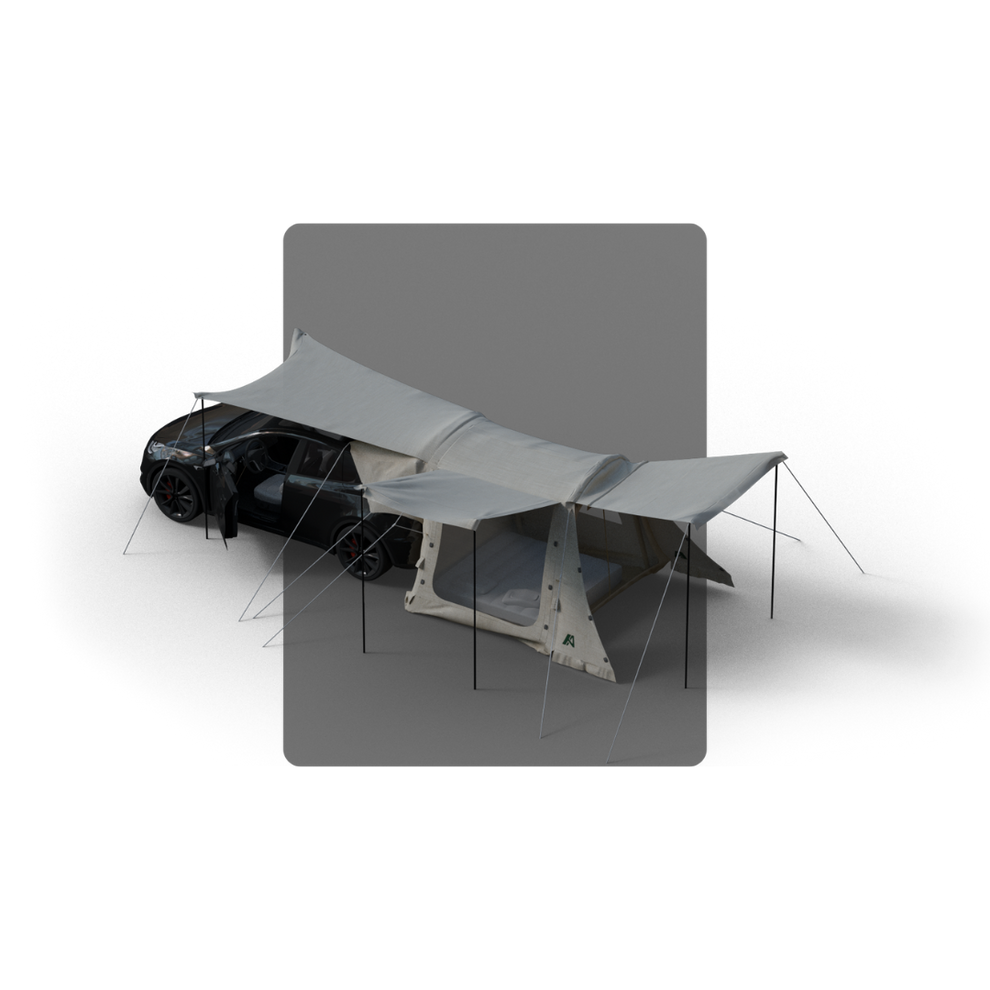
TENTSLA X1 Tesla Camping Tent
Listed price: $649
Designed for compatible Tesla Model 3, Model Y and Model X vehicles, with an inflatable installation system and outdoor-grade construction.
Key features to evaluate
- Inflatable installation: The air-frame system is designed to simplify assembly. Follow the specified inflation method and pressure limits.
- Outdoor-grade fabric: The listed 210D and 420D Oxford fabrics are assigned to different tent sections.
- Support structure: Aluminum poles and steel tent pegs are specified in the construction details.
- Silver-coated fabric: The product description identifies this material for UV protection and heat insulation. Actual performance depends on construction and conditions.
- Vehicle compatibility: The product is listed for Tesla Model 3, Model Y and Model X. Confirm compatibility for your exact vehicle and model year before ordering.
Who should consider the TENTSLA X1?
It may suit Tesla owners who want a dedicated camping setup and value the convenience of an inflatable structure. It is particularly relevant for road trips where a quick transition from driving to camping matters. However, the best fit depends on the exact vehicle, number of campers, sleeping arrangement and campsite conditions.
Before buying, verify the installation instructions, recommended pump, dimensions, packed size, ventilation and weather guidance. Ask how the tent attaches to the vehicle and whether it can remain standing independently when the vehicle is moved. Do not assume that every connected tent supports detached use.
Owners planning to sleep in their vehicle should also review the guidance on Tesla Model Y sleeping safety and the instructions relevant to their specific vehicle. Camping features and operating conditions can differ by model, software and environment.
Common SUV Rear Tent Buying Mistakes to Avoid
Mistake 1: Assuming universal fit
Similar-looking SUVs can have different hatch shapes, heights and attachment points. Confirm fit for the exact vehicle instead of relying on general product photos or a broad compatibility statement.
Mistake 2: Confusing a rear shelter with a complete sleeping tent
Some hatch tents are designed primarily for shade and covered access. If sleeping is the goal, check the actual sleeping area, ground coverage, ventilation and weather limitations.
Mistake 3: Ignoring anchoring and weather limits
Even a well-designed tent needs suitable anchoring and sensible campsite selection. Avoid exposed locations in severe weather and follow the manufacturer's limits. Never rely on the vehicle alone to stabilize a tent unless the design specifically requires and supports that arrangement.
Mistake 4: Buying the largest tent available
Extra space is useful only when you need it. A large extension may be inconvenient for short stops, crowded campsites or frequent relocation. Choose enough room for your group and gear without creating unnecessary setup work.
Mistake 5: Forgetting vehicle operating and sleeping safety
Follow the vehicle manufacturer's guidance for camping, ventilation, battery use and operation of any camping mode. Understand the risks associated with sleeping in a vehicle, including carbon monoxide exposure from external sources, temperature control and blocked ventilation. Never use fuel-burning cooking or heating equipment inside an enclosed vehicle or tent unless the equipment is specifically designed and approved for that use and the manufacturer provides safe operating instructions.
For Tesla owners, TENTSLA's guide to using Camp Mode in a Model Y provides additional context. Camp Mode does not remove the need to monitor battery levels, understand environmental conditions or follow vehicle safety guidance.
Mistake 6: Treating setup claims as guarantees
Fast setup claims are often based on favorable conditions. Uneven ground, wind, rain and unfamiliarity can add time. Practice before your first trip and carry the required pump, anchors and repair materials.
How Much Should You Spend on an SUV Rear Tent?
The right budget depends on how often you camp and what the tent needs to do. A basic hatch shelter can make sense for occasional short trips, while a more advanced inflatable or vehicle-specific system may be worthwhile for frequent road trips. Larger extension tents may offer more living space, but they also require more storage and setup effort.
| Camping pattern | Most practical starting point | Where extra spending may be justified |
|---|---|---|
| Occasional overnight stops | Simple rear hatch tent | Better attachment, ventilation and weather protection |
| Frequent weekend trips | Inflatable or quick-setup design | Reliable air-frame construction, compatible pump and durable stress points |
| Multi-day base camps | Freestanding or extension tent | Separate living space, useful doors and better campsite flexibility |
| Family vehicle camping | Roomier extension or suitable freestanding model | Actual usable dimensions, storage organization and privacy |
| Tesla-specific road trips | Compatible vehicle-specific tent | Verified fit, practical installation and relevant vehicle guidance |
Calculate value over the expected number of trips rather than buying solely on initial price. If a tent saves substantial setup time and makes you more likely to camp, a higher purchase price may be justified. If you use it only once or twice a year, a simpler product may be the smarter choice.
Accessories also affect the total budget. A compatible pump, suitable stakes, a groundsheet, lighting and a weather-appropriate sleeping setup may be necessary depending on the model. Review the complete package before comparing two headline prices.
Expert Recommendation: Which SUV Rear Tent Is Best for You?
For short overnight stops and simple tailgate shelter, start with a rear hatch tent. If fast assembly is your priority and you camp regularly, compare inflatable models and verify their inflation requirements. If you want to leave the campsite during the day without dismantling the shelter, look for a freestanding design that explicitly supports this use. If your group needs more sheltered living space, consider a tailgate extension with dimensions that suit your vehicle and campsite.
For Tesla owners, vehicle-specific compatibility should be one of the first filters—not the final check. A tent that looks suitable may still create problems with hatch clearance, attachment tension or everyday vehicle access. Review the product specifications and instructions before ordering, and confirm any details that are unclear with the seller.
TENTSLA X1 is worth considering for compatible Tesla drivers who value an inflatable setup and dedicated vehicle-camping design. Its listed $649 price should be assessed alongside fit, materials, installation, packed size and warranty—not treated as proof that it is the best tent for every camper.
Our final advice is simple: choose the tent that makes your real camping routine easier. Prioritize fit, usable space, weather guidance and setup reliability over marketing claims. The right SUV rear tent should reduce campsite friction, protect your equipment appropriately and suit the way you actually travel.
Frequently Asked Questions About SUV Rear Tents
1. What is the best type of SUV rear tent?
The best type depends on your trip. Rear hatch tents suit quick stops, inflatable models can simplify setup, freestanding tents provide campsite flexibility, and tailgate extensions add sheltered living space. Compare vehicle compatibility, coverage and setup requirements before buying.
2. Can an SUV rear tent fit any SUV?
No. Rear hatch dimensions, vehicle height, body shape and attachment points vary. Check the tent manufacturer's compatibility list and confirm the fit for your exact model and model year.
3. Are inflatable SUV tents better than pole tents?
Not universally. Inflatable structures can simplify assembly, but they require compatible inflation equipment, correct pressure and inspection of the air beams. Pole tents may be preferable for campers who value a conventional frame or want to avoid inflatable components.
4. Can I leave an SUV rear tent standing while driving away?
Only if the tent is designed to detach from the vehicle and remain stable independently. Follow the manufacturer's procedure and secure the shelter properly. Never drive with a tent still attached unless the manufacturer explicitly permits that exact configuration.
5. Is a rear hatch tent suitable for sleeping?
Some are designed for sleeping, while others are primarily shelters for tailgate activities. Confirm the sleeping dimensions, ground protection, ventilation, privacy and weather guidance before using one overnight.
6. What materials should I look for in an SUV tent?
Review the specified fabric, seams, zippers, support structure, stakes and weather-resistance information. Fabric denier alone does not establish waterproof performance or overall durability, so look for complete product specifications and care instructions.
7. Does an inflatable SUV tent need a special pump?
Use the pump recommended or approved by the manufacturer. Check the connection, power requirements and pressure limits. Overinflation can damage air beams, while insufficient inflation can leave the structure unstable.
8. Is TENTSLA X1 compatible with every Tesla?
TENTSLA lists the X1 for Model 3, Model Y and Model X, but buyers should confirm compatibility for their exact vehicle and model year. Check the product page and manufacturer guidance before ordering.
9. What should I bring with an SUV rear tent?
Depending on the design, you may need the specified pump, ground stakes, guy lines, repair materials, suitable sleeping equipment, lighting and weather-appropriate clothing. Follow the product's packing and setup checklist.
10. Can I use an SUV rear tent in heavy rain or strong wind?
Only within the conditions permitted by the manufacturer. Check the tent's weather guidance, secure all anchors and choose a suitable campsite. No tent should be assumed safe in severe weather simply because its fabric is described as weather-resistant.
References
- National Park Service — Camping. Guidance and planning resources for camping in outdoor environments.
- REI Expert Advice — Tents. Practical information on tent selection, construction and use.
- National Weather Service — Weather Safety. Weather awareness and safety information useful when planning outdoor trips.