


A successful car camping trip depends less on how much gear you bring and more on whether you bring the right gear. A comfortable sleeping setup, dependable shelter, enough water, practical cooking equipment, and a vehicle emergency kit will make a bigger difference than a trunk full of gadgets. For Tesla owners, there is another consideration: your sleeping arrangement, Camp Mode settings, and battery plan need to work together. This car camping supplies list covers 16 practical categories, with specific recommendations for people who camp in or around their vehicles.

Quick Answer: What Supplies Do You Need for Car Camping?
The 16 most useful car camping supplies are:
- Tent or vehicle-compatible shelter
- Camping mattress or sleeping pad
- Sleeping bag, blankets, and bedding
- Pillows and sleep accessories
- Window shades and privacy covers
- Lighting and headlamps
- Power banks and charging equipment
- Drinking water and water containers
- Cooler and food storage
- Portable stove and cooking equipment
- Food, snacks, and reusable tableware
- First aid and personal hygiene supplies
- Emergency roadside kit and basic tools
- Weather-appropriate clothing and rain gear
- Camping chairs and a folding table
- Storage bags, cleaning supplies, and trash containers
For most first-time car campers, prioritize shelter, sleep comfort, water, food, lighting, and safety. Add premium accessories only after you understand what your trips actually require.
What Is Car Camping, and What Makes a Good Supplies List?
Car camping means traveling to a campsite or outdoor destination with your vehicle and using it to transport most or all of your camping equipment. Depending on the vehicle and campsite, you may sleep inside the car, in a tent attached to or positioned beside it, or in a conventional ground tent.
Compared with backpacking, car camping gives you more freedom to bring larger mattresses, cooking equipment, chairs, coolers, and extra clothing. But that does not mean you should pack everything you own. Too much equipment creates clutter, makes setup slower, and leaves less usable space for sleeping.
A useful car camping supplies list should solve four practical problems:
- Sleep: Keep you comfortable, dry, and appropriately warm or cool.
- Weather: Provide protection from rain, wind, sun, and insects.
- Daily needs: Make drinking, cooking, cleaning, and storage manageable.
- Safety: Help you handle minor injuries, vehicle problems, and unexpected changes in conditions.
From our perspective, the best setup is the one you can install, use, and pack away without turning every stop into a complicated project. That is especially important for road trips involving multiple campsites.
Supplies 1–5: Shelter and Sleeping Comfort
Your sleeping setup deserves the largest share of attention. A poor mattress or inadequate weather protection can ruin an otherwise excellent trip. We recommend choosing these items before buying decorative camping accessories or extra gadgets.
1. Tent or Vehicle-Compatible Shelter

A tent provides protection from rain, wind, insects, and direct sunlight. Your choice depends on where you plan to sleep. A conventional ground tent works well at established campsites, while a vehicle-compatible tent can create additional covered space around an SUV or other suitable vehicle.
Before buying, check the tent's compatibility with your vehicle model, attachment points, dimensions, weather rating, floor construction, and setup requirements. A tent designed for a large SUV may not fit a smaller crossover properly. Also consider whether you need a separate sleeping area, a sheltered changing space, or room for outdoor equipment.
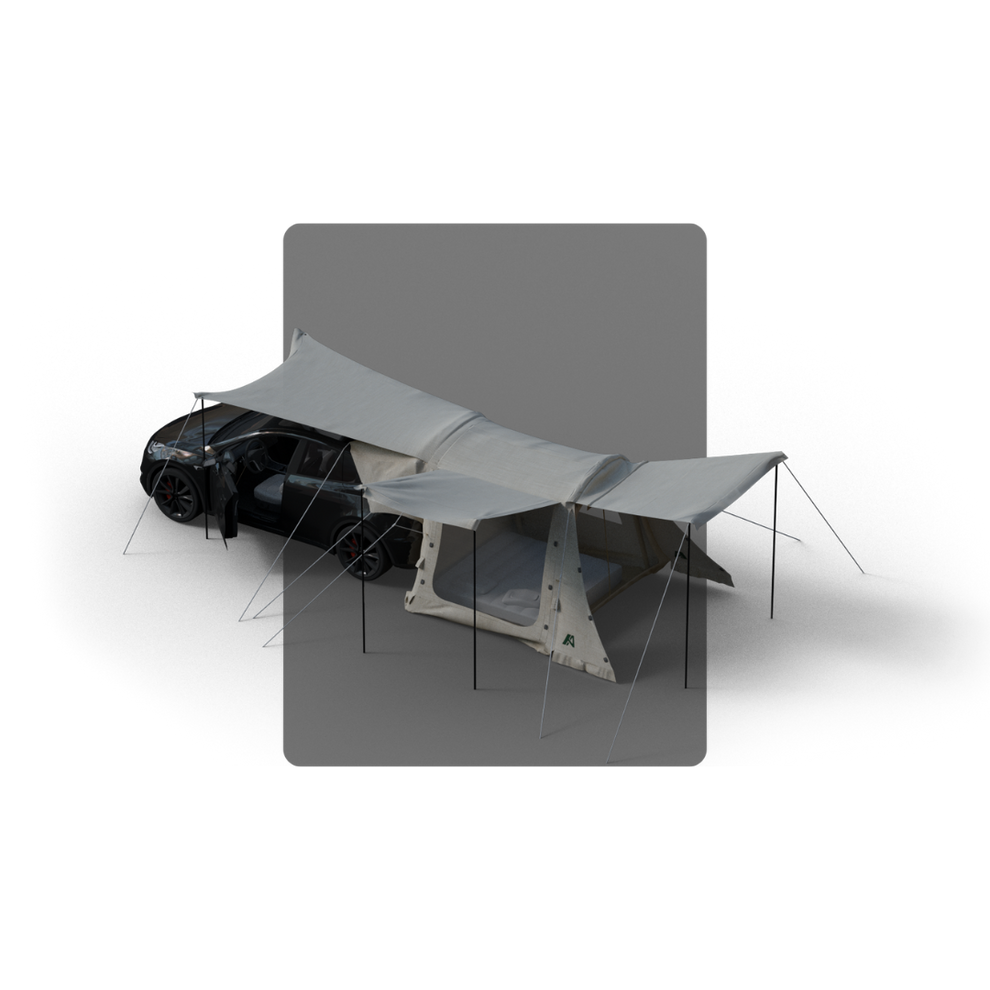
For Tesla owners who want a dedicated vehicle camping setup, the TENTSLA X1 Tesla camping tent is designed for Tesla Model 3, Model Y, and Model X. Its inflatable air-frame structure is intended to make installation faster than assembling a traditional pole-based tent. The product uses 210D Oxford fabric for the inner fabric, 420D Oxford fabric for the outer and floor fabrics, aluminum support poles, steel pegs, and silver-coated fabric for UV protection and heat insulation.
For a broader comparison of shelter options, see our guide to popular Tesla camping tents.
2. Camping Mattress or Sleeping Pad
A mattress is one of the most worthwhile upgrades for vehicle camping. Sleeping directly on a folded seat or uneven cargo floor can create pressure points and uncomfortable gaps. A properly fitted mattress gives you a flatter, more supportive surface.
Choose based on your vehicle's usable sleeping dimensions, the number of people, mattress thickness, inflation method, storage size, and ease of cleaning. Do not buy based only on a product's advertised vehicle compatibility. Measure the actual sleeping area with the seats folded and account for wheel arches, seat gaps, and any camping platform.
For Tesla owners, our Tesla camping mattress guide explains what to consider across Model 3, Model Y, Model S, and Model X setups. You can also browse the TENTSLA camping mattress collection.
3. Sleeping Bag, Blankets, and Bedding
Your mattress supports your body, but bedding manages temperature. Bring a sleeping bag or blanket appropriate for the lowest expected overnight temperature, not simply the daytime forecast. A lightweight blanket may be enough for a warm summer campsite, while colder conditions require insulated bedding and suitable sleepwear.
Check the sleeping bag's temperature rating and understand the difference between comfort and lower-limit ratings. If you sleep cold, choose a more conservative option. A compact extra blanket is also useful if the weather changes unexpectedly.
4. Pillows and Sleep Accessories
A proper pillow can make a surprisingly large difference. Travel pillows save space, while compressible camping pillows offer a more familiar sleeping position. Bring an eye mask and earplugs if you are sensitive to campground lighting, traffic, or other campers.
For vehicle camping, also consider a small storage pouch for glasses, a phone, and other items you want within reach. This keeps essentials from disappearing into the cargo area at night.
5. Window Shades and Privacy Covers
Window shades help reduce unwanted light and improve privacy. Reflective shades can also limit direct sunlight entering the cabin when the vehicle is parked. Choose shades designed for your exact vehicle windows rather than relying on oversized generic covers that leave gaps.
Privacy covers should not compromise your ability to maintain safe cabin conditions or access the vehicle when needed. Make sure you can remove them quickly and keep required exits accessible.
Supplies 6–7: Lighting and Power Equipment
6. Headlamp, Lantern, and Flashlight
Do not rely entirely on your vehicle's interior lights or phone flashlight. A headlamp keeps both hands free when setting up a tent, preparing food, or walking to campground facilities. A small lantern is useful inside a tent or beneath an awning, while a flashlight belongs in your emergency kit.
Look for adjustable brightness, a comfortable head strap, weather resistance, and a battery system you can recharge or replace easily. Red-light modes can be useful around other campers because they are less disruptive than a bright white beam.
7. Power Bank and Charging Equipment
Phones are navigation tools, communication devices, cameras, and emergency contacts. Bring a reliable power bank, charging cables, and a vehicle-compatible charging option. If you use a portable power station for lights or small appliances, check its capacity and output ratings against the equipment you plan to connect.
For Tesla camping, Camp Mode can maintain cabin temperature and support certain electronics through the vehicle's USB ports and low-voltage outlets, depending on model and equipment. However, it should not be treated as an unlimited power source. Monitor battery level, understand your vehicle's settings, and plan charging stops before entering remote areas.
Supplies 8–11: Water, Food Storage, and Cooking
8. Drinking Water and Reusable Containers
Water is a non-negotiable item. Bring enough for drinking, cooking, brushing your teeth, and basic cleaning. The amount depends on temperature, trip length, physical activity, and whether the campsite provides potable water.
A large refillable water container is convenient at the campsite, while individual bottles make it easier to keep water accessible in the vehicle. If you are traveling somewhere without reliable treated water, bring an appropriate filtration or purification method. Do not assume water from a natural source is safe to drink.
The National Park Service's camping guidance recommends planning water needs before departure and bringing suitable containers or treatment equipment when necessary.
9. Cooler and Food Storage Containers
A cooler is useful for fresh food, drinks, and ingredients that need temperature control. Choose its capacity based on the number of people and the length of the trip. A large cooler is not automatically better: it takes up valuable cargo space and can be difficult to organize.
Use sealed containers for dry food and keep raw ingredients separate from ready-to-eat items. In areas with bears or other wildlife, follow local food-storage rules. Some campgrounds require food to be stored in designated bear lockers rather than inside a vehicle.
10. Portable Stove and Cooking Equipment
A compact camping stove makes it easier to prepare hot meals without depending on restaurants. A basic setup may include a compatible stove, approved fuel, lighter, small pot, pan, cooking utensil, and a stable cooking surface.
Check fuel compatibility before departure and test the stove at home. Keep cooking equipment outdoors in a well-ventilated area, following the manufacturer's instructions and campsite fire restrictions. Never use a fuel-burning camping stove, charcoal grill, or portable heater inside a vehicle or enclosed tent. Carbon monoxide can accumulate without warning.
For beginners, a simple one-burner stove is often enough. A larger cooking system is worth considering only if you regularly prepare multi-course meals or camp with a larger group.
11. Food, Snacks, and Reusable Tableware
Plan meals before packing. Choose food that is easy to prepare, stores safely, and does not require unnecessary equipment. Breakfast items, sandwiches, pasta, canned meals, trail mix, and energy bars can cover many short trips.
Pack reusable plates, bowls, cups, cutlery, and a compact cutting board. Add a food-safe container for leftovers and a separate bag for waste. This is more practical than carrying a large collection of single-use items.
Supplies 12–13: Hygiene and Emergency Safety
12. First Aid Kit and Personal Hygiene Supplies
A compact first aid kit should include adhesive bandages, sterile gauze, medical tape, antiseptic wipes, tweezers, disposable gloves, and any personal medication you may need. Check expiration dates before each longer trip and replace used items.
For hygiene, pack toothbrushes, toothpaste, biodegradable soap where permitted, hand sanitizer, quick-dry towels, toilet paper, tissues, and personal care products. A small wash basin or collapsible bucket can make cleaning easier at campsites without convenient facilities.
Do not assume every campground has showers, drinking water, or clean restrooms. Confirm available facilities before leaving, especially when traveling with children or people who need specific hygiene supplies.
13. Emergency Roadside Kit and Basic Tools
Car camping still involves driving, sometimes on unfamiliar roads and in areas with limited mobile coverage. A roadside kit should be treated as essential vehicle equipment, not optional camping gear.
Include a first aid kit, flashlight, reflective warning triangle, tire pressure gauge, work gloves, duct tape, basic tools, emergency blanket, drinking water, nonperishable snacks, and a phone charging cable. Add a tire repair or inflation solution only if it is suitable for your vehicle and you know how to use it. Check the vehicle manufacturer's recommendations for tire service and roadside procedures.
Electric vehicle owners should also understand their vehicle's tire repair equipment, roadside assistance coverage, charging network access, and towing procedures. A generic gas-car emergency kit may include items that are not applicable to your EV.
Before departure, check tire condition, tire pressure, windshield visibility, weather, road closures, and your route's charging or fuel options. Keep an offline map or written destination details in case cellular service becomes unreliable.
For a useful baseline, consult the National Highway Traffic Safety Administration's vehicle preparation and roadside emergency guidance.
Supplies 14–16: Clothing, Outdoor Comfort, and Organization
14. Weather-Appropriate Clothing and Rain Gear
Pack for the overnight temperature and possible weather changes. Bring layers rather than relying on one heavy jacket. A practical clothing selection includes moisture-wicking base layers, warm mid-layers, a waterproof outer layer, spare socks, comfortable footwear, and a hat.
For warm-weather camping, sun protection and breathable clothing matter. For colder trips, insulated layers and dry sleeping clothes are more important. Keep one complete change of clothes in a waterproof bag so you have something dry if the weather turns.
15. Camping Chairs and a Folding Table
Chairs and a small table make a campsite more comfortable, especially if you plan to spend time outside the vehicle. Choose compact folding models that fit your storage space. Check their packed dimensions, weight capacity, stability, and ease of setup.
For short overnight stops, chairs may be optional. For weekend trips, family camping, or long evenings outdoors, they are among the most frequently used comfort items. A small table also gives you a cleaner place to prepare food and organize equipment.
16. Storage Bags, Cleaning Supplies, and Trash Containers
Organization is what keeps a car camping setup practical. Use separate bags or bins for bedding, cooking equipment, clothing, food, and emergency supplies. Transparent or clearly labeled containers reduce the time spent searching through the vehicle.
Bring trash bags, paper towels or reusable cleaning cloths, a small brush, dish soap, and a compact drying towel. Keep dirty footwear and wet equipment away from bedding. If you camp in wet conditions, a dedicated waterproof bag for damp items is particularly useful.
For Tesla owners, cargo space and the shape of the folded rear seats can affect how you organize equipment. Put items you need at night near the sleeping area and keep emergency supplies accessible rather than buried beneath luggage.
Special Car Camping Supplies for Tesla Owners
Tesla camping has a few specific advantages, but it also requires planning around battery use, cabin climate, sleeping space, and vehicle settings. A normal car camping checklist is a good starting point, not a complete Tesla setup.
Understand Camp Mode Before Your Trip
Tesla Camp Mode is designed to maintain cabin temperature while the vehicle is parked and allow certain electronics to operate. The exact controls and available features depend on the vehicle model and software version. Read the owner's manual for your specific vehicle before relying on Camp Mode overnight.
One important detail is that Tesla's operating guidance states that Sentry Mode and the vehicle alarm system are disabled while Camp Mode is active on the referenced Model 3 configuration, and Walk-Away Door Lock is inactive. Do not assume the vehicle provides the same security behavior as it does during ordinary parking. Understand the implications and choose a safe, permitted campsite.
Camp Mode also consumes battery energy. The amount varies with outside temperature, cabin settings, vehicle configuration, and other conditions. We recommend arriving with a comfortable charge reserve, checking the battery level before sleeping, and identifying a reliable charging option for the next day. Do not plan a remote trip around an assumed fixed battery-drain figure.
For more detailed guidance, read how to use Camp Mode in a Tesla Model Y and our explanation of Tesla Camp Mode battery consumption.
Choose the Right Sleeping Arrangement
Some owners sleep inside the vehicle, while others prefer a vehicle tent that creates a separate sheltered area. Your choice depends on passenger count, weather, campsite rules, and how much interior space you need.
If two adults plan to sleep in a Model Y, measure the available sleeping area and consider the mattress dimensions before purchasing. Our guide to sleeping two adults in a Tesla Model Y discusses the practical space considerations.
If you want more interior organization or a flatter sleeping surface, a camping platform may be worth considering. Compare the available options in our Tesla Model Y camping platform guide.
Consider a Dedicated Tesla Camping Tent
A vehicle-specific tent is worth considering if you camp frequently, need additional covered space, or want a more organized transition between sleeping inside the vehicle and spending time outside. It is less compelling for someone who only camps once a year at mild-weather campsites with existing facilities.
TENTSLA X1 Tesla Camping Tent
The TENTSLA X1 is designed for Tesla Model 3, Model Y, and Model X owners who want a dedicated shelter for vehicle-based outdoor trips. Its inflatable air-frame system is designed for setup in a few minutes: inflate the structure, secure the tent, and prepare the camping area.
The material combination includes 210D Oxford inner fabric, 420D Oxford outer and floor fabric, aluminum support poles, steel tent pegs, and silver-coated fabric for UV protection and heat insulation.
$649
Explore the TENTSLA X1 Tesla Camping Tent
Before purchasing, confirm compatibility with your exact vehicle, review the product dimensions, and check the setup requirements. A vehicle-specific tent is a more considered purchase than a generic shelter, so it should match the way you actually camp.
You can also browse Tesla road trip essentials and camping accessories for other items that support a more organized vehicle-based setup.
Car Camping Gear Comparison: Which Supplies Should You Buy First?
Not every item on a car camping supplies list deserves the same budget. The table below ranks common gear by practical value, priority, and the type of trip where it makes the most difference.
| Supply | Priority | Best Use Case | Buying Recommendation |
|---|---|---|---|
| Vehicle tent or ground tent | Essential when shelter is not provided | Rain, wind, insects, and outdoor sleeping | Choose based on vehicle compatibility and expected weather. |
| Camping mattress | High | Sleeping inside a vehicle | Measure the sleeping area before buying. |
| Sleeping bag or bedding | High | Overnight temperature control | Match insulation to the lowest expected temperature. |
| Water containers | Essential | Drinking, cooking, and cleaning | Carry enough for the trip and refill access. |
| Cooler | Medium to high | Fresh food and multi-day trips | Choose capacity based on meal planning. |
| Portable stove | Medium | Cooking at campsites | Start with a simple, compatible stove. |
| Power bank | High | Phone and small device charging | Check capacity and output before purchase. |
| Headlamp and lantern | High | Nighttime setup and campsite use | Bring independent lighting rather than relying on a phone. |
| Camping chairs and table | Optional comfort upgrade | Long stays and outdoor dining | Prioritize compact folding models. |
| Storage bins | Medium | Multi-day trips and family camping | Use a few labeled containers instead of many small bags. |
Pros and Cons of Investing in Dedicated Car Camping Gear
Dedicated equipment can make camping more comfortable, but buying a complete premium setup immediately is rarely the smartest move. The right approach is to invest in equipment that solves a recurring problem.
| Pros | Cons |
|---|---|
| A fitted mattress improves sleeping comfort and makes the interior more usable. | Vehicle-specific products may cost more than generic alternatives. |
| A dedicated tent can provide additional shelter and usable outdoor space. | It adds equipment that must be stored, transported, and maintained. |
| Organized storage makes setup and packing faster. | Too many organizers can consume valuable cargo space. |
| Reliable lighting and power accessories improve convenience. | Electronics introduce charging, compatibility, and maintenance requirements. |
| Reusable cooking equipment can reduce repeated disposable purchases. | Cooking gear adds cleaning work and requires safe fuel handling. |
Is Upgrading Your Car Camping Setup Worth It?
If you camp once or twice a year, a basic setup may be all you need. If you take frequent weekend trips, a better mattress, weather-resistant shelter, and organized storage can save time and improve comfort on every trip.
For Tesla owners, a dedicated tent or vehicle-specific mattress becomes more attractive when the vehicle is regularly used as a sleeping space. For occasional users, start with a basic mattress and essential supplies, then upgrade after identifying the limitations of your current arrangement.
Common Car Camping Packing Mistakes to Avoid
- Buying gear before measuring the vehicle: A mattress, storage box, or tent that does not fit wastes money and creates unnecessary frustration. Measure the actual usable space first.
- Underestimating overnight temperatures: Daytime warmth does not guarantee a comfortable night. Pack bedding and clothing for the expected low temperature.
- Forgetting water: Do not assume a campsite has potable water or convenient refill facilities. Bring enough for drinking, cooking, and cleaning.
- Overpacking kitchen equipment: A simple stove and a small cooking kit are enough for many trips. Avoid carrying a full kitchen unless you genuinely need it.
- Ignoring battery or power planning: Vehicle climate systems and electronic accessories consume energy. Plan charging and monitor available power.
- Using fuel-burning equipment in enclosed spaces: Never operate a camping stove or fuel-burning heater inside a vehicle or enclosed tent. Carbon monoxide is a serious hazard.
- Leaving safety supplies buried: First aid equipment, a flashlight, and emergency tools should be easy to reach.
- Failing to test equipment: Inflate the mattress, assemble the tent, test the stove outdoors, and check your lights before leaving home.
The National Park Service recommends identifying and testing essential equipment before a trip. We agree with that approach: a short test at home is much easier than discovering a missing valve, incompatible fuel canister, or incomplete tent kit at a remote campsite.
Expert Recommendation: Build Your Car Camping Supplies List in Three Stages
The most efficient way to build a car camping setup is to buy in stages. This avoids spending heavily on equipment you may rarely use and helps you identify which upgrades will make a real difference.
Stage 1: Buy the Essentials
Start with shelter, a mattress or sleeping pad, suitable bedding, water, basic food supplies, lighting, first aid, and an emergency roadside kit. These items address the most important requirements: sleeping safely, staying hydrated, eating, and handling unexpected problems.
Stage 2: Improve Comfort and Organization
After your first trip, add the items that would have made the biggest difference. For many people, that means window shades, a better pillow, a cooler, storage containers, camping chairs, or a compact table. Choose based on actual experience rather than buying every accessory recommended online.
Stage 3: Upgrade for Frequent Trips
If car camping becomes a regular activity, consider a dedicated vehicle tent, a better-fitting mattress, a more capable power solution, and weather-resistant storage. These upgrades are most valuable when they solve a problem you encounter repeatedly.
For Tesla owners, TENTSLA focuses on vehicle-based camping products designed around Tesla models. The TENTSLA X1 is a relevant option for drivers who want a dedicated shelter for Model 3, Model Y, or Model X trips. It should be considered alongside a properly fitted mattress, suitable bedding, and a realistic Camp Mode battery plan rather than as a standalone solution.
Our final recommendation is straightforward: prioritize sleep, shelter, water, and safety before convenience accessories. A compact, well-planned car camping supplies list will serve you better than an expensive collection of gear that is difficult to pack and slow to use.
Quick Summary: 16 Car Camping Supplies
| No. | Supply | Main Purpose | Priority |
|---|---|---|---|
| 1 | Tent or vehicle shelter | Weather and insect protection | Essential when no shelter is provided |
| 2 | Camping mattress | Comfortable sleeping surface | High |
| 3 | Sleeping bag and blankets | Temperature management | High |
| 4 | Pillows and sleep accessories | Better sleep quality | Medium |
| 5 | Window shades | Privacy and light control | Medium |
| 6 | Headlamp and lantern | Nighttime visibility | High |
| 7 | Power bank and chargers | Device power | High |
| 8 | Water containers | Drinking and cleaning | Essential |
| 9 | Cooler and food containers | Food storage | Medium to high |
| 10 | Portable stove and cookware | Meal preparation | Medium |
| 11 | Food and tableware | Meals and snacks | Essential |
| 12 | First aid and hygiene kit | Health and cleanliness | Essential |
| 13 | Roadside kit and tools | Vehicle emergencies | Essential |
| 14 | Clothing and rain gear | Weather protection | High |
| 15 | Camping chairs and table | Outdoor comfort | Optional |
| 16 | Storage and cleaning supplies | Organization and waste management | Medium |
Frequently Asked Questions About Car Camping Supplies
1. What are the most important car camping supplies for beginners?
Beginners should prioritize a suitable tent or vehicle shelter, a comfortable mattress, weather-appropriate bedding, drinking water, food, lighting, a first aid kit, and roadside emergency supplies. These items cover the basic requirements without making the first trip unnecessarily complicated.
2. What should I pack for a one-night car camping trip?
For one night, bring shelter, a mattress or sleeping pad, a sleeping bag or blanket, a pillow, water, simple meals, a headlamp, a phone charger, toiletries, weather-appropriate clothing, and a basic emergency kit. You can usually leave larger cooking systems and extra furniture at home.
3. Do I need a tent for car camping?
Not always. You can sleep inside a suitable vehicle, use a conventional ground tent, or choose a vehicle-compatible tent. The right option depends on your vehicle, campsite rules, weather, privacy needs, and available sleeping space.
4. Is a camping mattress worth buying?
Yes, if you plan to sleep inside your vehicle regularly. A properly fitted mattress can reduce uneven surfaces and improve sleeping comfort. Measure the available space before buying and compare thickness, packed size, inflation method, and material.
5. What food should I bring for car camping?
Choose food that is easy to store and prepare. Sandwich ingredients, pasta, rice, canned meals, fruit, trail mix, and energy bars are practical options. Use a cooler for food that requires refrigeration and follow local wildlife food-storage requirements.
6. Can I use a camping stove inside my car?
No. Never operate a fuel-burning camping stove, charcoal grill, or portable fuel heater inside a vehicle or enclosed tent. These devices can produce carbon monoxide, which can build up to dangerous levels. Use cooking equipment outdoors in a properly ventilated area and follow its manufacturer's instructions.
7. What supplies are especially useful for Tesla camping?
Tesla owners should consider a vehicle-compatible mattress, suitable bedding, window shades, a vehicle tent if additional shelter is needed, lighting, charging accessories, and an emergency kit. They should also understand Camp Mode operation and plan battery reserves and charging stops.
8. Does Tesla Camp Mode use battery power overnight?
Yes. Maintaining cabin temperature and powering electronics uses energy. Consumption varies with outside temperature, climate settings, vehicle configuration, and other conditions. Monitor the battery level and plan a sufficient reserve rather than relying on a fixed hourly estimate.
9. Is a vehicle camping tent better than a regular ground tent?
Neither is universally better. A vehicle-compatible tent may integrate more conveniently with your vehicle and provide a sheltered extension, while a ground tent offers flexibility across different vehicles and campsite layouts. Choose based on your trip style, setup preferences, and storage space.
10. How can I keep my car camping supplies organized?
Use separate labeled containers for sleeping gear, cooking equipment, clothing, food, and emergency supplies. Keep frequently used items accessible, isolate wet or dirty equipment, and avoid stacking essential safety supplies beneath luggage.
References and Further Reading
Use official guidance when planning camping equipment, vehicle safety, and Tesla cabin settings. These resources provide useful information beyond a general packing checklist.
- National Park Service – What to Bring Camping. Guidance on water, food storage, shelter, bedding, cooking equipment, and cleaning supplies.
- Tesla Model 3 Owner's Manual – Operating Climate Controls. Official information about Keep Climate On, Pet Mode, and Camp Mode. Check the manual for your own vehicle model and software version.
- National Highway Traffic Safety Administration – Summer Driving Tips. Vehicle preparation, emergency roadside kit contents, route planning, and travel safety.
```