


The era of treating a vehicle as simply a method of transportation to a muddy campsite is over. Modern overlanding and EV camping have fundamentally transformed how we experience the outdoors. Unfortunately, the industry is still plagued by outdated advice urging campers to pack ultra-light backpacking gear into their trunks. This is a severe commercial and practical miscalculation. When your vehicle has a payload capacity exceeding 1,000 pounds and, in the case of modern EVs, a massive lithium-ion battery pack, compromising on comfort or safety is illogical.

From our experience engineering advanced shelter systems for Tesla vehicles, the definition of Car Camping Essentials has evolved. You no longer need to sleep on rocks or suffer through freezing condensation. By leveraging modern inflatable architectures and vehicle climate control systems, you can achieve a luxury basecamp anywhere. In this comprehensive guide, we strip away the noise to provide the definitive, uncompromised 10-item checklist for modern vehicular camping, detailing not only what you need, but whether specific high-end upgrades are actually worth your investment.
Quick Answer: The Non-Negotiable Essentials
If you are packing for a weekend trip, your primary focus must be on integrating your gear with your vehicle's capabilities. A proper Car Camping Essentials checklist includes:
- Vehicle-Integrated Shelter: An SUV/EV connecting tent (like the TENTSLA X1).
- Premium Sleep System: A custom-fit trunk mattress and high R-value bedding.
- Climate & Power Management: Utilizing EV Camp Mode and high-capacity portable air pumps.
- Camp Kitchen & Food Storage: Heavy-duty coolers or 12V portable fridges.
- Safety & Waste Management: Adhering to Leave No Trace principles.
Do not pack minimalist gear when your car can do the heavy lifting. Prioritize modular, rapid-setup equipment that maximizes your vehicle's structural and electrical advantages.
Table of Contents
- What Are Car Camping Essentials?
- How Modern Car Camping Works
- The 10-Item Car Camping Essentials Checklist
- The Benefits of Vehicle-Integrated Gear
- Limitations to Consider
- Who Should Use This Setup
- Common Mistakes to Avoid
- Expert Buying Considerations
- TENTSLA Expert Recommendation
- Pros vs Cons & Comparison Tables
- Frequently Asked Questions (FAQ)
What Are Car Camping Essentials?
Car Camping Essentials constitute the foundational equipment required to live out of or adjacent to your vehicle in remote environments securely and comfortably. Unlike backcountry camping, where every ounce is meticulously weighed to prevent spinal fatigue, car camping permits the deployment of heavy-duty, high-comfort infrastructure. For owners of modern electric vehicles, these essentials must also be highly compatible with the vehicle's unique architecture, particularly aerodynamic trunks, glass roofs, and integrated software modes.
How Modern Car Camping Works
Historically, the car was simply a metal locker parked next to a ground tent. Today, the vehicle is the core of the ecosystem. In most professional situations—and certainly for dedicated EV campers—the vehicle serves as the primary sleeping cabin or the climate-controlled anchor for an attached shelter. By understanding how to use Camp Mode like a pro, the car actively regulates the temperature of the attached tent, manages ventilation, and provides high-voltage power for cooking and lighting.
The 10-Item Car Camping Essentials Checklist
In our testing and direct consumer feedback, the following 10 items form the absolute core of a successful trip.
1. The Vehicle-Integrated Tent
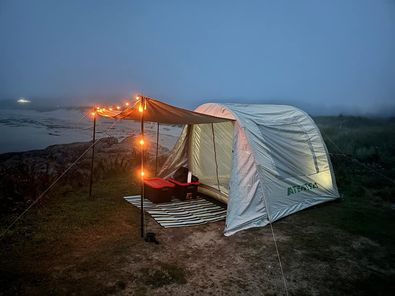
A standalone ground tent is an obsolete choice for car camping. A premium vehicle-connecting shelter allows you to expand your living space directly out of your trunk. You can sleep in the climate-controlled cabin of your car while using the attached tent as a changing room, dining area, or secondary sleeping quarter. For Tesla owners, investing in a dedicated Tesla Camping Tent ensures a weather-tight seal against the unique curvature of the vehicle's hatch.
2. A Precision-Fit Sleep System
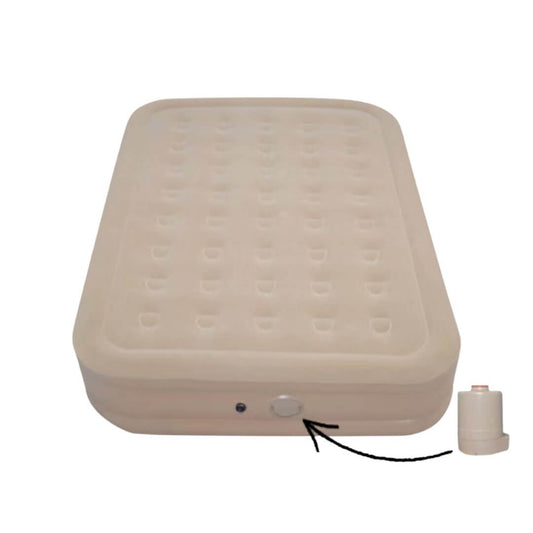
Throwing a cheap yoga mat in the back of your car will ruin your spine and your trip. You must bridge the gap between the folded seats and the trunk floor. We recommend a memory foam or specialized inflatable system contoured to your vehicle. The Tesla Trunk Mattress is specifically engineered to fit the Model Y and Model 3 dimensions flawlessly, ensuring a completely flat, supportive sleep surface.
3. High R-Value Bedding
Sleeping bags are restrictive. Because you are inside a vehicle or a heavy-duty tent, you can use domestic-style bedding. However, for maximum thermal efficiency, utilize a specialized Camping Blanket for Outdoor Trips. Look for materials that trap body heat but resist morning condensation.
4. Rapid Inflation Tools
If you upgrade to an inflatable tent frame or mattress, manual hand pumps are a massive waste of time and energy. You need a 12V high-pressure pump. A Portable Air Pump for Tent ensures your shelter and sleep systems are fully erected in under five minutes, allowing you to establish basecamp immediately upon arrival.
5. Secondary Sleeping Mats (For the Tent)
If you are utilizing the attached tent for additional guests or children, the ground requires insulation. A Self Inflating Camping Mattress provides the necessary thermal break between the sleeper and the cold earth, vastly improving sleep quality compared to closed-cell foam pads.
6. Power Management System
For Internal Combustion Engine (ICE) vehicles, a portable lithium power station (like a Jackery or EcoFlow) is mandatory for charging devices and running CPAP machines. For EV owners, understanding Tesla Camping Mode Battery Drain allows you to safely utilize the car's massive battery pack to power induction cooktops and lighting directly from the vehicle.
7. 12V Refrigeration or Heavy-Duty Cooler
Ice management is the bane of car camping. For trips exceeding 48 hours, a 12V compressor fridge plugged into your vehicle's auxiliary port is vastly superior to a traditional cooler. It eliminates soggy food and frequent ice runs.
8. Area Lighting
Headlamps are for walking; area lights are for living. You need diffused, ambient LED lanterns to illuminate your vehicle tent and cooking area without blinding your fellow campers.
9. Water Storage and Filtration
Do not rely on single-use plastic bottles. Bring a heavy-duty 5-gallon to 7-gallon rigid water container with a spigot. It serves as your drinking supply and your dish-washing station.
10. Waste Management and LNT Gear
You must pack out what you pack in. Bring heavy-duty contractor bags for garbage, and a portable toilet or a trowel depending on the local regulations. Always adhere to strict Leave No Trace principles.
The Benefits of Vehicle-Integrated Gear
Upgrading to vehicle-specific gear changes the paradigm of outdoor living. By utilizing an attached tent and trunk mattress, you elevate yourself off the uneven, damp ground. You gain impenetrable defense against wind and heavy rain, as your primary anchor is a 4,000-pound vehicle. Furthermore, you drastically reduce setup and teardown times, maximizing your actual recreation time.
Limitations to Consider
We must exercise commercial and practical judgment: vehicle-integrated camping is not flawless. The primary limitation is mobility. Once your tent is attached to your car hatch, you cannot simply drive away to the trailhead or the local store without fully detaching and securing the shelter. Additionally, premium car camping essentials take up significant trunk space, requiring careful packing Tetris, especially if you are traveling with a family of four.
Who Should Use This Setup (And Who Should Not)
Who Should Use It: We recommend this checklist for weekend warriors, festival-goers, families, and specifically EV owners. For commercial users looking to rent out their Tesla on platforms like Turo, equipping the vehicle with these essentials creates a highly lucrative "glamping" rental package.
Who Does Not Need It: If you are embarking on a deep backcountry overland expedition crossing extreme rock-crawling trails, an attached ground tent is a liability. You require a hardshell rooftop tent (RTT). Similarly, ultralight backpackers will find this heavy, high-volume gear entirely useless.
Common Mistakes in Car Camping
Another frequent error is underestimating the terrain. Even though you are car camping, your vehicle must be leveled. If you park on a slant, you will spend the entire night sliding down your mattress. Always bring leveling blocks.
Expert Buying Considerations
When evaluating items for your Car Camping Essentials checklist, scrutinize the material specifications. For heavy-duty applications, a tent must feature at least a 210D (Denier) Oxford fabric for the canopy and a 420D floor to resist puncture from rocks and sticks. Furthermore, evaluate the structural frame. Traditional fiberglass poles snap under high winds; advanced inflatable air-frame structures flex and recover, making them infinitely superior for severe weather.
TENTSLA Expert Recommendation
For Tesla owners seeking the pinnacle of vehicle-integrated camping, generic dome tents are an unacceptable compromise. We recommend engineering your basecamp around the TENTSLA X1.
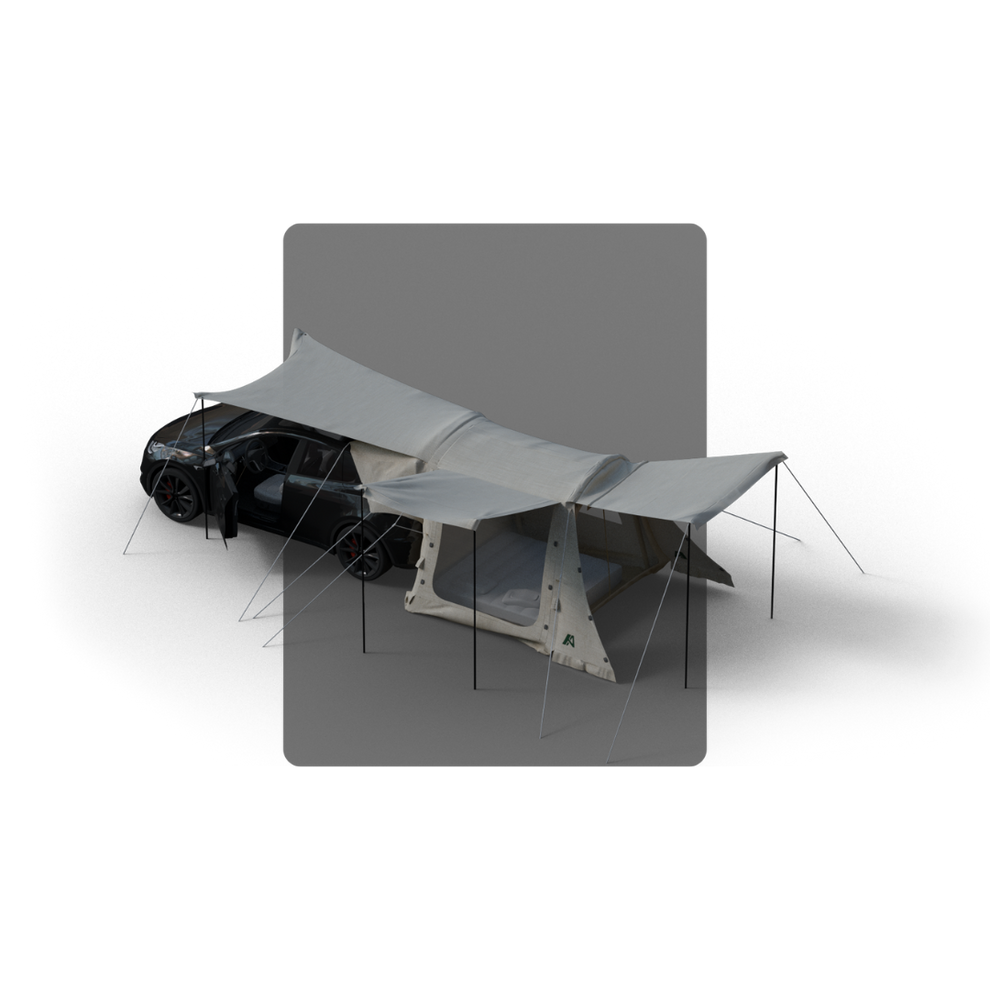
TENTSLA X1 Tesla Camping Tent
Designed explicitly for the Tesla Model 3, Model Y, and Model X, the TENTSLA X1 transforms your EV into a multi-room backcountry suite. It utilizes an advanced inflatable air-frame system, eliminating frustrating fiberglass poles and enabling a robust setup in minutes.
Premium Weather-Resistant Construction: Engineered to withstand harsh outdoor elements, keeping you dry and insulated while seamlessly connecting to your vehicle's climate-controlled cabin.
| Material | Application |
|---|---|
| 210D Oxford Fabric | Inner Fabric |
| 420D Oxford Fabric | Outer Fabric & Floor |
| Silver Coated Fabric | UV Protection & Heat Insulation |
Pros vs Cons & Comparison Tables
Pros and Cons of Premium Car Camping Gear
| Pros (Advantages) | Cons (Limitations) |
|---|---|
| Maximum comfort and sleep quality (approaching home-bed standards). | Requires significant financial investment upfront. |
| Ability to harness vehicle HVAC for heating and air conditioning. | High volume; consumes substantial trunk space. |
| Rapid deployment using air pumps and custom-fit geometries. | Ties the shelter directly to the vehicle, limiting mid-trip driving. |
| Superior weather resistance compared to standard nylon backpacking tents. | Heavier materials mean slower drying times if packed wet. |
Comparison: Traditional vs. EV-Integrated Camping
| Feature | Traditional Car Camping | EV-Integrated Camping (e.g., TENTSLA) |
|---|---|---|
| Shelter Setup | Standalone ground tent next to the vehicle. | Tent attaches to the trunk, creating a unified cabin. |
| Climate Control | Rely on sleeping bags and external weather. | Vehicle's Camp Mode pushes AC/Heat directly into the tent. |
| Power Supply | Noisy gas generators or limited power banks. | Silent, massive lithium-ion vehicle battery pack. |
| Security | Fabric walls offer zero physical security. | Ability to lock yourself inside the hard-shell vehicle cabin. |
Frequently Asked Questions (FAQ)
Is it safe to sleep in a car while camping?
Yes, provided you follow basic safety protocols. In EVs like Tesla, there are zero tailpipe emissions, making it 100% safe to run the climate control all night. In traditional gas vehicles, you must never run the engine while sleeping due to the fatal risk of carbon monoxide poisoning. You must also manage ventilation to prevent condensation.
How do I keep my food cold while car camping?
In most professional situations, we recommend upgrading from a standard ice chest to a 12V portable compressor refrigerator. If you must use a standard cooler, pre-chill it with sacrificial ice 24 hours before your trip, use solid block ice instead of cubed ice, and keep the cooler in the shade of your vehicle.
Can I use a regular air mattress for car camping?
We do not recommend standard cheap air mattresses. They lack internal insulation, meaning the cold air trapped inside will pull heat directly away from your body, leaving you freezing. Furthermore, they do not contour around vehicle wheel wells. Always use a dedicated, insulated car camping mattress.
Authoritative References & Camping Ethics
To ensure a safe, efficient, and environmentally responsible outdoor experience, we advise consulting the following resources:
- Leave No Trace Center for Outdoor Ethics: The definitive standard for minimizing your environmental impact, managing waste, and respecting wildlife while car camping. Explore LNT Principles.
- National Park Service (NPS): Official guidelines on front-country campground regulations, vehicle safety, and wildlife encounters (including bear-safe food storage). NPS Camping Guide.
- U.S. Department of Energy (DOE): Technical insights regarding electric vehicle battery efficiency, parasitic drain, and high-voltage systems critical for EV camping mode calculations. DOE EV Technology.