


The concept of "glamping" in a sedan was practically unheard of a decade ago. However, the introduction of Tesla's Camp Mode revolutionized the overland industry. By maintaining a constant, climate-controlled cabin temperature using the high-voltage battery pack without the threat of carbon monoxide poisoning, the Model 3 became a hyper-efficient micro-camper. Yet, transitioning your daily commuter into an off-grid sleeping pod requires deliberate commercial and practical judgment.
In most professional situations, we see new EV owners make the critical mistake of treating their Model 3 like an SUV. They buy bulky air mattresses that force them to scrape their noses against the rear parcel shelf, or they rely on standard dome tents that fail to integrate with the car's HVAC system. Explain not only WHAT something is, but WHETHER it is actually worth using, buying, or upgrading. Upgrading to specialized EV gear is absolutely essential. In this uncompromising guide, we dissect the absolute best Tesla camping accessories Model 3 owners need to achieve a seamless, zero-emission outdoor experience.
Quick Answer: The Model 3 Gear Hierarchy
- Sleep Foundation: A tri-fold, high-density memory foam mattress specifically cut for the Model 3 wheel wells.
- Space Expansion: The TENTSLA X1 trunk extension tent to convert the rear of the sedan into a standing-room vestibule.
- Climate & Privacy: Precision-cut, reflective blackout window shades to block morning sun and prevent thermal drain.
- Food Storage: A 12V compressor fridge designed to fit flawlessly inside the Model 3 sub-trunk.
- Power Management: A low-wattage inverter to safely pull power from the vehicle's 16V accessory socket without tripping the internal fuses.
Table of Contents
- What is the Model 3 Camping Ecosystem?
- How It Works: Leveraging Camp Mode
- Benefits of Overlanding in a Model 3
- Limitations: The Sedan Reality
- Who Should Use It
- Who Does Not Need It
- The 6 Best Tesla Camping Accessories Model 3
- Common Mistakes Model 3 Campers Make
- Buying Considerations
- Expert Recommendation
- Essential Comparison Tables
- Frequently Asked Questions (FAQ)
What is the Model 3 Camping Ecosystem?
The Model 3 camping ecosystem is a curated collection of gear engineered specifically to fit the exact contours, volumetric constraints, and electrical architecture of the Tesla Model 3. Because the Model 3 is a sedan with a fixed rear parcel shelf (the structure immediately behind the rear seats), folding the seats down creates a "cave" rather than an open canopy. The right Tesla camping accessories Model 3 setup mitigates this structural bottleneck, maximizing every cubic inch from the sub-trunk up to the glass roof.
How It Works: Leveraging Camp Mode
The magic of sleeping in your EV is driven by the software. When you engage Camp Mode, the vehicle bypasses its normal idle sleep state. It maintains interior temperature, provides continuous airflow, keeps the USB-C ports powered, and powers the 12V/16V accessory socket. Understanding how much battery does Tesla's camping mode drain per hour is critical; typically, it consumes about 1% to 1.5% of the battery per hour, meaning an 8-hour sleep will only cost you roughly 10% of your range. Your gear must integrate with this system, relying on the car's power rather than external gas generators.
Benefits of Overlanding in a Model 3
We recommend Model 3 camping for its unparalleled security and comfort. You are enclosed in a steel and aluminum safety cell, locked away from wildlife and harsh elements. You sleep in a HEPA-filtered, perfectly climate-controlled environment. Furthermore, because there is zero engine noise or exhaust, you are granted access to highly restricted nature reserves that ban traditional combustion RVs.
Limitations: The Sedan Reality
We must use practical judgment: the Model 3 is not a camper van. The most severe limitation is vertical space. Unlike exploring can two adults sleep in a Tesla Model Y, where occupants can easily sit up, the Model 3 requires you to slide in and out of the trunk opening. Additionally, the suspension is tuned for street performance, not rock crawling, meaning you are limited to paved or well-graded dirt roads.
Who Should Use It
For commercial users and weekend warriors: Solo travelers, photographers, and couples attending music festivals or weekend state park trips are the ideal demographic. If your objective is stealth camping or quick weekend escapes without the burden of towing a trailer, outfitting a Model 3 is the perfect logistical maneuver.
Who Does Not Need It
For heavy-duty applications: Families of three or more, or individuals planning deep backwoods overlanding through rutted trails, should not rely on a Model 3. The ground clearance and internal volume are simply insufficient. You must upgrade to a larger SUV or a dedicated overland rig.
The 6 Best Tesla Camping Accessories Model 3
1. TENTSLA X1 Tesla Camping Tent
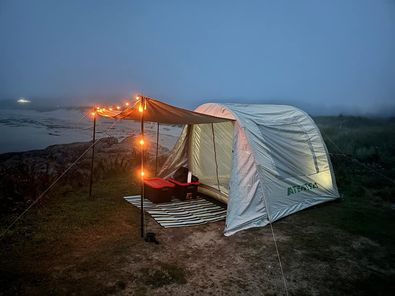
In our testing, the absolute most transformative accessory for the Model 3 is a tailgate-mounted tent. The TENTSLA X1 resolves the sedan's greatest weakness: lack of standing room. By creating a sealed vestibule off the trunk, it allows you to utilize the car's HVAC system while giving you a place to stand, change clothes, and store muddy gear.
2. High-Density Custom Memory Foam Mattress
Do not use an inflatable pool raft. When you look at the best Tesla camping mattress options, you must select a foam pad that is no thicker than 3 inches. Because the Model 3 has limited headroom, a thick air mattress will push your face directly into the roof glass. Custom-cut memory foam contours to the wheel wells and utilizes hard boards at the top to span the gap between the folded rear seats and the front center console.
3. Precision Blackout Privacy Shields
The expansive glass roof of the Model 3 is beautiful for stargazing but acts as a greenhouse at sunrise. Generic window shades sag and let light in. You must buy rigidity-framed, reflective blackout shades cut via laser template for the Model 3. These not only provide total privacy but heavily reduce the thermal load on the car's A/C compressor during Camp Mode.
4. Sub-Trunk 12V Compressor Fridge
Ice coolers are obsolete for EV camping. The sub-trunk of the Model 3 is perfectly sized to house a 20-liter to 35-liter 12V compressor refrigerator. By plugging this directly into the vehicle's rear accessory port, you maintain perfectly chilled food indefinitely without dealing with melted ice sludge.
5. Screen Cover & Anti-Glare Mat
When Camp Mode is active, the central infotainment screen remains illuminated. While you can put it in "Camp" display, it still emits a glow. A simple slip-on fabric screen cover is essential for complete darkness. It prevents accidental touches if you bump the screen during the night.
6. Low-Profile Roof Rack Storage Box
Because you are sleeping in the trunk and back seat, your luggage needs to go somewhere. The front trunk (frunk) is rarely large enough. For serious trips, an aerodynamic roof box is required. Be warned: this will reduce your highway range by roughly 10% to 15%, so you must factor this into your charging calculations.
Common Mistakes Model 3 Campers Make
From our experience, the most severe mistake is neglecting battery management. If you arrive at a campsite with 15% battery, the vehicle will automatically disable Camp Mode at 20% to preserve enough range to reach a Supercharger. You will wake up freezing (or sweating). You must arrive at your camp destination with at least 40% battery life.
Another amateur error is failing to disable the vehicle's tilt and intrusion alarms. If you lock the car from the inside using your phone app without engaging Camp Mode or Pet Mode properly, tossing and turning in your sleep will trigger the vehicle's blaring security alarm, waking up the entire campground.
Buying Considerations
When purchasing Tesla camping accessories Model 3 setups, prioritize Packability. The gear must fit into the sub-trunk or frunk when not in use so that the main trunk remains free for daily driving. Second, prioritize Power Draw. Ensure any electronic accessories (like kettles or heaters) do not exceed the 12A/16V continuous rating of the Tesla auxiliary port, or you risk blowing the electronic fuse (e-fuse).
Expert Recommendation
The TENTSLA Verdict
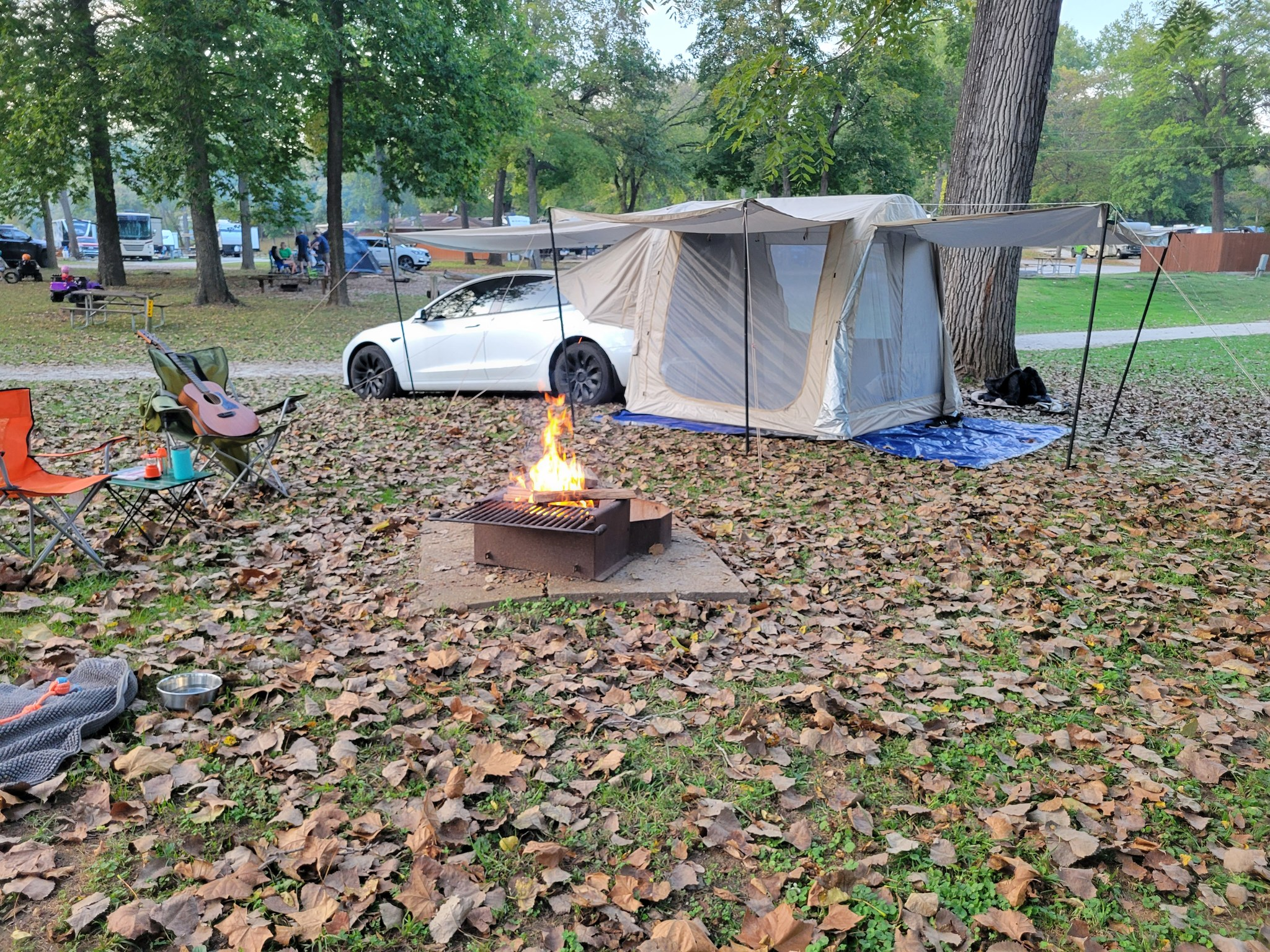
Is it actually worth investing in specialized gear to camp in a sedan? Unquestionably. The Model 3 is one of the most efficient, climate-controlled mobile sleeping pods on the market, but its physical dimensions demand respect. We recommend prioritizing the Tesla Model 3 Camping Tent integration above all else. By deploying the TENTSLA X1, you fundamentally alter the geometry of your campsite, providing the vital standing room and exterior lounge space that a sedan inherently lacks. Pair this with a low-profile memory foam mattress and custom blackout shades, and you transform a daily commuter into an elite, zero-emission overlanding vehicle.
Essential Comparison Tables
| Accessory Category | Optimal Specification | Why It Matters |
|---|---|---|
| Tent Extension | Inflatable, tailgate-seal compatible (e.g., TENTSLA X1) | Provides standing room and traps HVAC air from the cabin. |
| Mattress | Max 3-inch thickness, Memory Foam | Preserves crucial vertical headroom under the parcel shelf. |
| Privacy Shades | Laser-cut, multi-layer reflective | Blocks UV radiation and ensures total security at night. |
| Refrigeration | Sub-trunk fitted 12V Compressor | Eliminates ice, utilizes constant vehicle power. |
| Feature | Tesla Model 3 | Tesla Model Y |
|---|---|---|
| Rear Entry | Trunk lid (Requires sliding into space) | Hatchback (Allows sitting up comfortably) |
| Vertical Headroom | Very Limited (Parcel shelf obstruction) | Expansive (Open cabin design) |
| Sub-Trunk Storage | Standard depth | Deep (Can fit larger capacity 12V fridges) |
| Required Accessories | Requires low-profile mattress & exterior tent | Highly flexible; handles thicker mattresses easily |
| Pros (Why it is worth executing) | Cons (Limitations to mitigate) |
|---|---|
| Camp Mode provides flawless, silent climate control all night. | The sedan trunk layout creates a tight, enclosed sleeping tunnel. |
| Massive savings on hotel costs during road trips. | Battery anxiety if camping far from Supercharger networks. |
| Zero tailpipe emissions allow camping in pristine nature reserves. | Adding roof boxes drastically impacts aerodynamic range. |
| Glass roof provides spectacular, unobstructed stargazing. | Requires highly specialized, custom-cut gear to function properly. |
| Gear Item | Storage Location During Transit | Deployment Priority |
|---|---|---|
| TENTSLA X1 Tent | Sub-trunk or Frunk | High. Setup immediately upon arrival for gear staging. |
| Memory Foam Mattress | Folded in rear trunk (takes up ~40% space) | High. Must be laid flat before moving gear into the tent. |
| 12V Fridge | Sub-trunk (if custom fit) or rear seat | Medium. Plug in continuously while driving. |
| Privacy Shades | Slide behind driver/passenger seats | Low. Install right before sleeping. |
Frequently Asked Questions (FAQ)
Can you really sleep comfortably in a Tesla Model 3?
In most professional situations, yes, provided you are under 6'2" and utilize a custom-cut, low-profile mattress. The primary challenge is the structural cross-member behind the rear seats, which limits vertical headroom. You cannot sit upright in the back of a Model 3 as you can in a Model Y. However, for lying flat in a climate-controlled environment, it is exceptionally comfortable.
Does Camp Mode drain the Model 3 battery completely?
No. Camp Mode is highly efficient, utilizing a heat pump (in models 2021 and newer) to manage thermals. In moderate weather (50°F to 70°F), it consumes approximately 1% of the battery per hour. In extreme freezing temperatures, it may consume up to 2% to 3% per hour. Crucially, the Tesla software will automatically shut off Camp Mode if the main battery reaches 20% to ensure you have enough range to drive away.
Is an inflatable mattress or a memory foam mattress better for the Model 3?
We adamantly recommend memory foam. Inflatable mattresses are generally too thick (often 5 to 8 inches), which robs you of the vital vertical headroom necessary in the Model 3. Furthermore, the air inside inflatable mattresses gets cold overnight, pulling heat away from your body. A 2.5-inch to 3-inch tri-fold memory foam mattress provides superior support, retains body heat, and maximizes vertical clearance.
Authoritative Industry References
To ensure your overland setup meets safety and efficiency standards, we consult data from the following authoritative bodies:
- U.S. Department of Energy (DOE) - Standards and data on lithium-ion battery efficiency, thermal management systems, and EV auxiliary power draw.
- National Highway Traffic Safety Administration (NHTSA) - Safety guidelines and aerodynamic impact studies regarding roof-mounted cargo boxes on passenger vehicles.
- Recreation.gov - Federal regulations, campsite vehicle dimension limitations, and guidelines for zero-emission camping in U.S. National Parks.
For more detailed breakdowns on outfitting your vehicle, review our comprehensive index of Tesla Camping Accessories.